Backyard Office Solar Calculator
Answer 5 quick questions. Get a precise solar system recommendation — panels, battery, cost, and payback.
Type
Hours
State
Type
Peak sun hours determine how much power your panels can generate daily.
☀️ Your Solar System Recommendation
How Much Solar Does a Home Office Shed Need?
Working from a backyard shed sounds like a dream — no commute, no open-plan distractions, full control over your space. But then reality hits: you need power. Real, reliable power. Not an extension cord snaking across the yard.
Here's the thing — a solar setup for your shed can cost as little as $140 or as much as $2,500. That gap is huge, and knowing where you land on that spectrum changes everything you buy.
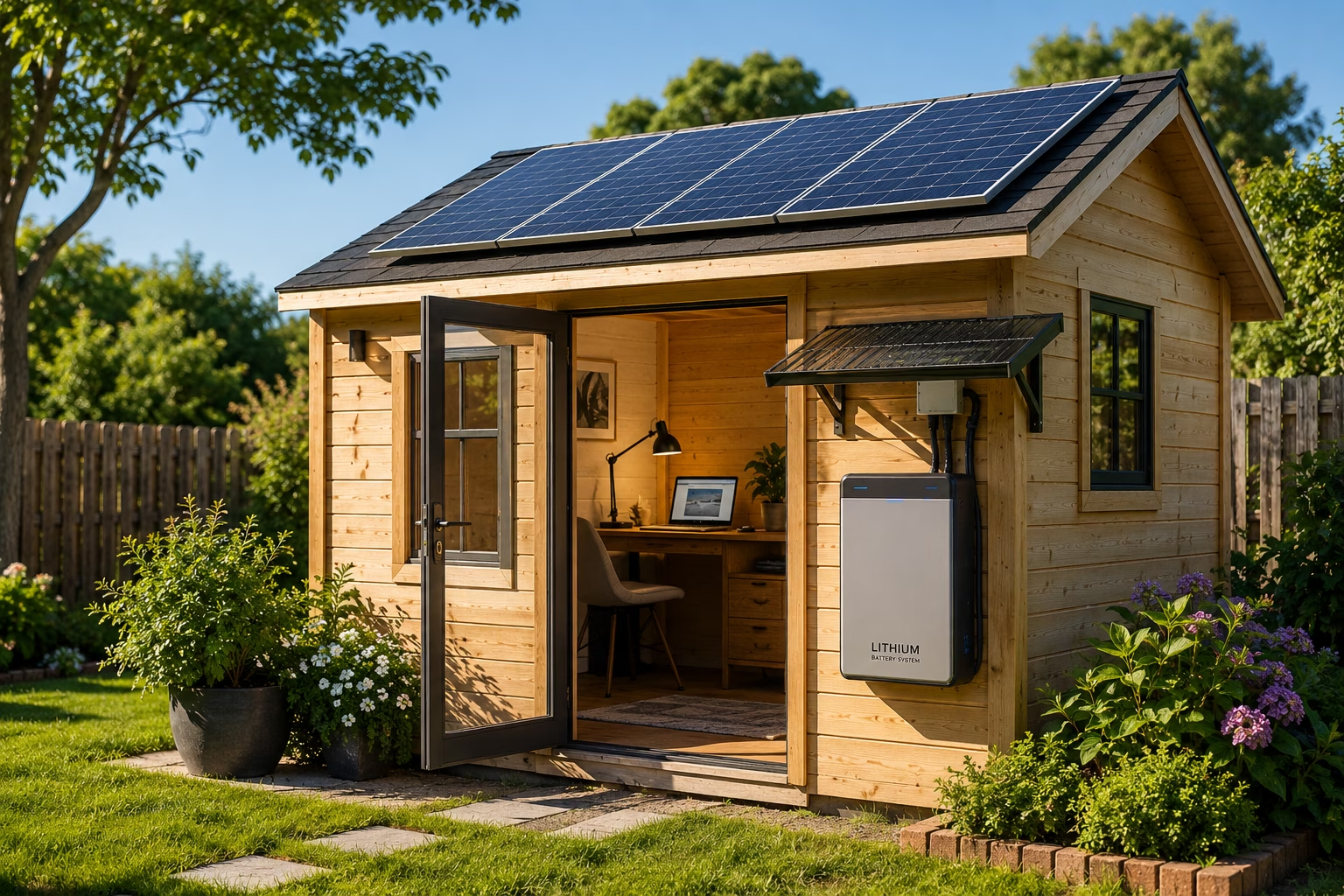
The 3 Tiers of Solar Power for Work-From-Home Sheds
Before you buy a single panel, figure out what you actually need to run.
| Setup | Wattage | Powers What | Cost |
|---|---|---|---|
| Basic | 200W | Laptop + lights + fan | $400–$600 |
| Standard | 400W | + Monitor + AC | $800–$1,400 |
| Full Office | 600W+ | + Desktop + printer + AC | $1,500–$2,500 |
Basic (200W): This covers a laptop-first setup with LED lighting and a small fan. If you're a writer, coder, or video caller with no external monitor, this handles your full day without blinking.
Standard (400W): Add a monitor and a small window AC unit, and your power draw jumps fast. A 5,000 BTU AC alone pulls 450–550W at startup — so pair it with a quality battery and a pure sine wave inverter to protect sensitive electronics.
Full Office (600W+): Desktop computers, laser printers, dual monitors, and climate control — this tier needs serious storage behind it. Plan for at least 100Ah of lithium battery capacity to run through cloudy days or early mornings.
Calculating Your Exact Load
You don't need a spreadsheet. Flip over your laptop charger and look at the label — it shows output watts, usually 45W–65W. Do the same for every device you plan to plug in.
- Laptop charger: 45–65W
- LED desk light: 8–12W
- Monitor (24"): 20–35W
- Small AC unit: 450–600W at startup
Add those numbers together, then multiply by the hours you run each device daily. That's your daily watt-hour load. A 400W solar panel setup with a 40Ah–60Ah lithium battery covers most remote workers who run a laptop, monitor, and occasional AC in short bursts.
One thing people skip: battery storage is non-negotiable. Panels only generate during daylight. Without a battery, you go dark the moment a cloud rolls in.
Start Small. Scale Up.
You don't have to nail the perfect solar power work-from-home shed setup on day one. Start with a 200W panel, a 30Ah lithium battery, and a 300W pure sine wave inverter. Get comfortable with your real usage for 2–3 weeks, then add panels or battery capacity as needed.
↑ Ready to calculate? Scroll up.
Solar Panels for a Craft Room, She Shed & Studio
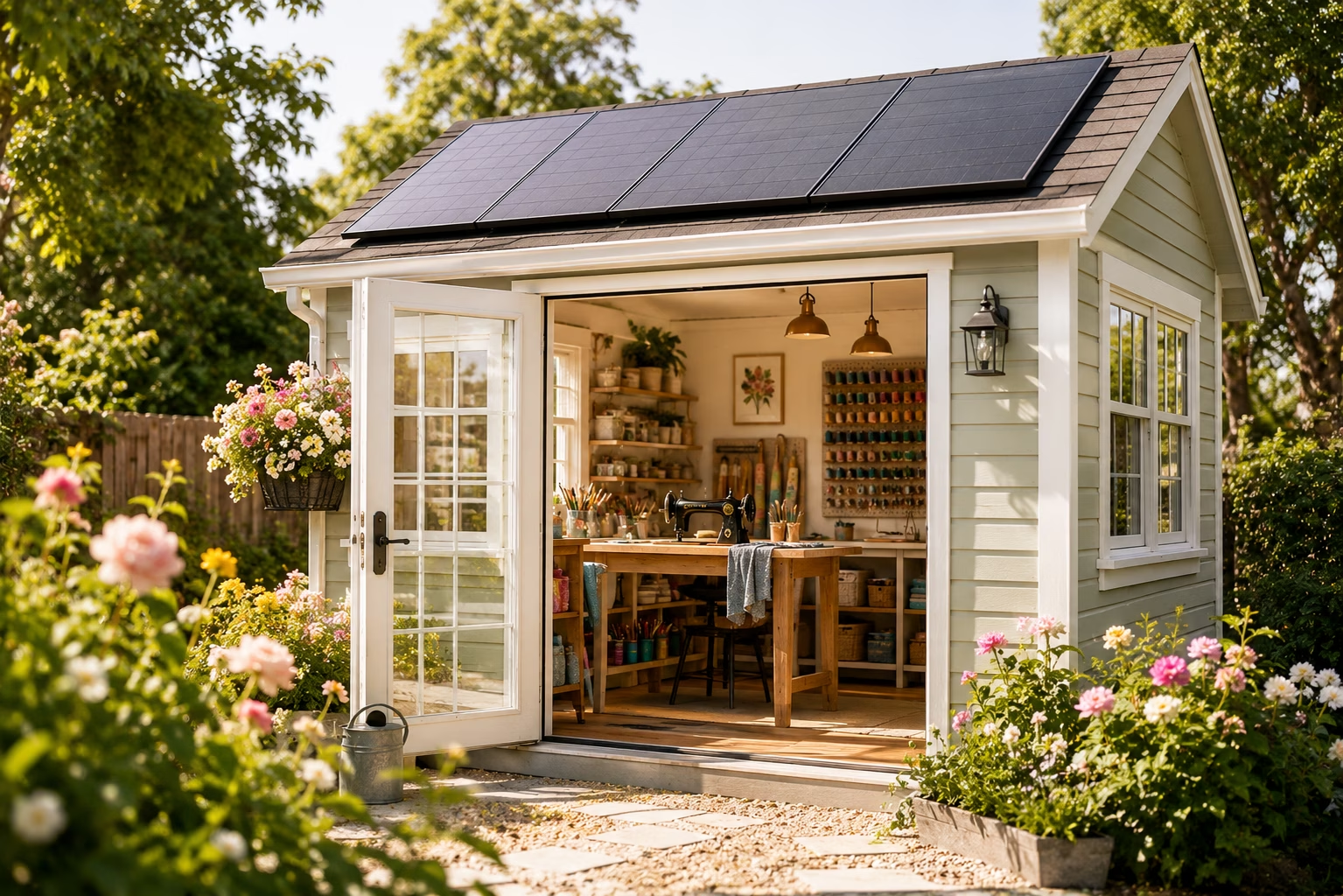
Solar Panels for a Craft Room or She Shed
A craft room runs on light — and lots of it. LED strip lights, overhead task lighting, and a dedicated work lamp can pull 80–150W combined. Add a sewing machine (100W) and a glue gun (40W), and you're looking at a 200W panel with a 20Ah lithium battery as your baseline.
The key purchase most crafters miss: a 300W pure sine wave inverter. Glue guns and sewing machines have small motors that need clean, stable power — a modified sine wave unit will burn them out faster than you'd expect.
Solar Panels for an Art Studio Shed
An art studio needs two things above everything else: accurate light and fresh air. Standard solar-powered daylight LED bulbs (5000K–6500K color temperature) let you see true colors without distorting your palette.
Run a 60–80W ventilation fan continuously when working with oils, resins, or spray paints. A 200W panel paired with a 30Ah lithium battery covers this load cleanly, and because solar runs silently, you never break your creative focus.
Solar Power for a Music Studio Shed
This is the one shed type where your inverter choice can make or break the whole setup. Studio monitors, audio interfaces, and condenser microphones pick up every flicker of dirty power — a modified sine wave inverter will inject a 60Hz hum directly into your recordings.
Only buy a pure sine wave inverter for a solar power music studio shed. A typical setup — laptop, audio interface, studio monitors, MIDI controller — pulls 150–250W. A 400W panel with a 40Ah lithium battery gives you 6–8 hours of clean, uninterrupted recording sessions.
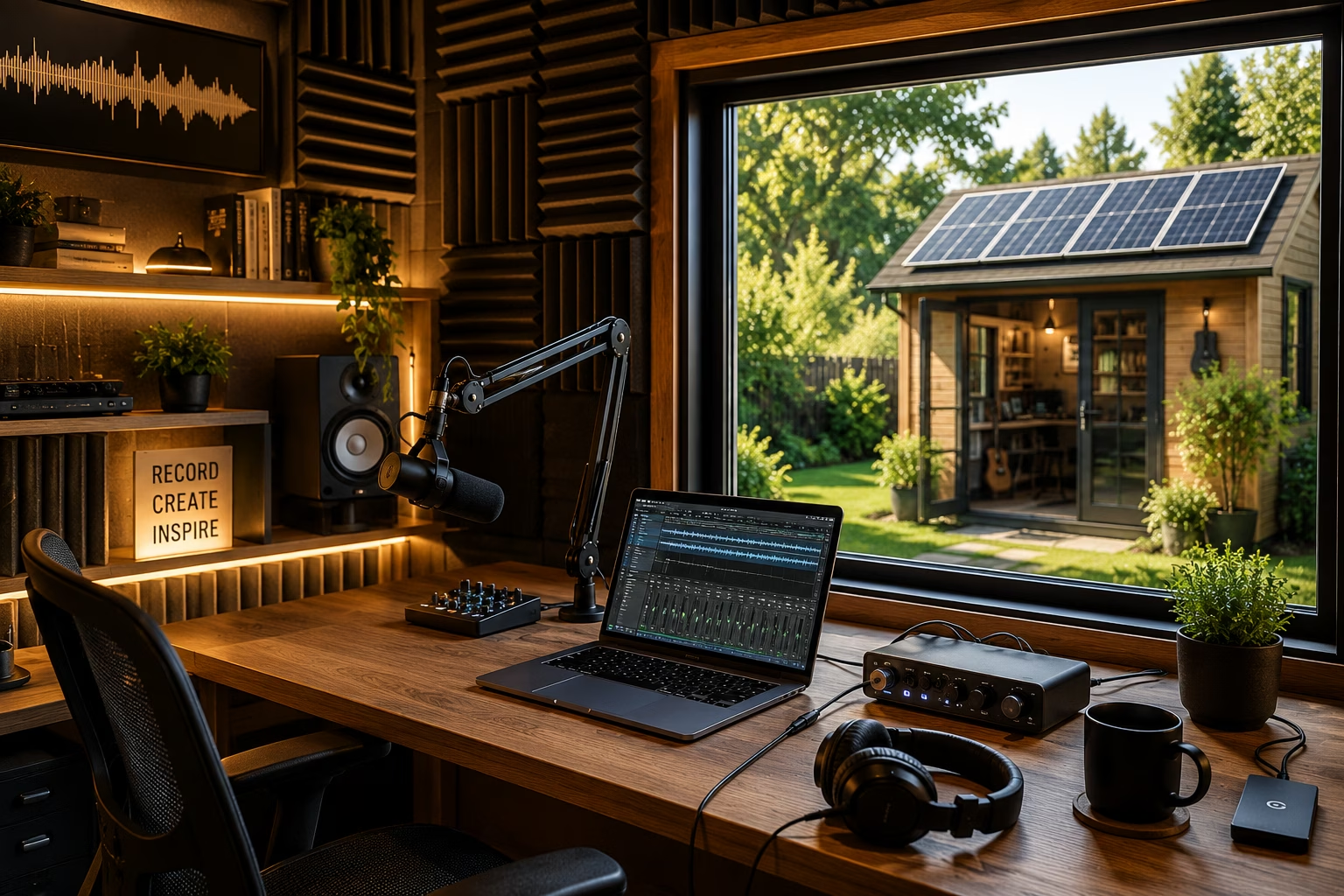
Podcast Studio Shed Solar
Silence is your most valuable production asset. Gas generators are dead on arrival in a podcast setup — the noise floor they create ruins recordings at the source. Solar power eliminates that problem completely.
A podcast studio shed solar setup is actually one of the most affordable to build. A USB microphone, camera, ring light (45W), and laptop total around 120–150W peak. A 200W panel and a 20–30Ah lithium battery covers a full recording day.
Solar Gym Shed Off Grid
Keeping cool is the real challenge in a backyard gym. A high-velocity box fan or wall fan pulls 200–300W and needs to run continuously through every workout. For a solar gym shed off grid, budget around a 400W panel and a 50Ah lithium battery to handle the fan, a Bluetooth speaker (15–30W), and a small TV or tablet for workout videos.
Sizing It Perfectly: Use a She Shed Solar Calculator
Before buying a single panel, calculate your total daily watt-hours. Multiply each appliance's wattage by the hours you run it daily — then add 20% for inefficiency losses. A dedicated she shed solar calculator maps that number directly to the panel wattage and battery storage capacity you actually need.
↑ Ready to calculate? Scroll up.
Can You Run AC in a Solar Backyard Office?
Yes, you absolutely can run AC on a solar shed. But you can't just slap two panels on the roof and expect your office to stay cool in July. Running air conditioning off-grid is the biggest power challenge in any backyard office build — and getting it wrong means sweating through your Zoom calls or dead batteries by 2pm.
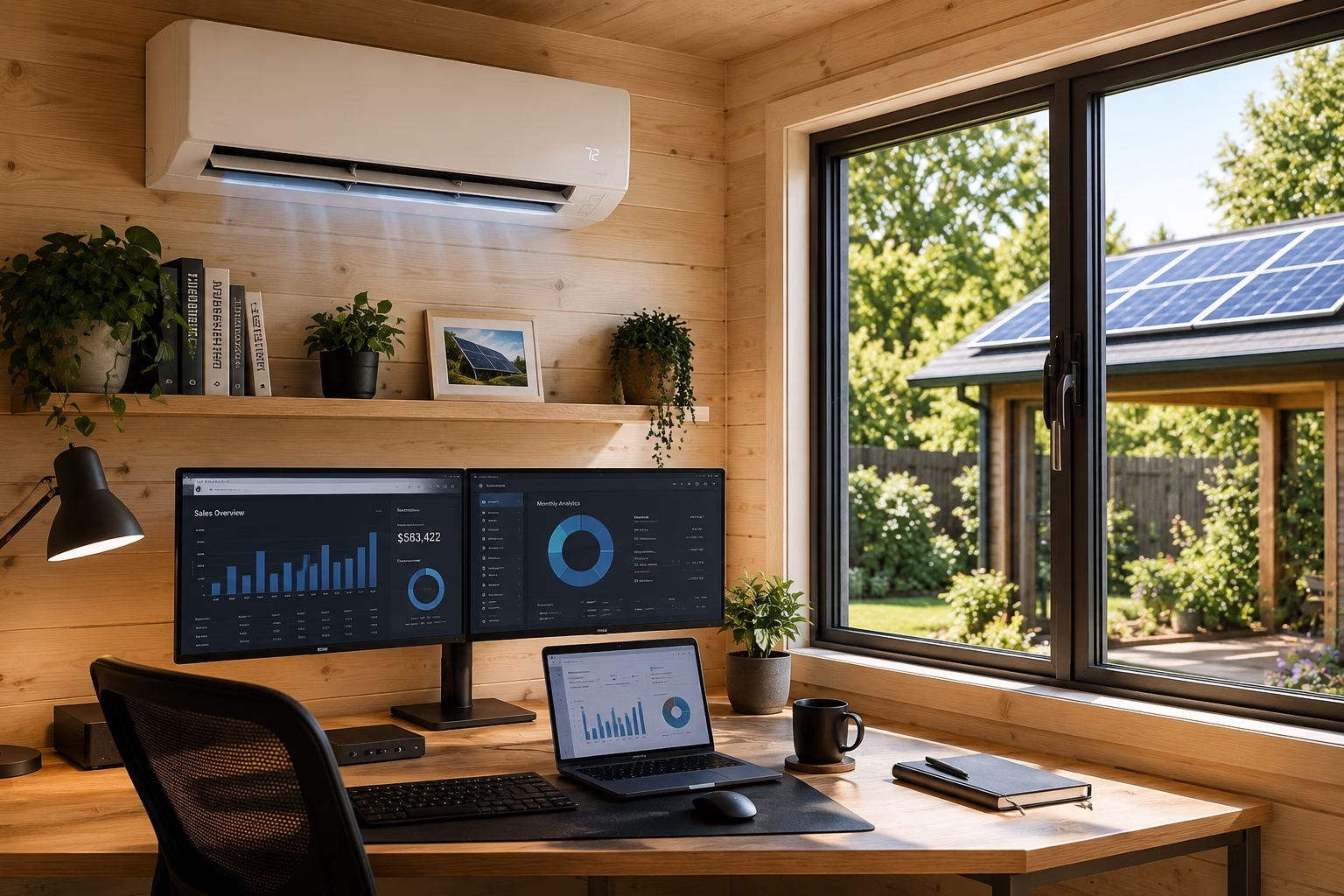
Window AC vs. Mini-Split: There's Only One Right Answer
| Type | Continuous Draw | Startup Spike | Solar-Friendly? |
|---|---|---|---|
| Window AC (8,000 BTU) | 800W–1,000W | Up to 2,500W | ❌ Difficult |
| Mini-Split Inverter (9,000 BTU) | 300W–600W | Soft start | ✅ Recommended |
For a mini split AC solar backyard office, the difference is everything. A window unit's compressor kicks on at full power every single cycle — hammering your battery bank repeatedly throughout the day. A quality inverter-type mini-split like a Senville, Pioneer, or MRCOOL ramps up smoothly and throttles down automatically.
How Many Solar Panels to Run a Mini-Split?
Here's the honest math for a 9,000 BTU inverter mini-split running 5–6 hours during peak daylight:
- Solar array: 1,200W–1,600W (3 to 4 modern 400W panels)
- Battery bank: minimum 200Ah–300Ah lithium at 24V or 48V
- Inverter: 2,000W pure sine wave minimum
The battery bank buffers cloud cover gaps and that soft-start current draw. Skimping on battery capacity is where most DIY builds fail.
Pro Tip: Use Pre-Cooling
This single habit extends your battery runtime by hours. At noon — when your solar panels run the air conditioner directly from peak sunlight — crank the mini-split hard. Cool the space down aggressively while the sun does the heavy lifting.
By 2pm, your shed is already cool. The mini-split throttles down to a light maintenance load, barely touching your batteries for the rest of the afternoon.
↑ Ready to calculate? Scroll up.
Backyard Office Solar: Grid-Tied vs. Off-Grid
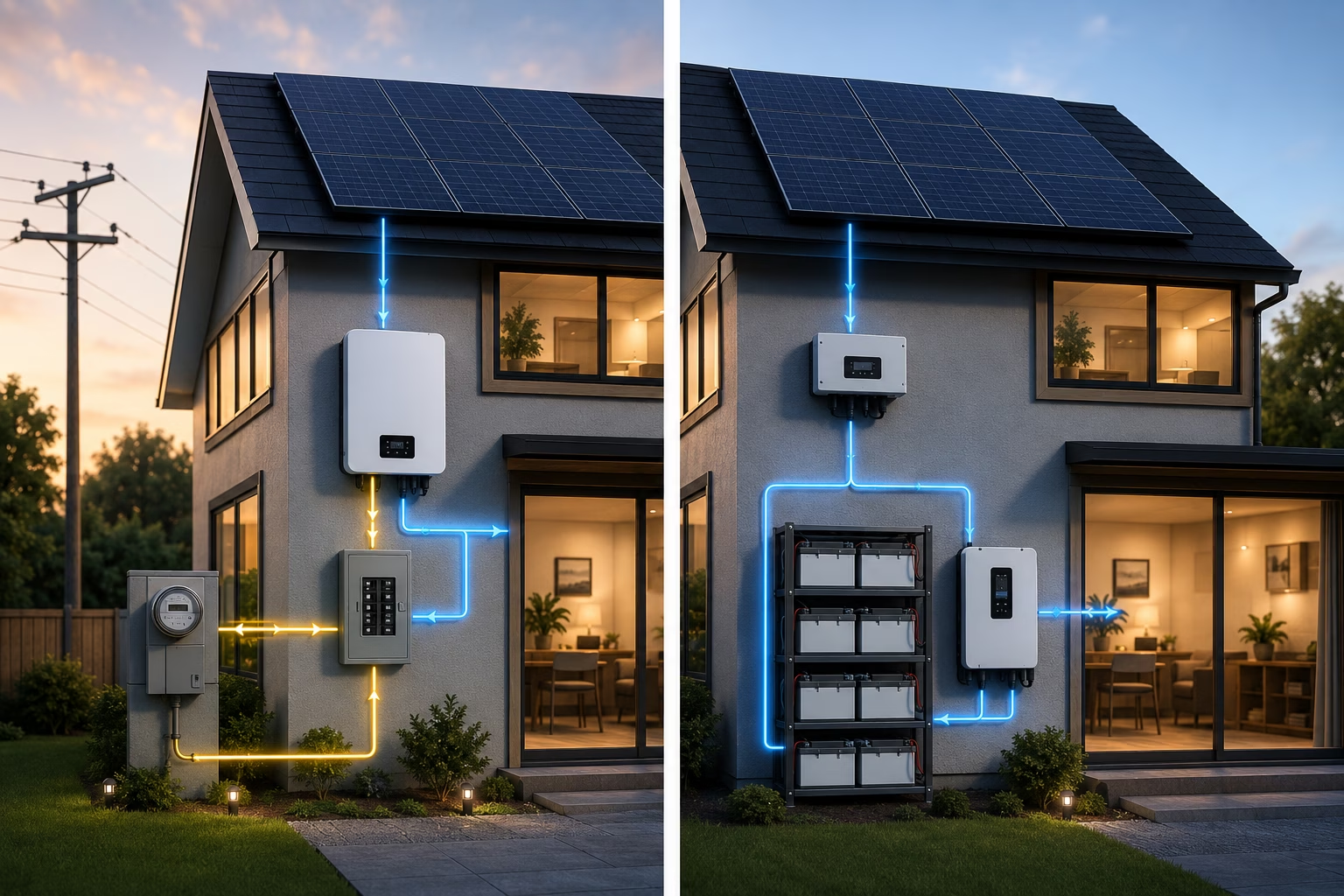
The solar backyard office grid-tied vs off-grid debate comes down to one practical question before anything else: how far is your shed from the main house, and what's between them?
| Factor | Grid-Tied | Off-Grid |
|---|---|---|
| Battery required | No | Yes (essential) |
| Upfront cost | Lower ($1,500–$3,000 less) | Higher ($2,000–$4,500) |
| Works during grid outage | ❌ No | ✅ Yes |
| Best shed distance | 50–100 ft from house | 150+ ft or across hardscape |
| Utility bill impact | Reduced | Eliminated |
Grid-Tied Setup: The Cost-Effective Route
A grid-tied solar shed office runs a feeder wire from your main home's electrical panel directly to a subpanel in the shed. Your rooftop or ground-mount solar panels feed clean energy into the home system, and the shed draws from that same pool.
- No battery bank required — the grid acts as your storage, dramatically cutting upfront costs
- Your shed runs normally after dark, on cloudy days, and through winter without any battery management
- Perfect for a solar panels detached garage office where structures sit 50–100 feet apart
- Total system cost stays significantly lower — often $1,500–$3,000 less than a comparable off-grid build
Off-Grid Setup: The Ultimate Independence
A true off-grid home office shed solar system needs four components working together: solar panels, a lithium battery bank, a charge controller, and a pure sine wave inverter. Nothing connects to the utility grid.
- Your shed sits 150+ feet from the house, making trenching prohibitively expensive or destructive
- You avoid digging through concrete, hardscaping, or an irrigation system just to run wire
- Zero utility bills for the shed — every watt comes free from the sun after the initial investment
- Scales up easily — add panels or battery capacity as your power needs grow
The Quick Rule of Thumb
Shed within 50–100 feet of the house with clear ground between them? Go grid-tied. You'll save money, skip battery headaches, and still run solar cleanly.
Shed further out, across hard surfaces, or on a separate part of the property? Off-grid is your answer. The trenching cost alone justifies the battery investment — and you get total energy independence as a bonus.
↑ Ready to calculate? Scroll up.
She Shed Solar Ideas & Inspiration
You spend weeks planning the perfect backyard escape. Shiplap walls, a vintage reading chair, soft curtains, and a workspace that finally feels like yours. Then you walk outside, look at the shed, and realize — there's no power hookup. Solar changes that completely.
Solar Isn't Just Practical — It's Beautiful
The best she shed solar ideas don't look like a science project bolted to your roof. They look intentional. Integrated. Here's what real homeowners are powering with solar right now:
- Fairy string lights and LED Edison bulbs draped across ceiling beams for warm, golden ambiance
- Bluetooth speakers charged continuously for all-day background music while crafting
- Small sewing machines and embroidery hoops running off a compact inverter without a single extension cord from the house
- Accent lamps and task lighting positioned exactly where you need them — no outlet hunting required
- Mini USB fans for airflow during summer crafting sessions
- A tablet or small TV mounted on the wall for tutorials, shows, or video calls
What the Setup Actually Looks Like
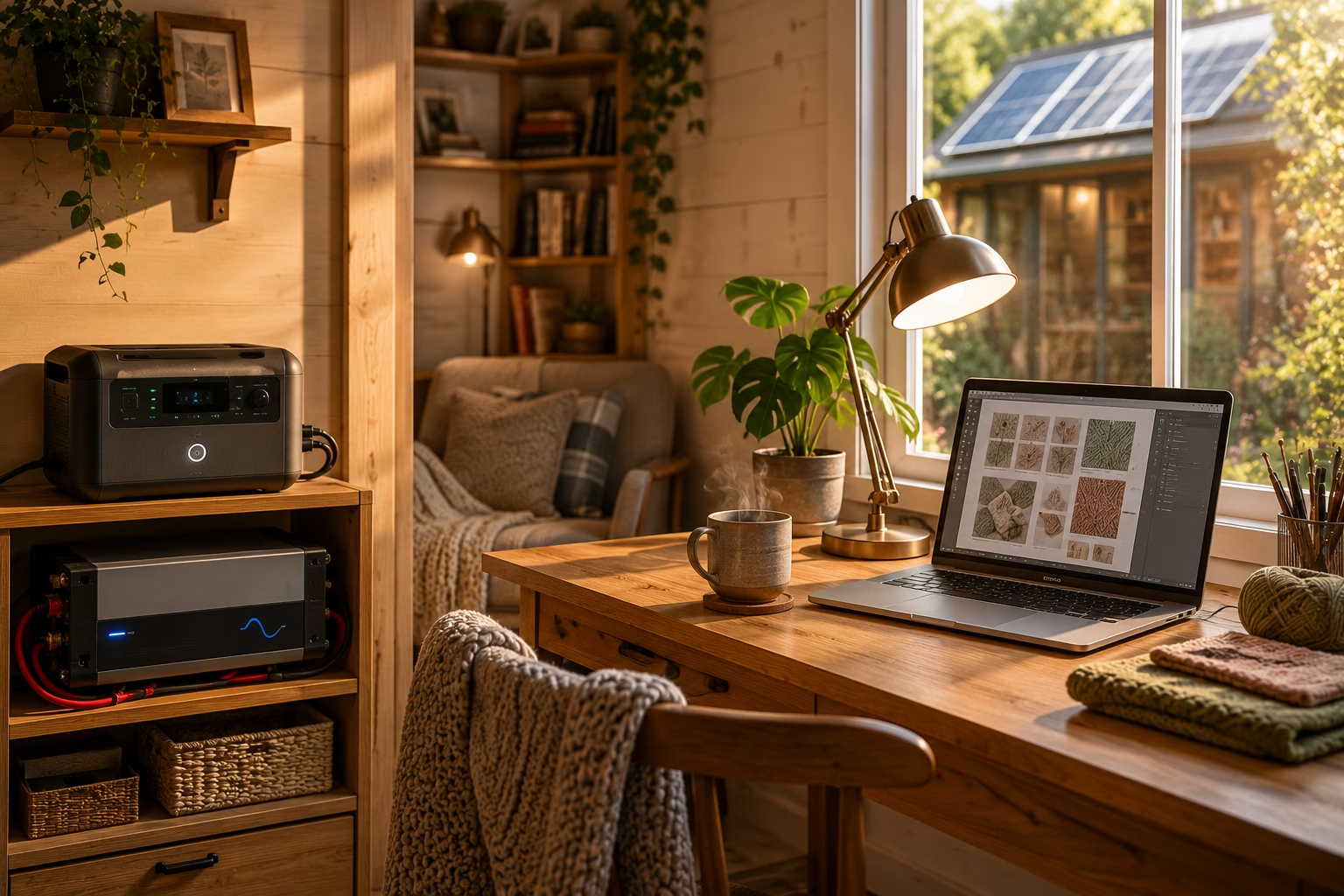
A solar-powered she shed doesn't scream "off-grid survivalist." Modern sleek black monocrystalline panels sit flush against roof shingles, barely visible from the garden. A compact lithium power station tucks neatly onto a shelf inside — about the size of a small carry-on bag. The whole system operates silently.
The Real Solar She Shed Setup Cost
| Build Level | Cost Range | What You Get |
|---|---|---|
| Budget Hobbyist | $500–$1,500 | 1–2 panels, portable power station, lights, fans, charging |
| Mid-Range Creative | $1,500–$4,000 | Full panel array, dedicated inverter, AC loads, climate control |
| Premium Automated | $8,000–$13,000 | Full lithium bank, dual monitors, smart automation, heavy daily loads |
Your she shed doesn't need to do everything. It just needs to do your everything. Start with the appliances you actually use daily, size your panels around that honest list, and build the sanctuary you've been putting off.
↑ Ready to calculate? Scroll up.
Backyard Office Solar — FAQ
Most backyard home offices need 1 to 3 solar panels, depending on your load. A laptop-only setup with LED lights runs fine on a single 200W panel. Add a monitor and occasional AC, and you're looking at 2–3 panels (400W–600W total). Use our calculator above to get a number tailored to your specific appliances and state.
Yes — but the AC unit type matters enormously. An inverter-type mini-split (like a 9,000 BTU Senville or MRCOOL) has a soft start and can run on 300W–600W continuously. A standard window AC spikes to 2,500W at startup, which overwhelms most small systems. For a solar-powered AC setup, plan on 1,200W–1,600W of panels and at least 200Ah of lithium battery storage.
The cheapest functional she shed solar setup starts around $400–$600: one 100W–200W panel, a compact lithium power station (Jackery or EcoFlow), and a basic mounting bracket. This powers LED lights, phone charging, a small fan, and light sewing machine use for a full day. You won't run AC on this budget — but for a craft or relaxation space, it's perfectly sufficient.
It depends on your municipality and system size. Small portable power stations (Jackery, EcoFlow, Bluetti) attached to panels typically require no permit. Permanently mounted panels wired into a subpanel almost always require both a building permit and an electrical permit. Check with your local building department before installing anything that connects to fixed wiring.
Absolutely. A dual-monitor setup typically draws 150W–250W total (two 24" monitors + laptop or mini-PC). A 400W solar panel with a 40Ah–60Ah lithium battery handles this load cleanly for an 8-hour workday. Add LED lighting and a WiFi router and you're still under 300W combined — well within the capacity of a straightforward two-panel system.
Quality monocrystalline solar panels carry 25-year performance warranties and typically last 30–35 years with minimal degradation. Most panels lose about 0.5%–0.7% efficiency per year, meaning a panel rated at 400W today will still produce around 380W after 10 years. LiFePO4 lithium batteries last 8–15 years depending on cycle depth.
Grid-tied wins on cost if your shed is within 50–100 feet of the main house with clear ground between them. Off-grid wins if your shed is further away (making trenching prohibitively expensive), if you want utility bill elimination, or if you want to maintain power during grid outages. For most suburban backyards, grid-tied is the economical choice.
Yes, but with caveats. Laser printers have a high startup wattage surge (400W–900W) when fusing toner to paper, even if standby draw is low. Your inverter needs to handle that surge — plan for a 1,500W–2,000W pure sine wave inverter minimum. For occasional printing, a 400W–600W solar array with a 60Ah lithium battery handles it fine. If you're printing heavily all day, size up significantly or use an inkjet instead (30W–50W average draw).