Most solar cleaning injuries happen because homeowners treat this like washing a car, not like working at height on a slick, sloped surface. If you're researching how to clean solar panels on a roof, the real question isn't which cleaner to buy — it's whether you should be up there at all.
For most single-story homes with a low pitch, it's doable with the right gear. For anything steep or two stories up, ground-based tools are the safer call, which we'll cover further down.
How to Clean Solar Panels on a Roof Safely (Without Damage)
Before you touch a single panel, shut the system down at the inverter. Working around live electrical equipment with a wet brush is not the place to find out your disconnect switch doesn't work the way you think it does. Check your system manual or call your installer if you're unsure which switch does what.
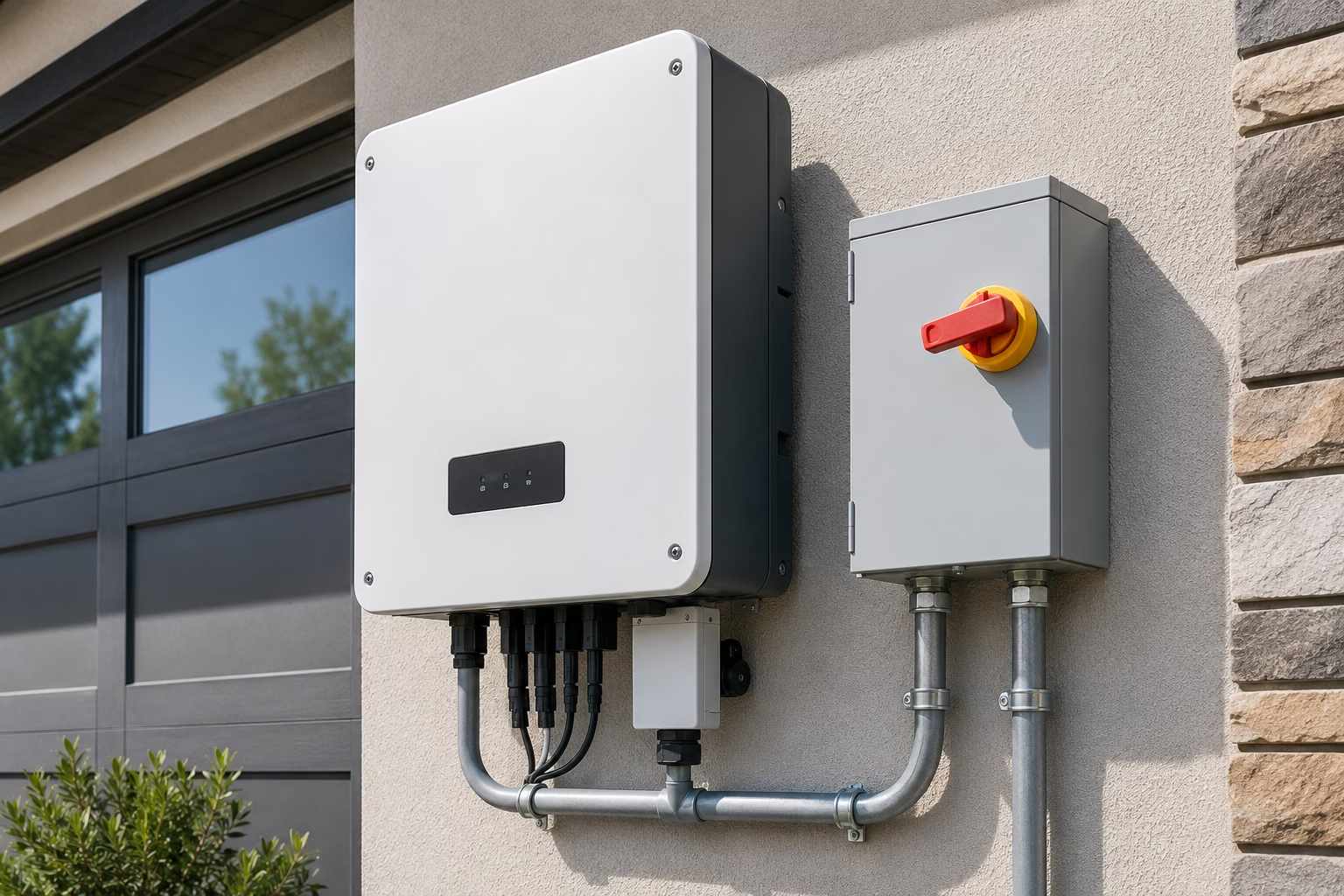
Timing matters more than people expect. Panels heat up fast in direct sun, and hitting hot glass with cool water can cause thermal stress — not enough to shatter a panel outright, usually, but enough to stress the seals and microcracks over time. Early morning or late evening, when panels are cool and the roof isn't radiating heat, is the right window. This is the core of how to clean solar panels on the roof without creating problems you can't see yet.
Wear soft-soled shoes, use a harness if your roof pitch exceeds 20 degrees, and never work alone.
Step-by-Step Roof Washing Process
Once the system's off and you've picked a cool, dry time of day:
- Rinse first. Use a hose with a fan nozzle to knock off loose dust and bird droppings before scrubbing anything.
- Use a soft-bristle brush — the kind made for cars or solar panels, not a stiff deck brush. Anything abrasive scratches the anti-reflective coating.
- Skip soap. Use plain water, or deionized/purified water if your area has hard water. Soap leaves a film that attracts more dust.
- Work in sections, top to bottom, so dirty runoff doesn't dry on clean glass.
- Squeegee the panels before they air-dry to avoid water spots and mineral streaks.
- Inspect as you go — cracked glass, loose frames, or chewed wiring from rodents are easier to spot when you're already up close.
This is how to wash solar panels on roof surfaces without leaving streaks or scratches that quietly cut into output over time. If your home is in a state with strong sun exposure and you want to see what that output should actually look like, run your numbers through the solar calculator built for California homes or the comprehensive USA solar calculator for a wider baseline.
How to Clean Solar Panels Without Getting on the Roof
If your roof pitch is steep, your panels sit two stories up, or you just don't like heights, skip the roof entirely. A telescopic water-fed pole — the same tool window cleaners use on tall buildings — lets you scrub and rinse panels from the ground or a ladder on stable ground. Pair it with a soft brush head and purified water for a streak-free finish.
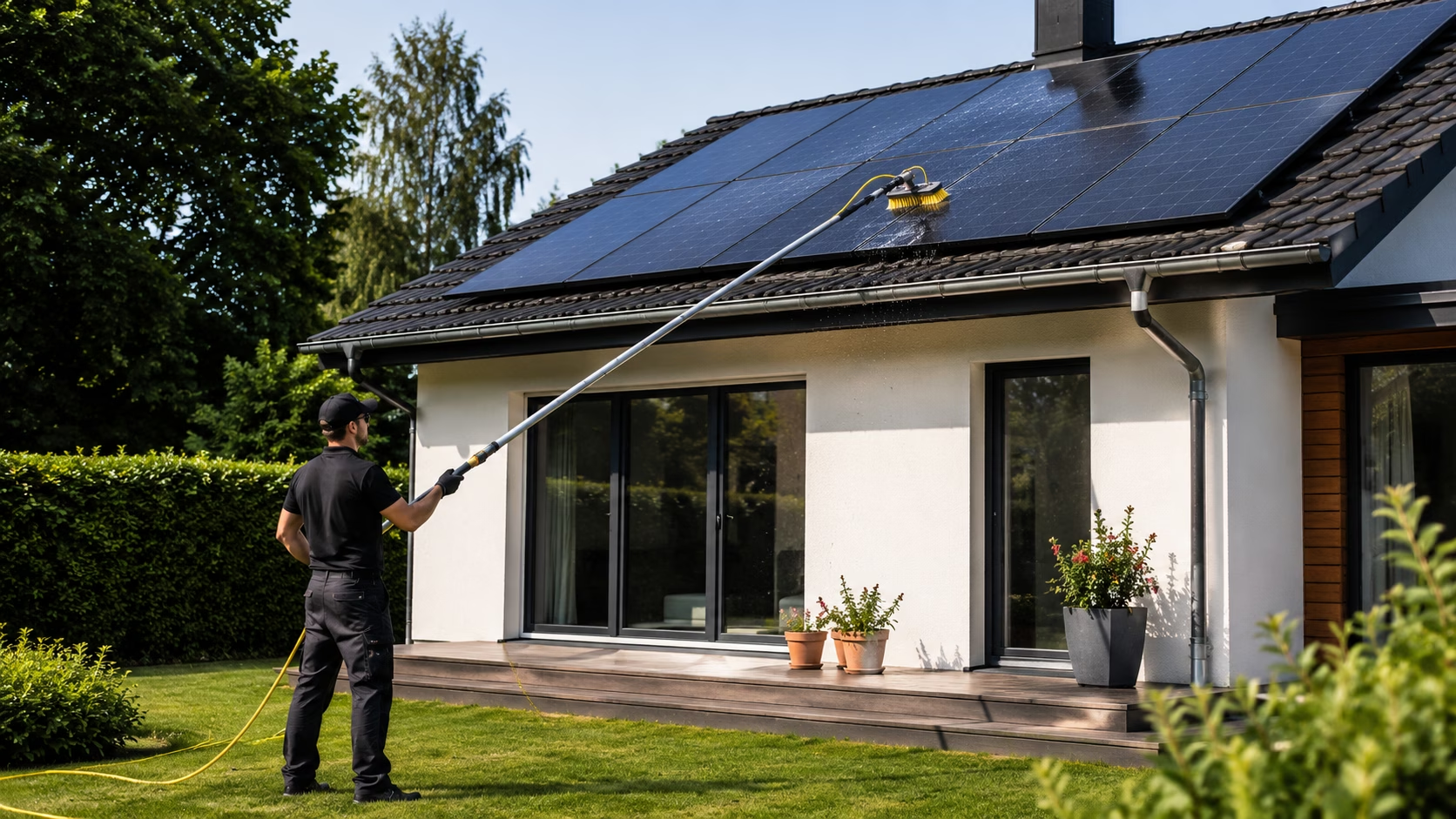
Specialized solar cleaning nozzles attach to a standard garden hose and use angled spray patterns to dislodge dirt without scratching. While they won't replace a brush for stuck-on grime, using them for routine pv panel maintenance is often enough to keep dust and pollen from lowering your system's output.
For steep or high roofs, this ground-based approach isn't just convenient — it's the difference between a clean system and a trip to the ER.
How to Clear Snow Off Solar Panels: Winter Maintenance Guide
Yes, if it's a heavy, wet snowfall sitting on the panels for days. No, if it's a light dusting — that'll usually melt off on its own once the sun hits the dark surface. Glass warms faster than the surrounding air, so a thin layer rarely needs intervention. The real question homeowners ask is how to clean snow off of solar panels when it's piled up after a storm without cracking $20,000 worth of equipment in the process.
Metal shovels are the single worst tool you can use here. One slip and you've got a gouge in the glass or a cracked frame seal, and that's a repair bill you didn't need. The same goes for hot water — pouring it on a frozen panel surface is asking for thermal shock, where the rapid temperature swing stresses the glass enough to crack it, sometimes not until weeks later.
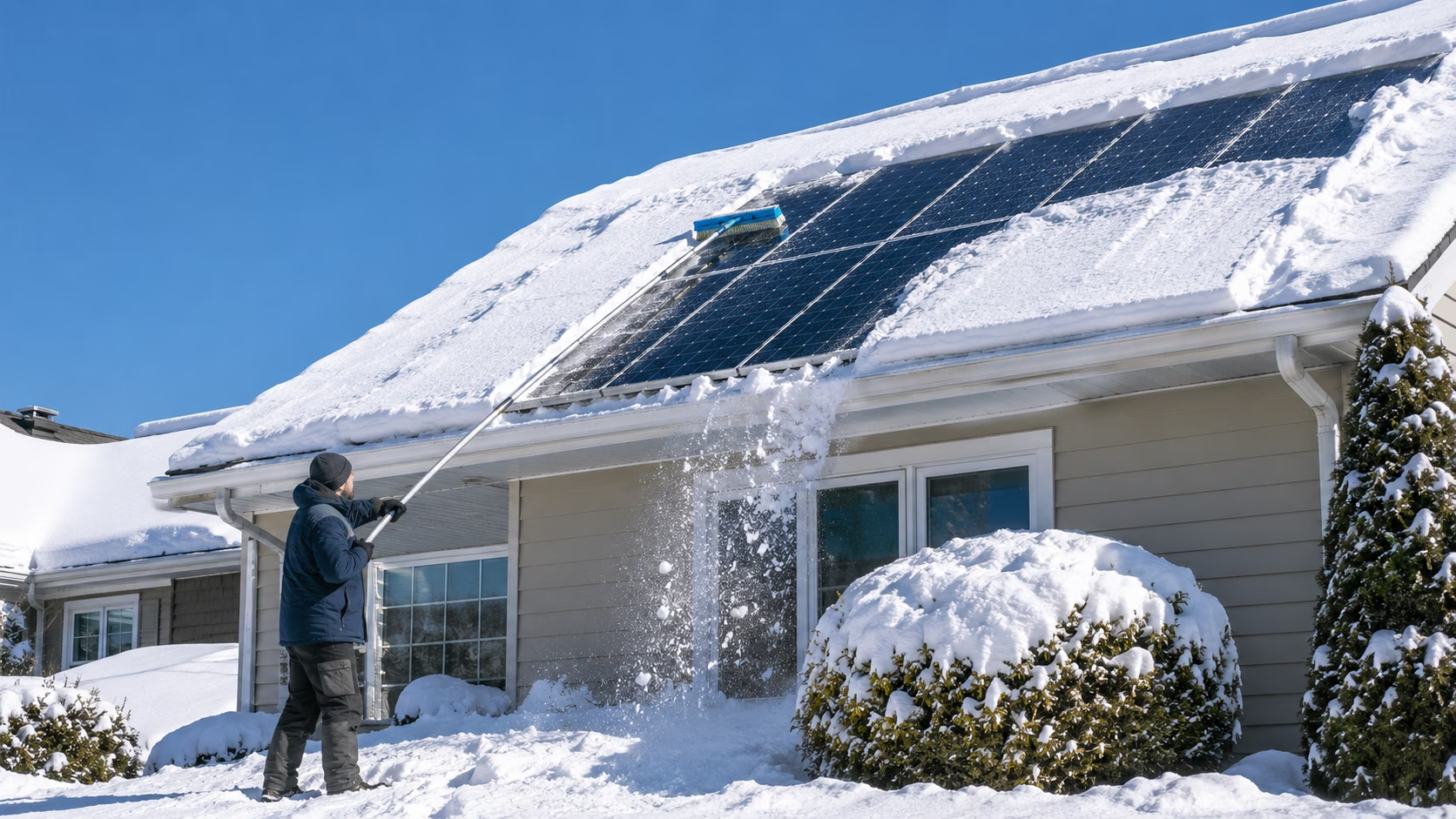
The safer approach for how to clear snow off solar panels is mechanical, not thermal. Soft tools, gentle pressure, gravity doing most of the work. Let the panel's own tilt and the sun's warmth loosen things first if you can wait it out. If you can't — say, you need production back online — a soft-bristle tool designed specifically for solar arrays is the move. Never use anything with a metal edge, and never apply downward pressure that could stress the glass or the mounting clips underneath.
Step-by-Step Methods to Clear Snow from Solar Panels
Here's the actual process, in order:
- Check the angle first. Steeper-tilted panels often shed snow on their own within a day of sun exposure.
- Use a solar-specific roof rake — these have soft foam or rubber edges built to avoid scratching tempered glass.
- Pull snow downward, following the panel's tilt, instead of pushing or scraping sideways.
- Use a soft squeegee with an extension pole for the final layer of slush or ice film.
- Avoid de-icing salt or chemical melts — runoff can corrode frames and mounting hardware over a season.
- Work from the ground whenever possible. A snow-covered roof is a fall risk even for someone who's done it a hundred times.
This is how to clear snow from solar panels without voiding your warranty or introducing microcracks that show up as reduced output months later.
How to Keep Solar Panels Clear of Snow (Prevention Tips)
The best fix is preventing buildup in the first place. Adjusting your panel mounts to a steeper tilt before winter — often 35 to 45 degrees — helps snow slide off under its own weight instead of sitting there. Hydrophobic nano-coatings are another option; they reduce surface friction so snow and ice release faster. Ask your installer whether your mounting system allows seasonal angle adjustment before the first storm hits, or check the numbers yourself with the solar panel angle optimization calculator.
Use a telescopic snow rake or water-fed pole from the ground — most extend 20+ feet and let you clear panels without ever touching a ladder. Climbing a snow-covered, icy roof is far riskier than the few extra minutes a pole takes.
What Can I Use to Clean My Solar Panels? (Vinegar, Windex, or Water?)
Grab the wrong bottle under your kitchen sink and you can void a $20,000 solar warranty in under five minutes. Manufacturers test panel coatings against specific cleaning agents, and anything outside that list — ammonia-based glass cleaners, abrasive pads, anything acidic and undiluted — can strip the anti-reflective layer or degrade the seals. So what can I use to clean my solar panels without triggering a warranty dispute? The answer is narrower than most people expect, and it starts with what you leave out, not what you add in.
What Can I Use to Clean Solar Panels Safely?
Plain water is your baseline. Deionized or distilled water specifically, since tap water leaves mineral spots that bake onto the glass under sun exposure and become harder to remove every cycle. Pair it with a soft microfiber cloth or a squeegee with a rubber blade — nothing with a hard edge, nothing abrasive. For stuck-on grime, a soft-bristle brush made for automotive or solar use works, applied with light pressure, never scrubbing. That's the full kit. No soap, no additives, no shortcuts. If you're still asking what can I use to clean solar panels beyond this, the honest answer is: very little else, and that's by design — manufacturers built the coating to work with water alone.
NoFlat-out, no. Can you clean solar panels with Windex and get away with it once? Probably. Do it repeatedly and you're building up an invisible chemical film that ammonia-based cleaners leave behind. That film attracts dust faster than bare glass, then bakes on under direct sun, creating a haze that cuts light absorption and tanks your output over a season.
Diluted OnlyVinegar cuts through hard water spots better than plain water alone — that part's true. But can you use vinegar to clean solar panels straight from the bottle? No. Undiluted acetic acid corrodes aluminum frames and degrades the rubber gaskets sealing your junction boxes over repeated use. If you use it at all, mix one part white vinegar to ten parts distilled water, and rinse thoroughly afterward. Anything stronger isn't worth the frame damage.
Can you pressure wash solar panels? Never. This is the fastest way to destroy a working system. Pressure washers generate enough force — even on a "low" setting — to drive water past the panel's edge seals and into the junction box, where it shorts the electrical connections from the inside.
Worse, the direct force on the glass surface can create micro-cracks in the PV cells underneath. These don't always show up immediately. A panel can keep producing power for months while a hairline crack slowly spreads, until output drops or the panel fails outright. By then, you're well past any warranty claim, since pressure damage is almost always classified as user-caused, not a manufacturing defect. Stick to gravity-fed water and a soft brush. It's slower. It's also the only method that doesn't risk a full panel replacement.
Is Solar Panel Cleaning Worth It? Cost vs. Efficiency Loss
Dirt sitting on your panels right now is costing you somewhere between $5 and $50 a month, depending on your system size and local sun exposure. That's the direct financial answer to what happens if you don't clean your solar panels — blocked sunlight directly reduces daily energy production, and every blocked photon is energy your inverter never converts into power. Ignoring maintenance can eventually lead to costly repairs if grime degrades your seals over time, leading to $60 to $600 in lost production on a typical residential system.
Is Solar Panel Cleaning Worth It?
It depends on two numbers: your local electricity rate and your actual efficiency loss. Is solar panel cleaning worth it on a $0.10/kWh utility rate with light dust? Marginal. Is it worth it at $0.28/kWh in California with heavy pollen buildup? Absolutely, and the math isn't close. Do dirty solar panels produce less energy? Yes — consistently. Dust, pollen, and airborne grime create a standard 5% to 15% efficiency drop on residential systems, with documented cases hitting 25% in high-pollen regions or after bird activity. That's not a rounding error. On a 7kW system, a 15% loss is real money every single month.
What is the Cost of Maintenance for Solar Panels?
Here is what routine maintenance for solar panels looks like in practice: a basic DIY kit (soft brush, squeegee, hose attachment) runs about $20 and covers you for years. If you are considering hiring a professional solar cleaner, expect $150 to $250 per visit in most US markets, scaling up for steep roofs or heavily soiled systems.
Does rain clean solar panels? Partially. Rain rinses off loose dust, but it doesn't touch the baked-on film of pollen, smog residue, and mineral deposits that build up over weeks of sun exposure — the same way rain doesn't actually clean a dirty car windshield, it just rearranges the grime. That film keeps reducing output even after a storm rolls through.
The Math: Maintenance Cost vs. Efficiency Recovery
Based on a standard 7kW residential system at $0.16/kWh average US rate:
| Panel Condition | Efficiency Loss | Annual Value Lost | Cleaning Cost | Net Annual ROI |
|---|---|---|---|---|
| Clean Baseline | 0% | $0.00 | $0.00 (DIY) | 100% Optimized |
| Light Dust / Pollen | 5%–8% | $120–$180 | $20 (Hose/Soap) | +$100 Net Profit |
| Moderate Soiling | 10%–15% | $240–$360 | $150 (Pro Clean) | +$210 Saved |
| Heavy Grime & Droppings | 20%–25% | +$480–$600 | $200 (Deep Pro) | +$400 Recovered |
The pattern holds across every tier: cleaning cost stays flat while value lost scales with how dirty the system gets. Light dust barely justifies a service call, but moderate-to-heavy soiling turns a $150–$200 cleaning into a net gain within the first year, sometimes the first few months in high-rate states. To see what these savings look like against your own bill, the monthly utility savings calculator both factor real efficiency numbers like these into your timeline.
Do I Need to Turn Off Solar Panels to Clean Them? (Safety & Lifespan)
Yes — AlwaysEvery time, no exceptions. Panels themselves are weatherproof and built to handle rain, but that's not the risk. The risk is the high-voltage DC running through the array while it's energized. Shut down the system at the inverter and engage the AC/DC disconnects before you touch a hose or brush to the surface. This eliminates arcing risk entirely and prevents thermal shock if cool water hits glass that's been heating up under live load. Two switches, thirty seconds, zero excuses.
Panel Durability: Do Solar Panels Break Easily?
No. Residential panels use tempered glass rated to survive hail impacts and wind loads that would crack a car windshield. Manufacturers test them against UL 61730 and IEC 61215 standards specifically for impact resistance. So do solar panels break easily under normal weather? Not even close.
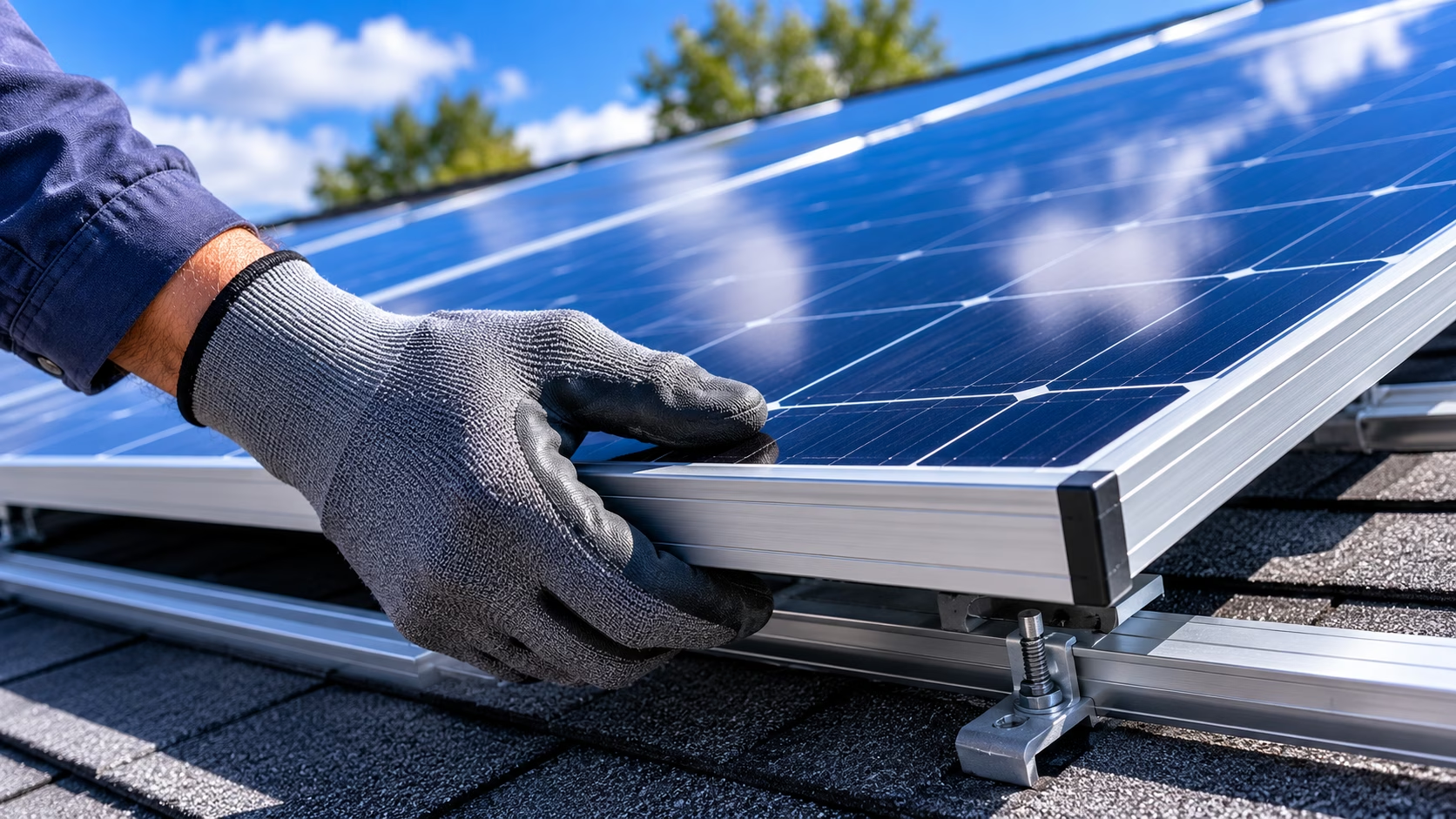
But here's where contractors see real damage: body weight. Standing or kneeling directly on a panel during cleaning concentrates force on a small area, and tempered glass that shrugs off hail can develop invisible micro-cracks under a 180-pound technician's knee. These cracks don't shatter the panel. They spread slowly, killing cell output over months. Never put direct weight on the glass — work from the frame edges or use extension tools instead.
Long-Term Impacts: Do Solar Panels Go Bad?
Not the way a lightbulb does. Do solar panels go bad? They degrade, not fail. Expect a slow, steady decline in overall energy output across a 25 years expected service life, with most manufacturers guaranteeing 80–85% of original performance at the 25-year mark.
Why Do Solar Panels Degrade?
Three forces drive it. UV exposure breaks down the encapsulant material over time. Thermal cycling — daily heat-up and cool-down — stresses solder joints and cell connections. And improper DIY solar panel maintenance introduces micro-cracks that accelerate cell breakdown years ahead of schedule. Why do solar panels degrade faster than they should? In almost every premature-failure case our team has inspected, it traces back to one of these three, with poor maintenance damage being the most preventable. Normal degradation runs under 0.5% per year. Anything faster points to physical damage, not age.
If your panels are part of an off-grid or mobile setup rather than a fixed roof — a cabin, RV, or boat — the same degradation rules apply, though access and cleaning frequency look different.
Checklist: How to Properly Clean Solar Panels
Knowing how to properly maintain solar panels through regular maintenance prevents premature failure and keeps your ROI high. Here's the exact workflow we run on every service call:
- Shut down the system at the inverter, then confirm both AC and DC disconnects are open.
- Verify zero voltage with a meter if you're a technician — don't assume the switch worked.
- Clean during off-peak hours, early morning or late evening, when panels are cool.
- Rinse loose debris first with a standard hose before any scrubbing.
- Use a soft solar-grade brush or microfiber pad — nothing abrasive, nothing metal.
- Skip harsh chemicals entirely. Plain or deionized water only.
- Never use a pressure washer. Force from the nozzle drives water past seals and stresses cell connections.
- Stay off the glass. Work from ladder access or ground-based poles, not from standing on the array.
- Re-energize the system only after the surface is dry and you've confirmed no loose connections.
This is how to properly clean solar panels without shortening their lifespan or creating a safety incident on your own roof. For a deeper look at keeping output high between cleanings — inverter checks, shading, and monitoring — see our comprehensive battery storage guidesolar guides library for more system-specific maintenance breakdowns.
See what clean panels are actually worth on your roof
Run your system size, location, and utility rate through our calculator to see your real annual production — and how much a missed cleaning cycle could be quietly costing you.