Off-Grid Greenhouse Solar Calculator
Answer 5 questions — get a complete solar system recommendation with the Winter Solar Paradox accounted for. LED warnings, heating loads, and 18-hr photoperiod battery scaling all built in.
Size
Type
& Season
Your state determines peak sun hours — the single biggest driver of system size. Winter vs summer production can differ by 60%.
🌿 Your Greenhouse Solar System Report
The Winter Problem: Why Greenhouse Solar Is Different
The Dark Winter Paradox
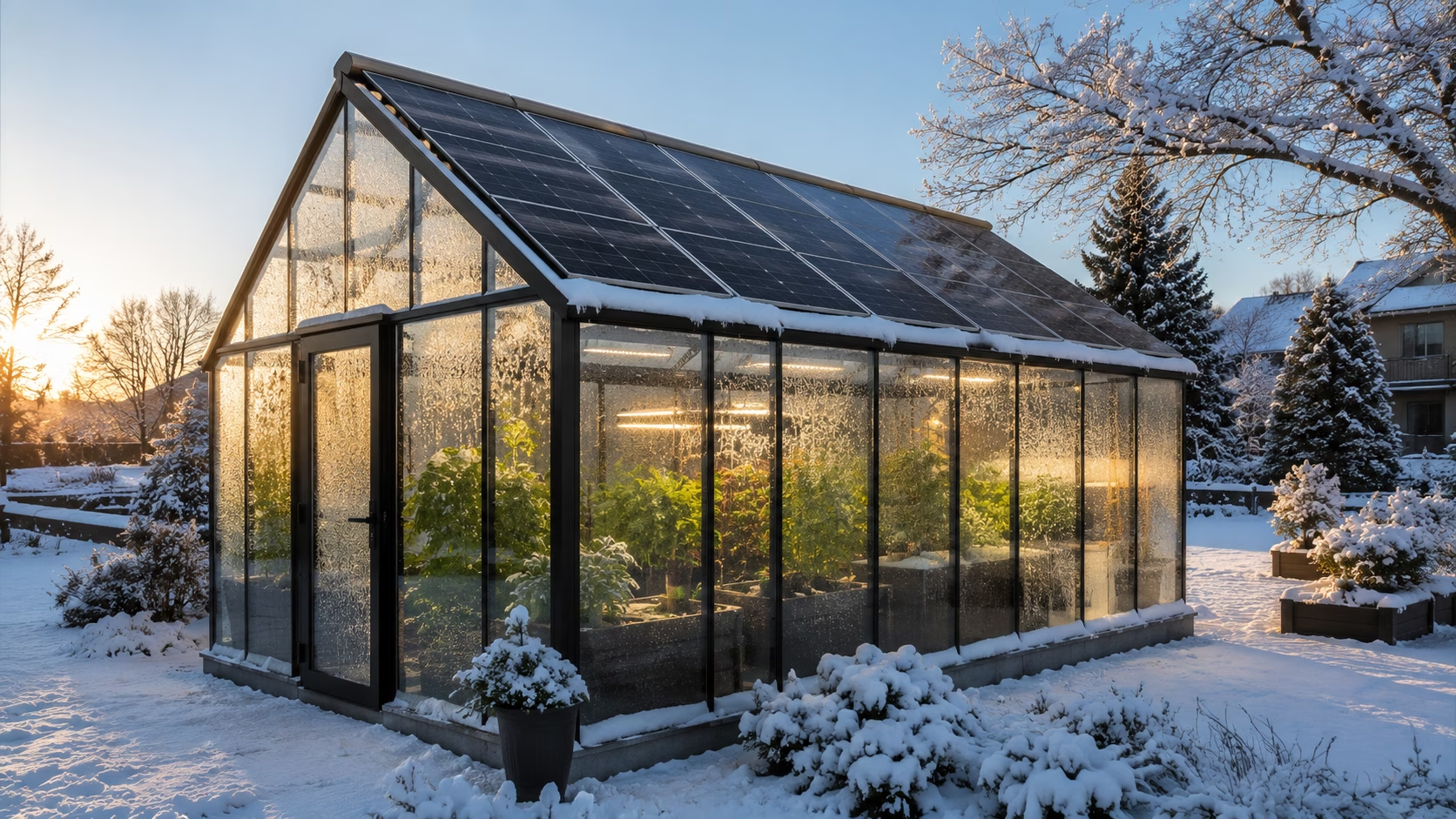
Here's the brutal truth no solar sales rep will tell you at the trade show: greenhouse solar in winter isn't just underperforming — it's working in direct opposition to your crop's survival needs. Your heating load hits its absolute peak in January and February, pulling maximum wattage around the clock, at the precise moment your panels are buried under cloud cover and low sun angles. That's not a minor inconvenience. That's a structural engineering problem.
Growers have discovered this mismatch mid-January with $40,000 in specialty crops on the line. The system ran beautifully all summer. Then the temperature dropped, and everything unraveled.
Sizing for the Worst-Case Scenario
A system sized for summer cooling is almost criminally undersized for a winter heating load. Electric space heaters running at 1,500W to 3,000W each, combined with soil warming cables under your growing beds, can pull 6,000W to 9,000W continuously — for 12 or more hours overnight when panels produce exactly zero output.
To cover that load with battery storage alone, you're looking at 72kWh to 108kWh of usable capacity per night. That's not a residential solar kit. That's a small commercial installation with a price tag to match. Most growers planning a greenhouse solar setup for winter simply don't run those numbers before purchasing.
The Solar Panels Greenhouse Winter Problem: The Numbers Don't Lie
| Parameter | Summer Performance | Winter Performance | Greenhouse Impact |
|---|---|---|---|
| Solar Array Output | 100% Efficiency Peak | 30%–50% Production Drop | Severe power deficit |
| Active Energy Demand | Low (Fans & Pumps only) | Extreme (1,500W+ Heaters) | Risk of crop freeze |
| Peak Sun Windows | 5.5–6.5 Hours | 2.5–3.5 Hours | Minimal charging window |
The Actionable Survival Guide
Stop thinking about buying more panels as the answer. The smarter play is attacking your thermal mass and envelope first. Line your north wall with dark-painted 55-gallon water barrels. They absorb daytime solar heat passively and release it through the night — no wattage required. Done right, these two moves alone can slash your overnight heating load by 25% to 40%.
For truly brutal freeze weeks, pair a modest solar kit with a propane backup heater. Running gas during a 72-hour cold snap costs a fraction of what you'd spend sizing your battery bank for that worst-case scenario. Solar powers a greenhouse beautifully in three seasons. In winter, it needs a partner.
↑ Ready to calculate? Scroll up.
Solar by Greenhouse Size: The Sizing Matrix
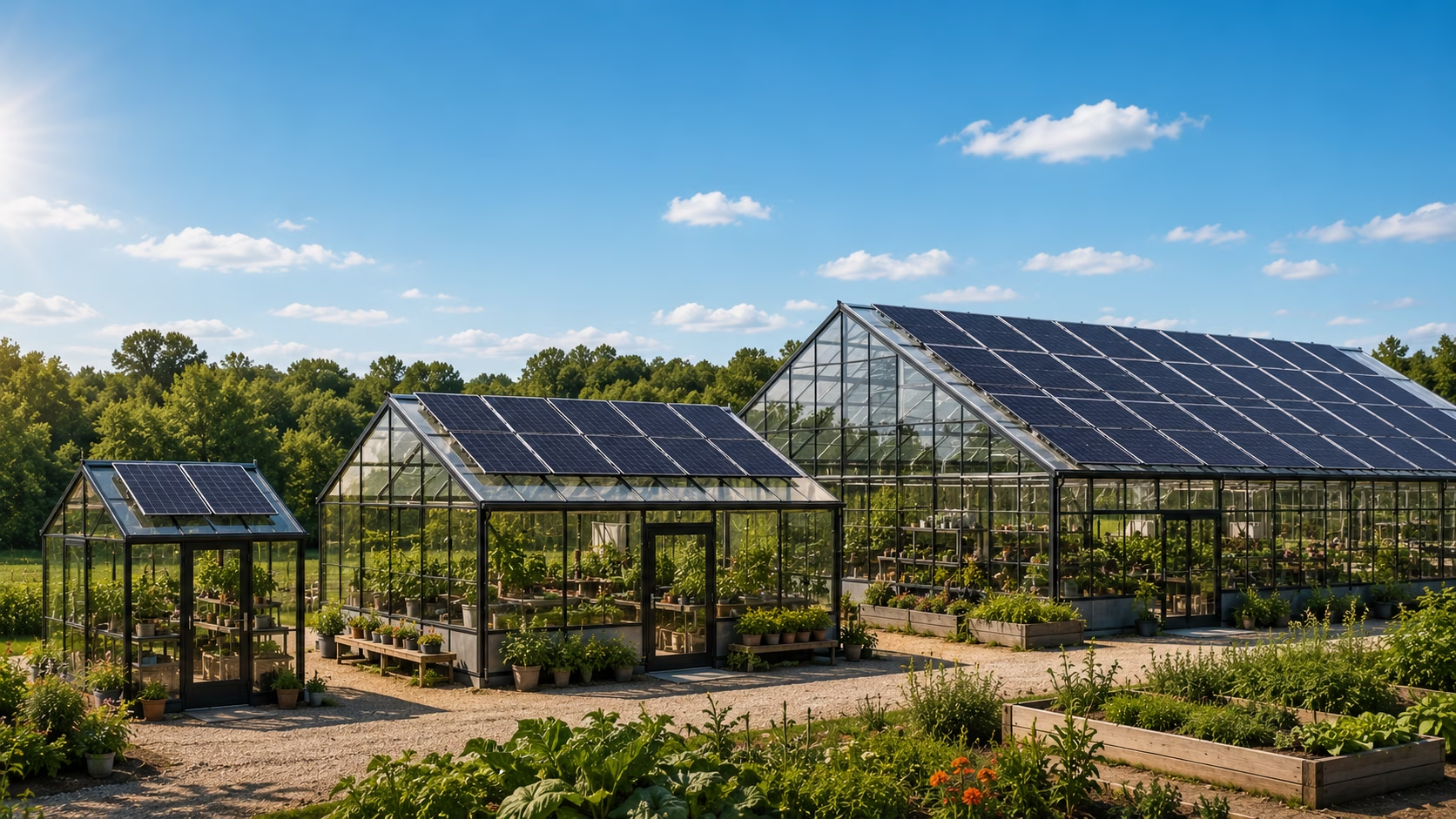
Sizing a greenhouse solar system isn't guesswork — it's a direct function of your square footage, your equipment list, and how many hours each piece of that equipment runs per day. Get that math wrong and you're either dumping money into oversized hardware or watching your battery bank crash at 2 AM when your circulation pump won't shut off.
The Sizing Matrix
| Size | Daily Load | Solar Needed | Battery | Cost Estimate |
|---|---|---|---|---|
| Under 50 sq ft | 400–800 Wh | 400W | 2 kWh | $1,500–$2,500 |
| 50–150 sq ft | 1,200–2,500 Wh | 800–1,200W | 5 kWh | $2,500–$4,500 |
| 150–400 sq ft | 3,000–5,000 Wh | 1,500–2,000W | 10 kWh | $4,500–$8,000 |
| 400+ sq ft | 5,000–8,000 Wh | 3,000W+ | 15 kWh+ | $8,000–$15,000 |
These configurations assume standard load profiles: automated ventilation fans, low-wattage supplemental lighting, water circulation loops, and timed irrigation valves. Continuous winter resistance heating will push every number up significantly.
Mid-Sized Grow Setups: 150–400 Square Feet
Once you cross the 150 sq ft threshold, the engineering conversation changes. A single 12V line can't efficiently carry the sustained draw from continuous air exchange fans, small nutrient circulation pumps, and automated irrigation solenoids running in overlapping cycles. At this scale, you move to 24V or 48V integrated systems with a proper inverter/charger combination. A 1,500W to 2,000W array charging a 10kWh lithium battery bank gives you the headroom to absorb those overlapping load spikes without voltage sag killing your equipment.
Commercial Scale: 400+ Square Feet
At 400 square feet and beyond, you're no longer building a solar kit — you're deploying agricultural power infrastructure. One hard rule at this tier: never undersize the battery bank to save upfront cost. A commercial crop loss from a single overnight power failure will cost more than the upgrade would have.
↑ Ready to calculate? Scroll up.
LED vs. HPS Grow Lights: Solar Impact
Your lighting choice doesn't just affect your plants — it dictates the entire cost architecture of your solar system. Before you spec a single panel or price out a battery bank, the LED vs. HPS grow lights solar power decision needs to land first. Everything downstream from inverter sizing to structural roof loading flows directly from that one call.
The Reality of the Grid Footprint
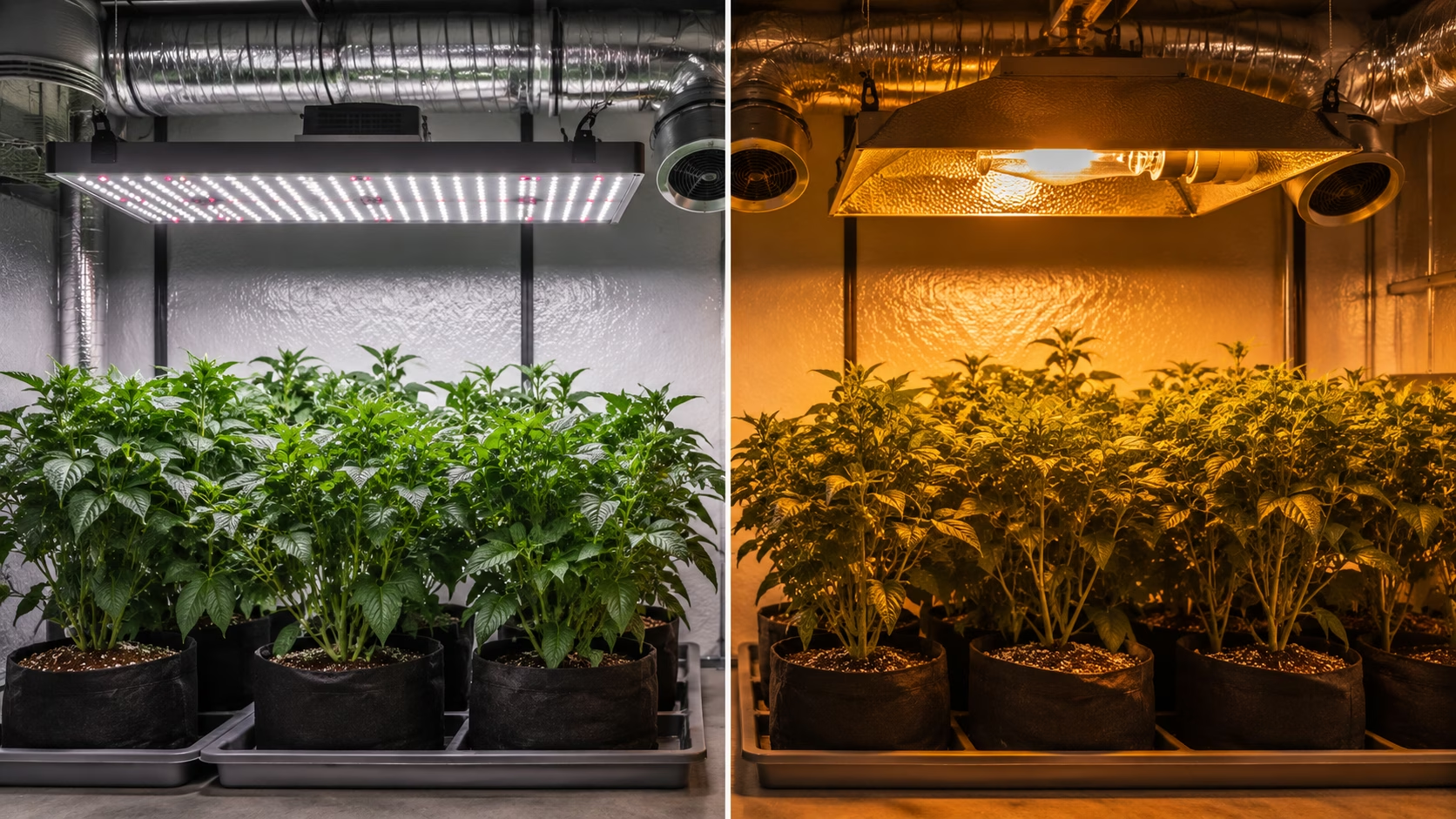
| Light Type (4-Fixture Array) | Total Running Load | Required Solar Array | Minimum Battery Bank |
|---|---|---|---|
| Standard HPS (1,000W each) | 4,000 Watts | 8,000W – 10,000W | 32kWh – 40kWh LiFePO4 |
| Modern LED (300W each) | 1,200 Watts | 2,500W – 3,000W | 10kWh – 12kWh LiFePO4 |
A legacy 1,000W HPS fixture doesn't just pull hard on your panels — it compounds the problem by dumping massive thermal load into your canopy zone. That heat signature forces your ventilation system to run longer and harder, which stacks additional draw on top of your already-stressed battery bank. You're paying twice: once for the light, again for the cooling it demands.
The Operational Verdict
Switching from HPS to LED doesn't just cut your panel count — it immediately downsizes your inverter rating, your lithium battery bank, your mounting infrastructure, and your cooling load. Every component in the chain gets smaller, cheaper, and easier to install on day one. The LED fixture pays for its own premium price by making everything else in your solar build cost less. That's hard capital savings you can put directly back into your growing operation.
↑ Ready to calculate? Scroll up.
Greenhouse Heating With Solar: What Actually Works
Here's the mistake seen constantly on hobby greenhouse forums: a grower drops a 1,500W resistance space heater into a small solar kit and wonders why their battery bank collapses before midnight. That single appliance pulls more continuous wattage than every other greenhouse load combined. Running it for 10 hours overnight demands 15 kWh of stored energy — roughly the entire usable capacity of a mid-tier residential battery system, gone before sunrise.
Solar greenhouse heating doesn't work through brute force. It works through precision targeting and thermal physics.
What Actually Works
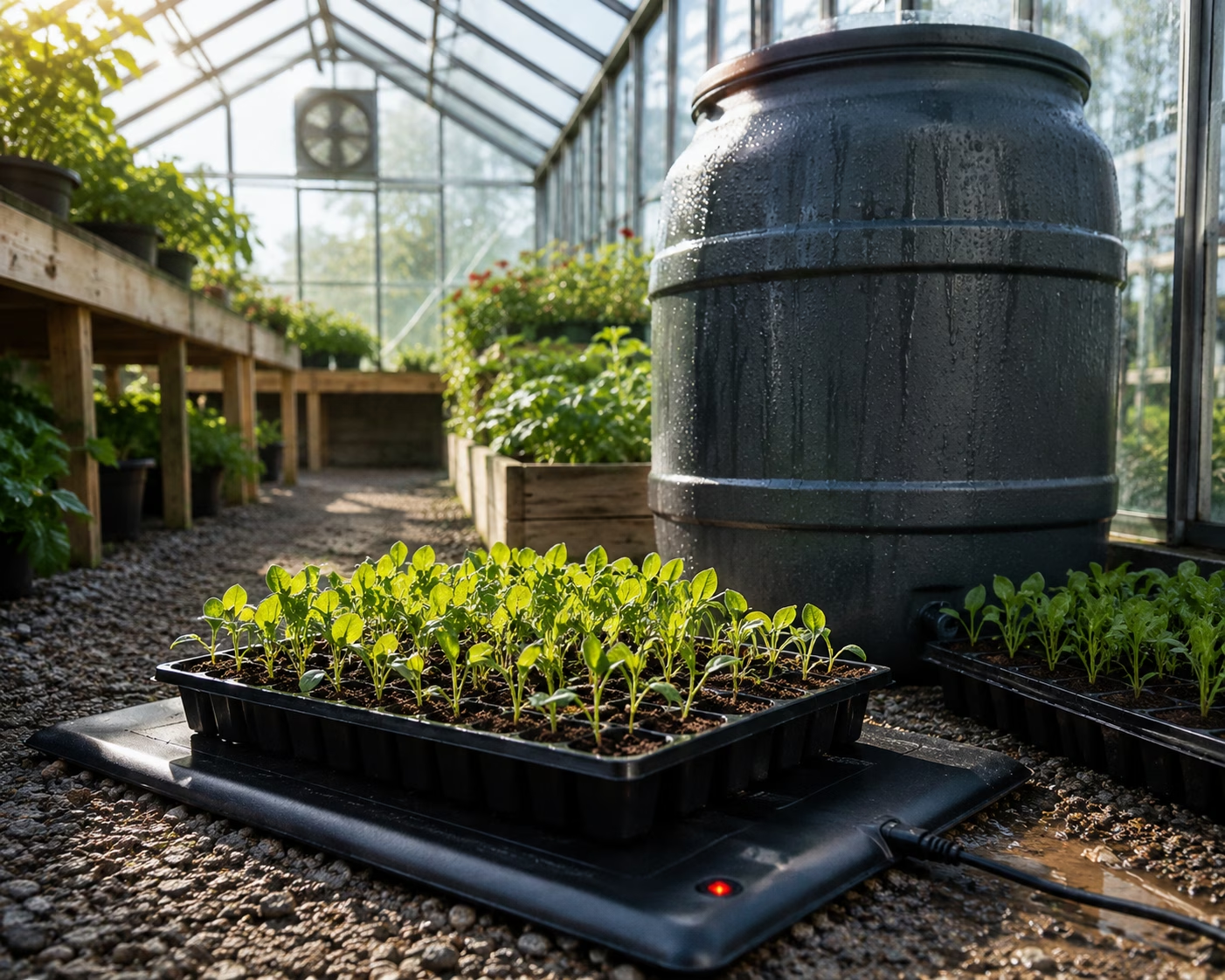
Stop trying to heat cubic feet of cold air. Start heating root zones. A heat mat setup running at 20W to 40W per mat delivers warmth directly to the biological zone that matters most — the root mass and germination bed. Four heat mats running simultaneously pull roughly 80W to 160W total. Compare that to a 1,500W solar powered greenhouse heater running the same hours. The mat array consumes roughly one-tenth the stored energy to protect the same crop value.
The Smart Passive-Active Hybrid
The highest-performing solar greenhouse heating setups pair low-wattage active hardware with engineered passive thermal storage. Line your north interior wall with dark-painted 55-gallon water barrels. Each barrel stores roughly 8 BTUs per gallon per degree Fahrenheit of temperature differential — absorbing solar gain through your glazing all day and radiating stored heat back through the night. A bank of six barrels can cut your active BTU/hr deficit by 40% to 50% on a calm, clear winter night.
Combine that passive bank with your heat mats and a small 12V DC circulation blower, and you've built a heating system that a modest solar array can actually sustain through a hard winter.
↑ Ready to calculate? Scroll up.
Year-Round Growing: Off-Grid Greenhouse Solar Setup
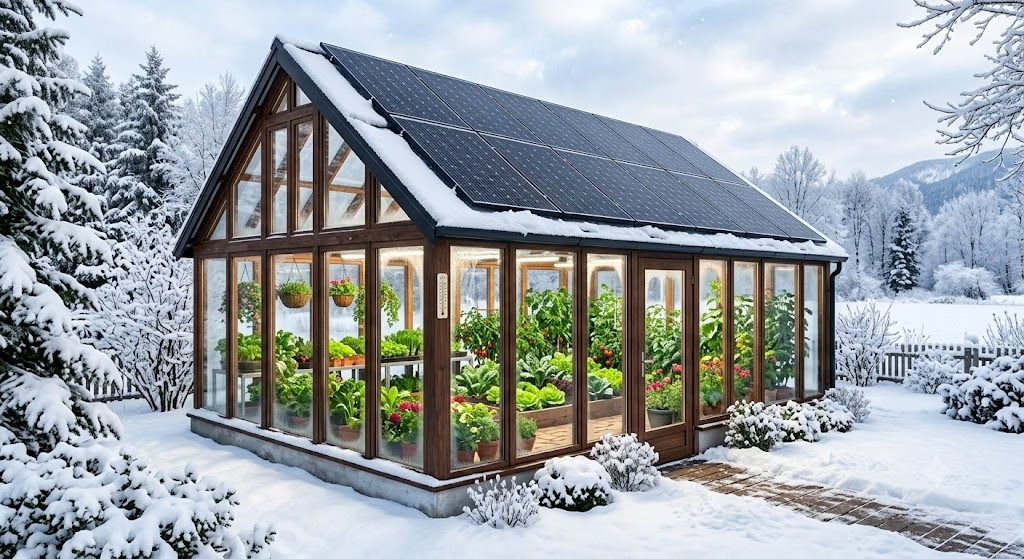
A fully off-grid greenhouse is only as reliable as its worst day of the year. Design your array around July and you'll hit January with a system that can't keep your root zones alive past 10 PM. Every panel count, every battery cell, every wire gauge in an off-grid greenhouse solar year-round build must trace back to one baseline: the December solstice at your specific latitude.
The Seasonal Balance Sheet
| Seasonal Phase | Solar Generation | Equipment Priority | Strategy |
|---|---|---|---|
| Winter Peak Load | 30%–40% (Minimum) | Root Heat Mats, LED Lights | Strict conservation & thermal mass backup |
| Summer Surplus | 100% (Maximum) | Cooling Fans, Misters, Pumps | Run heavy active cooling; dump excess load |
| Shoulder (Spring/Fall) | 70%–80% (Stable) | Automated Ventilation & Irrigation | Balance battery cycles; system maintenance |
Managing Summer Abundance
Don't let your charge controller bleed excess energy into a dump resistor. A solar powered greenhouse all-seasons layout puts that summer surplus directly to work. Run your high-volume extraction fans continuously during peak afternoon hours instead of cycling them on thermostats. Fire your automated soil misting arrays on aggressive 20-minute intervals. Route surplus power into a deep-well water pump to top off irrigation storage tanks — energy converted directly into water reserves.
Panel Tilt Angle Optimization
One adjustment delivers more seasonal output than most growers expect: steepen your array to 60°–65° before the winter solstice. That angle catches the low southern sun arc more directly, maximizes collection during your critical short-day window, and sheds snow load off the panel face naturally. Then flatten back to 30°–35° before June to handle the high overhead sun angle. Two tilt adjustments per year squeeze the performance equivalent of one or two additional panels out of hardware you already own. In a year-round build where every kilowatt-hour in January is mission-critical, that optimization isn't optional — it's load-bearing engineering. See our panel angle calculator for precise seasonal tilt recommendations.
↑ Ready to calculate? Scroll up.
Greenhouse Solar — FAQ
A small backyard greenhouse under 150 sq ft typically needs 800W–1,200W of solar — two to three 400W panels. Paired with a 5kWh LiFePO4 battery bank, this handles automated ventilation fans, a small exhaust fan running 4–6 hours, basic LED grow lighting, and timed drip irrigation. A 10×12 greenhouse (~120 sq ft) lands squarely in this tier. Add heated water pipe loops or supplemental electric heating and panel count climbs to 1,500W–2,000W.
Yes — but only if sized correctly for winter conditions, not summer averages. Winter peak sun hours drop 40%–60% depending on your state. In Ohio or Washington, you may have only 2.5–2.8 peak sun hours in December. A properly winter-sized system uses passive thermal mass (water barrel heat storage), targeted root-zone heating (20W–40W heat mats), and sizes battery capacity for 1.5–2 days of autonomy. For truly brutal freeze weeks, a propane backup heater paired with solar is the smartest engineering choice.
One 300W LED fixture running a 12-hour photoperiod consumes 3.6 kWh per day. Four fixtures = 14.4 kWh daily lighting load. Three to four modern 400W panels in full sun generate enough to offset one fixture's complete 12-hour run with margin for cloudy days. A mid-tier array of 1,500W–2,500W handles four LED fixtures comfortably, paired with a 10kWh–15kWh battery bank. Running an 18-hour photoperiod doubles your minimum battery requirement.
LED, without question. A 4-fixture HPS setup draws 4,000W and requires an 8,000W–10,000W solar array with 32kWh–40kWh of battery storage. The equivalent LED setup draws 1,200W and needs a 2,500W–3,000W array with 10kWh–12kWh of storage. LED drops your panel count by 60–70%, shrinks your inverter, halves your battery bank, and eliminates the secondary cooling load that HPS heat forces onto your ventilation system. The upfront premium on LED fixtures is recovered entirely in solar equipment cost savings on day one.
Yes — hydroponic systems are actually well-suited to solar. Water pumps, nutrient circulation loops, and environmental monitors are all continuous low-draw loads that pair cleanly with a steady battery bank. A hydroponic water pump draws 50W–80W. A complete small hydroponic setup with LED lighting, pump, environmental controller, and ventilation typically pulls 400W–800W continuously. A 1,200W–2,000W solar array with a 5kWh–10kWh LiFePO4 battery handles this reliably. The critical design rule: ensure your inverter is pure sine wave to protect sensitive EC meters and nutrient dosing electronics.
That depends entirely on how you heat it. A single 1,500W electric resistance heater running 10 hours overnight requires 15kWh of stored energy — that demands roughly 6,000W–8,000W of panels in a cold-state region just to charge the battery daily. Switch to 4 seedling heat mats at 20W each (80W total) and that same heating goal needs only 800W in daily generation. The smart approach: use passive thermal mass + low-wattage root-zone heat mats for solar-powered heating, with propane backup for hard freeze events.
A 14-hour photoperiod demands that your battery bank carry a significant portion of that lighting load overnight when panels aren't producing. Calculate your total daily Wh from all appliances, then multiply by 1.5 for 1.5 days of autonomy. For a small greenhouse with two 100W LED fixtures running 14 hours (2,800Wh from lighting alone) plus 800Wh in other loads = 3,600Wh daily. Battery needed: 3,600 × 1.5 = 5.4kWh minimum. Add 20% margin for real-world efficiency and you're sizing for approximately 6.5kWh–7kWh of LiFePO4 capacity.
A complete off-grid greenhouse solar system ranges from $1,500–$2,500 for a micro setup under 50 sq ft, up to $8,000–$15,000 for a commercial-scale 400+ sq ft facility. Mid-range small-to-medium systems (50–400 sq ft) typically run $2,500–$8,000 including panels, LiFePO4 battery bank, MPPT charge controller, pure sine wave inverter, and mounting hardware. The biggest cost levers are grow light type (LED vs HPS can swing total system cost by $3,000–$5,000) and whether you include winter heating loads in the design baseline. See our 2026 solar panel cost guide for current component pricing.