Food Truck Solar Sizing & ROI Calculator
Answer 5 questions — get panels, battery, inverter sizing, full cost breakdown, and generator savings report.
Type
Peak sun hours determine how much power your panels generate each day — and vary significantly by region.
🚚 Your Food Truck Solar System Report
Can Solar Actually Replace a Generator for Food Trucks?
That generator under your service window is loud, it stinks, and it eats through fuel costs before you serve your first customer. Every food truck owner has asked the same question at some point: can you ditch it entirely and run on solar? The honest answer is — it depends almost entirely on what you're cooking.
The Truth About Food Truck Solar vs. Generator
If your menu is built around propane-fired equipment, replacing your food truck generator with solar is not only possible — it's genuinely smart business. If you're running a full electric kitchen with commercial deep fryers and induction ranges pulling 10,000+ watts, solar alone won't cut it. Understand that distinction first, and everything else falls into place.
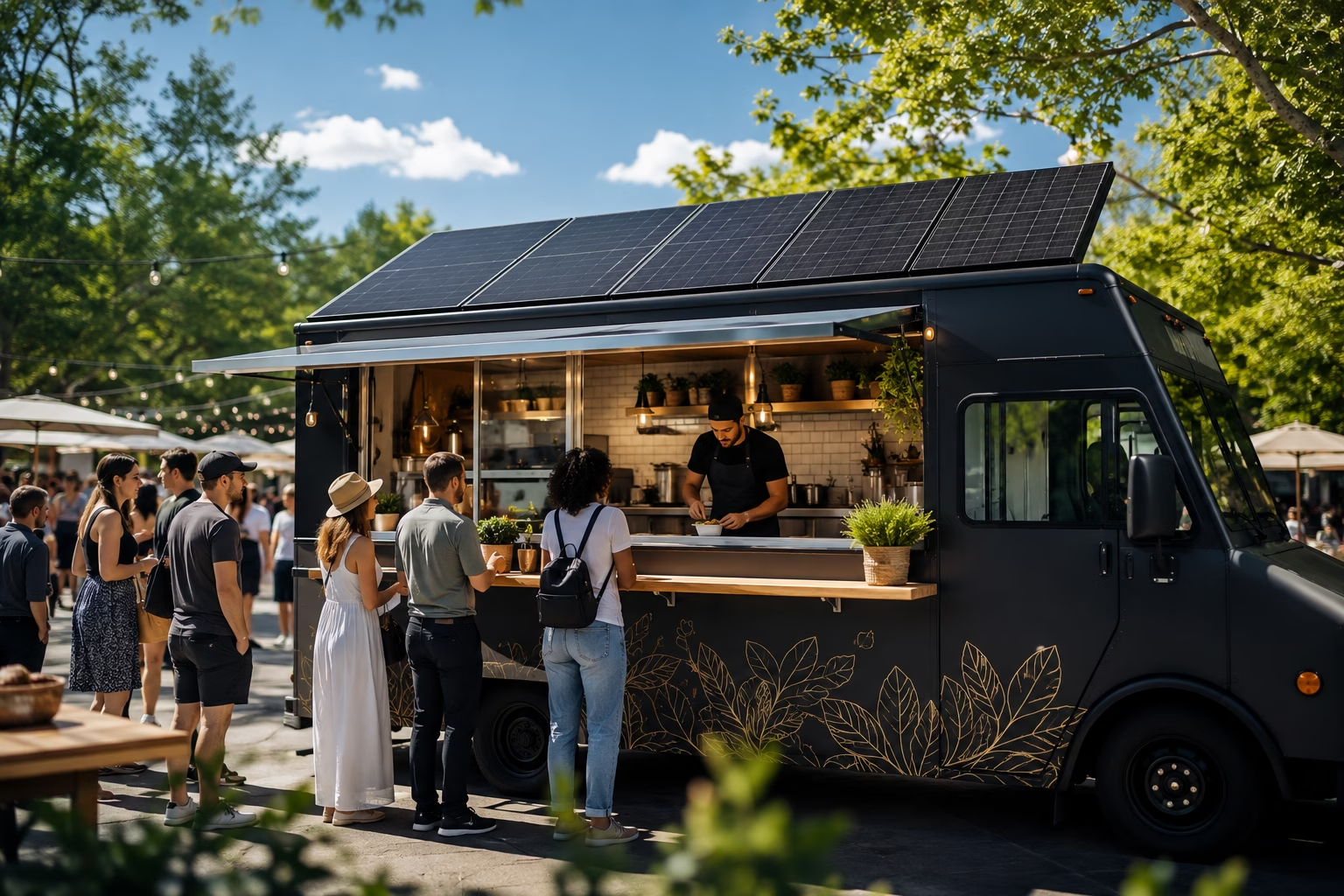
The Propane + Solar Combo — and Why It Actually Works
Here's the Golden Rule every experienced mobile builder follows: use propane for heat, solar for electricity. Let your burners, griddles, and fryers run on gas. Let your lithium battery storage and solar array handle refrigeration, ventilation hoods, LED lighting, and POS registers.
That split makes the math work. A typical commercial refrigeration unit draws 400–600 watts. Your POS system pulls under 150W. Lighting, a ventilation fan, and a phone charger add maybe another 200W combined. A 1,000–1,500W solar array with a solid LiFePO4 battery bank handles that load comfortably through a full service day.
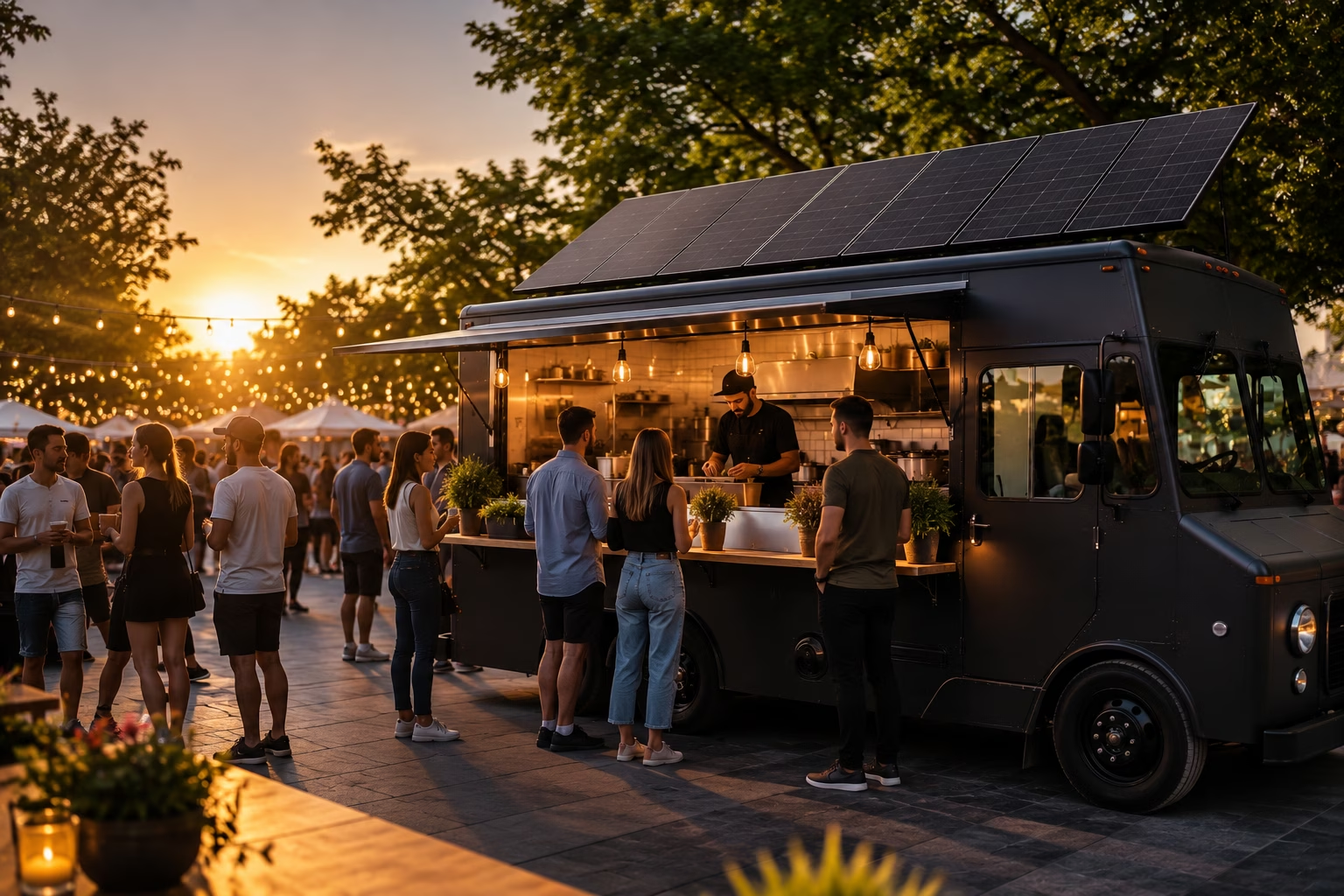
There's also a business case that numbers alone don't capture. A quiet truck draws people in at outdoor festivals. Customers linger longer when they're not breathing exhaust fumes. That directly affects your ticket count.
The 4 Food Truck Solar Scenarios
Before you spend a dollar on panels, know which category your truck falls into:
| Truck Type | Solar Verdict |
|---|---|
| Coffee / Beverage | ✅ 100% Solar Possible |
| Propane cooking + electric fridge | ✅ Solar Recommended |
| Full electric kitchen | ⚠️ Hybrid Only |
| Large concession trailer | Solar Supplement Only |
A coffee or beverage truck runs espresso machines and blenders — but those loads are short bursts, not sustained draws. Startup surges matter here, so size your inverter to 2–2.5x your peak wattage. A propane cook truck is the sweet spot for going solar. A full electric kitchen with induction ranges and electric fryers needs a hybrid generator backup — the kilowatt draw is simply too aggressive for a roof-mounted system.
Before You Buy a Single Panel
Get a dedicated peak-load assessment done first — not an average consumption estimate, a peak load audit that maps every motor, heater, and resistive load against the worst-case scenario of a full lunch rush. That number tells you what your inverter must handle, and everything else — battery capacity, panel count, charge controller sizing — flows from there.
↑ Ready to calculate? Scroll up.
Food Truck Solar Roof Space: How Many Panels Fit?
Your budget isn't the biggest obstacle when you go solar on a food truck. Your roof is. That flat rectangle above your kitchen determines everything — how much power you generate, what gear you can run, and whether your system pays off. Before you order a single panel, you need to know exactly what you're working with up there.
The Real Estate Challenge
Every food truck solar roof space calculation starts with one number: usable square footage. Not total roof area — usable area. Those two numbers are very different, and mixing them up is the fastest way to spec a system that underdelivers on day one.
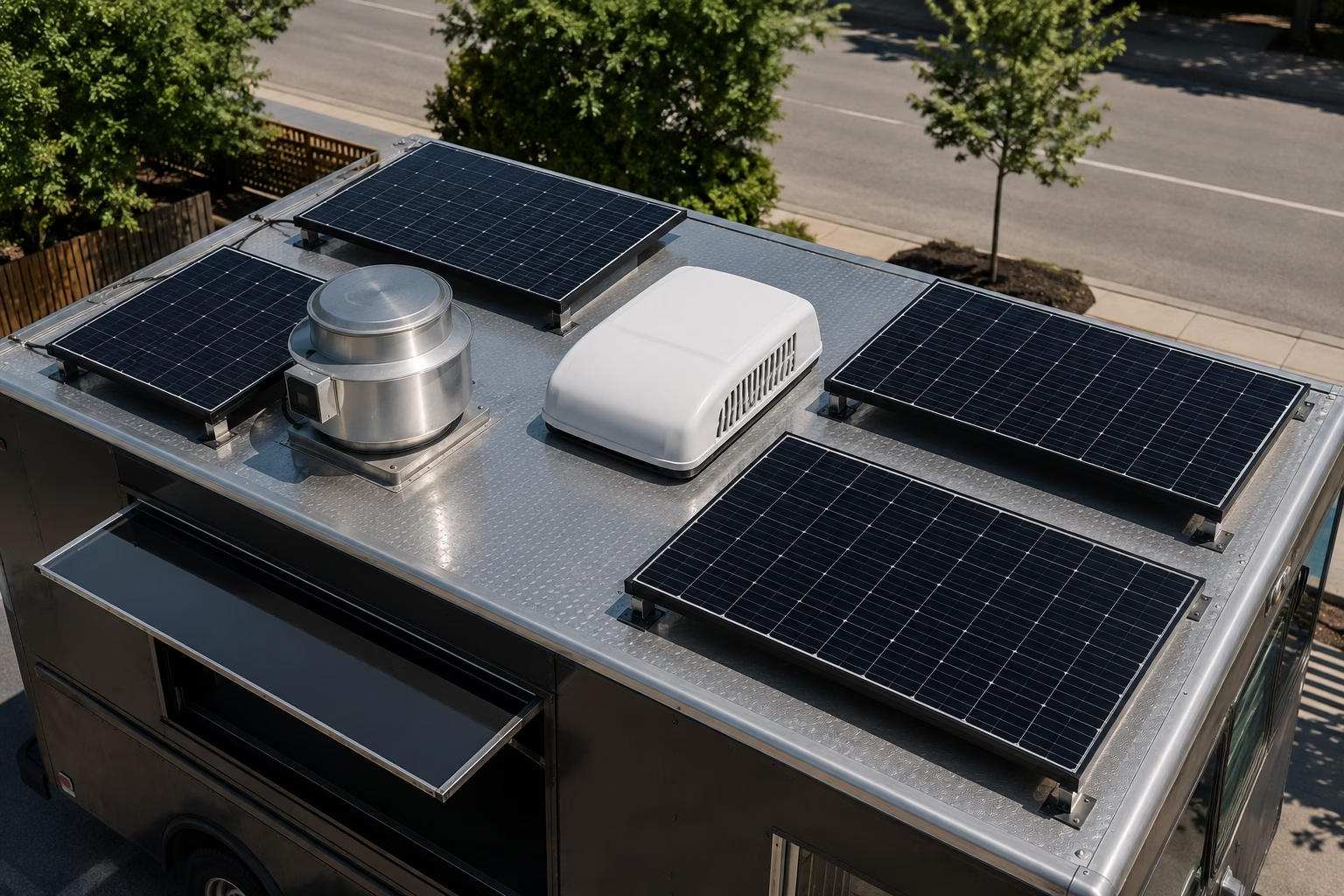
A 200W monocrystalline panel runs roughly 17.5 sq ft. A 400W panel sits closer to 21–23 sq ft. Stack those against your available deck space and you get a hard ceiling on how many solar panels fit on a food truck roof.
Truck Length vs. Solar Capacity
| Truck Length | Roof Space | Max Solar |
|---|---|---|
| 14 ft | ~40 sq ft | 800W |
| 20 ft | ~60 sq ft | 1,500W |
| 26 ft | ~80 sq ft | 2,000W |
| 30 ft trailer | ~100 sq ft | 2,500W |
These numbers assume real-world obstacles already subtracted out. A 20-foot truck gets you roughly 1,500W — enough to handle refrigeration, lighting, ventilation, and a POS system with a properly sized 400Ah LiFePO4 battery bank. Push to a 30-foot trailer and you're approaching 2,500W, which opens up more aggressive loads when paired with a 3,000W–5,000W pure sine wave inverter.
The Hidden Roof Obstacles
A clean roof blueprint and an actual food truck roof are two completely different things. Commercial exhaust hood fans, rooftop AC shrouds, and health department ventilation penetrations eat into your available deck fast. On a 20-foot truck, those obstacles alone can eliminate 15–20 sq ft of otherwise usable panel space.
Walk your roof before you design anything. Mark every penetration, every raised fixture, and every area where panel mounting hardware physically can't anchor safely. What looks like 60 sq ft on paper often shrinks to 40 usable sq ft once you account for clearances around moving components and vent stacks.
Builder Advice That Actually Saves Space
Spec high-efficiency monocrystalline panels — they deliver the most watts per square foot, which matters enormously on a constrained roof. If your layout still falls short, fabricate a custom overhang rack that extends 6–10 inches past the roofline on the non-service side. Done right, that addition can net you one extra panel without compromising structural integrity or road clearance.
↑ Ready to calculate? Scroll up.
Food Truck Solar Cost vs Generator Cost: Real Numbers
Most food truck owners make the same financial mistake when they evaluate mobile power: they look at the purchase price and stop there. That single-line comparison makes a gas generator look like the obvious winner. Run the full five-year operating model and that conclusion falls apart fast.
The Upfront Numbers Don't Tell the Whole Story
A gas generator costs $2,000–$5,000 to put on your truck. A properly built food truck solar system in 2026 runs $8,000–$20,000 depending on panel wattage, battery bank capacity, and inverter grade. That gap looks decisive on day one. It isn't.
| Cost Factor | Gas Generator | Solar System |
|---|---|---|
| Upfront Cost | $2,000–$5,000 | $8,000–$20,000 |
| Monthly Fuel | $200–$400 | $0 |
| Annual Maintenance | $1,200 | $100 |
| Noise Level | 80–100 dB | 0 dB |
| 5-Year Total Cost | $18,000–$30,000 | $9,000–$21,000 |
Quantifying the Real Solar Food Truck ROI
The $1,200 annual generator maintenance figure isn't padded. Oil changes, air filter swaps, carburetor cleans, voltage regulator failures, and unexpected field breakdowns on a busy Saturday — that number reflects real commercial operating conditions. Eliminating it entirely from your P&L on day one of solar operation is an immediate $1,200 annual gain before you count a single dollar of fuel savings.
Add the fuel elimination. At a conservative $300/month average, that's $3,600 per year flowing back into your business. Combined, a food truck operator running 180+ service days annually recovers $4,800 per year in hard costs. Against a mid-range solar investment of $12,000, that math produces a net positive return inside 30 months.
The solar system's LiFePO4 battery bank carries a 10-year performance warranty. Your generator needs a full overhaul or replacement inside that same window.
The Revenue Angle Nobody Puts in the Spreadsheet
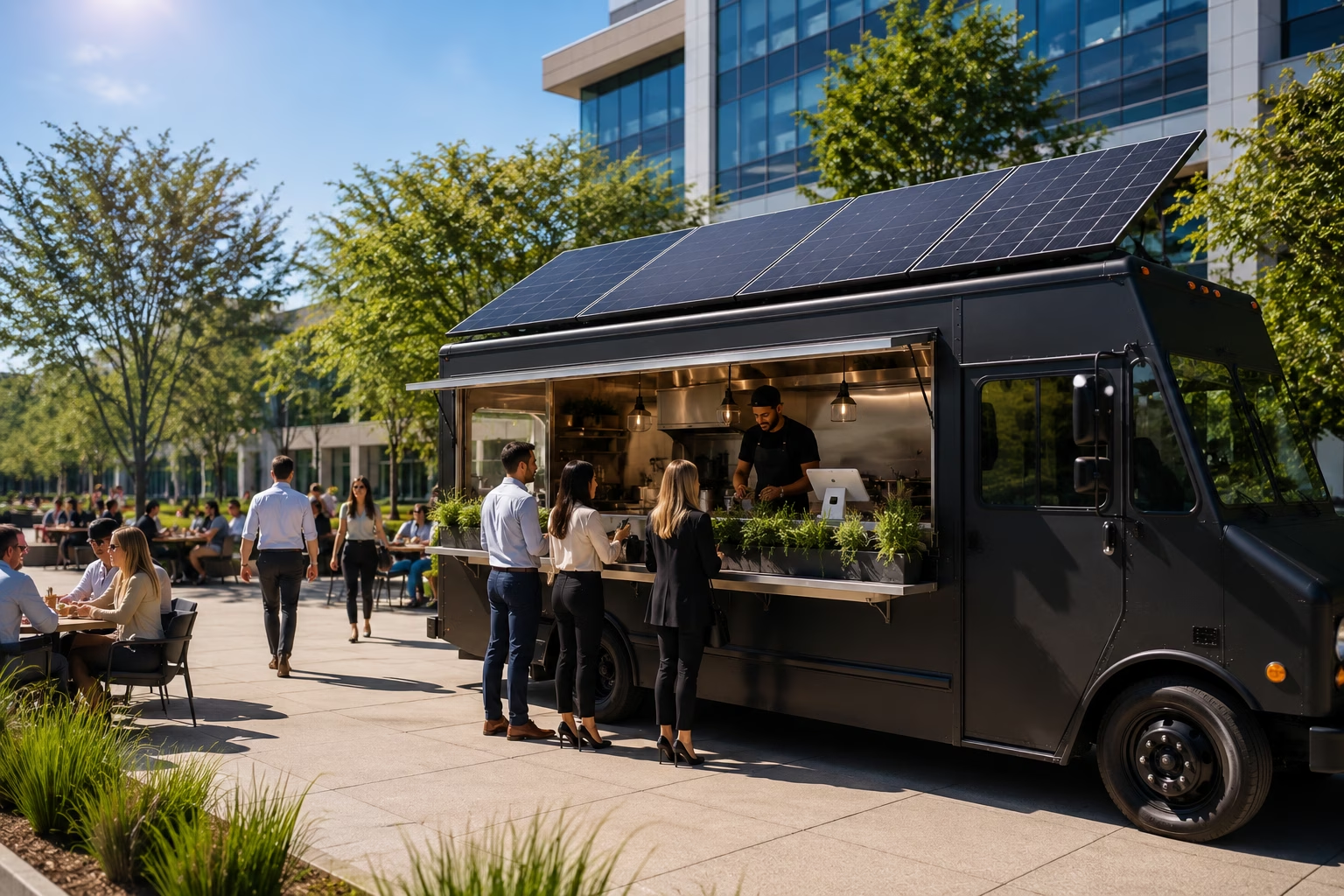
A silent truck opens doors a 90 dB generator permanently closes. Premium farmers markets, corporate campus lunch programs, rooftop venues, and high-end festival circuits routinely ban loud generator-powered vendors outright — or push them to the lowest-traffic corners of the lot. A 0 dB solar system qualifies your truck for those revenue channels. When you ask how much a food truck solar system costs, the sharper question is: what is staying on a generator actually costing you?
↑ Ready to calculate? Scroll up.
City Generator Noise Bans: Is Your City Affected?
Your food truck's biggest business threat in 2026 isn't a slow Saturday or a bad location. It's a noise violation notice taped to your service window by a municipal code enforcement officer. Cities banning generator-powered food trucks are no longer outliers — they're setting the new standard, and the operators who don't adapt are losing permits, not just customers.
The Regulatory Landscape Is Shifting Fast
Over 47 US municipalities have enacted enforceable decibel-level restrictions that directly target mobile food vendors. These ordinances concentrate hardest in historic downtown districts, public park zones, and residential boundary corridors — exactly the high-traffic locations where food trucks generate their best revenue days.
The enforcement mechanism is simple and brutal. A standard gas generator runs 80–100 dB under commercial load. The municipal code in a growing number of cities caps allowable noise at 55–60 dB at the property boundary. That gap isn't a technicality — it's a clear, documentable violation on every single service day.
| City / Location Type | Decibel Limit | Penalties & Impact |
|---|---|---|
| Albuquerque, NM | <55 dB (at boundary) | Direct municipal code fines |
| NYC & Chicago Parks | Tightening restrictions | Permit cancellation risks |
| Historic Downtowns | Under 60 dB rules | Strict bans on gas generators |
| Residential Boundaries | Nighttime quiet hours | Early closure enforcement |
Solar Turns a Legal Liability Into a Revenue Advantage
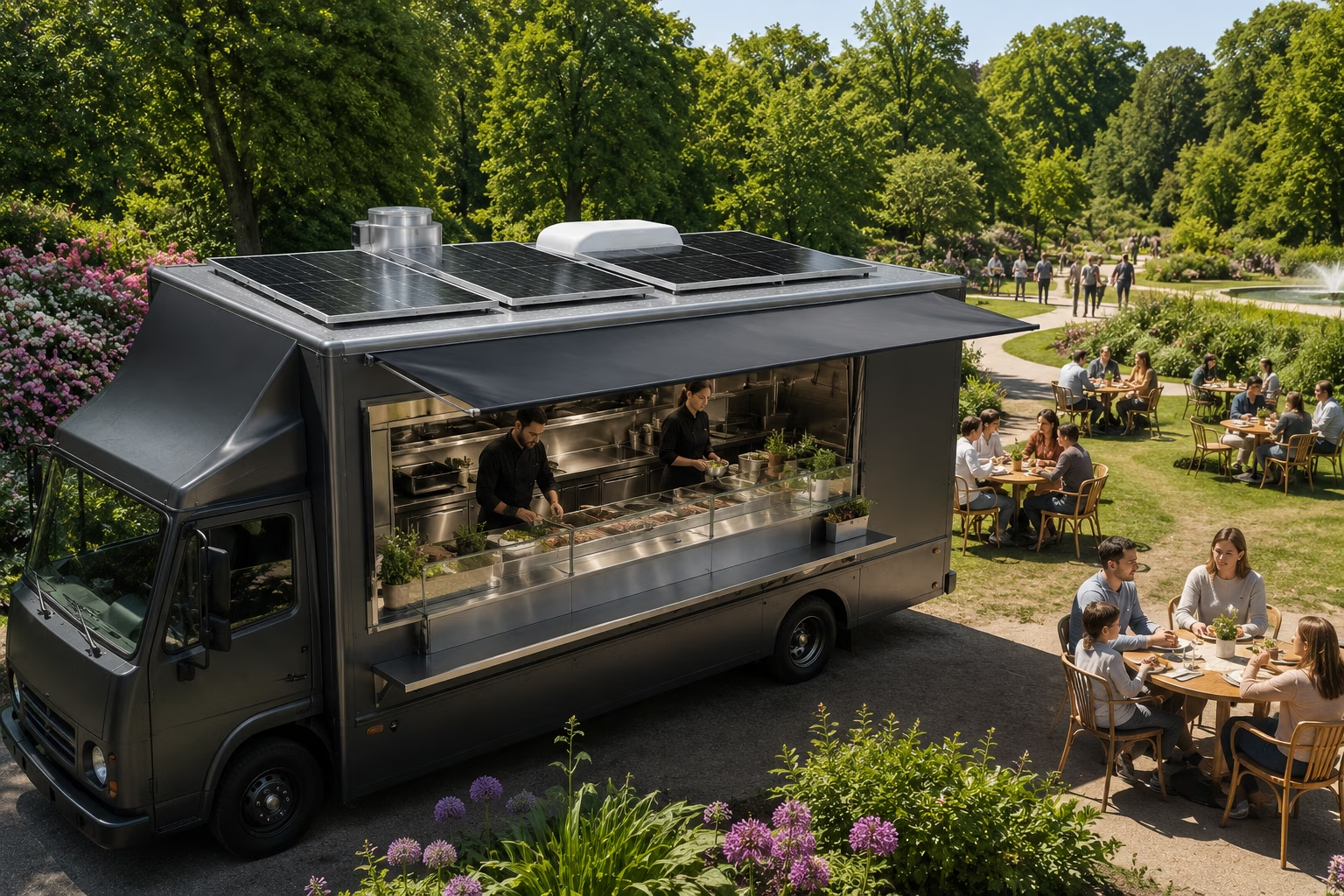
A 0 dB solar system doesn't just keep you compliant — it opens venue categories that gas-generator trucks can't access at any price. Wedding reception venues, botanical gardens, university campuses, corporate park lunch programs, and private festival circuits now write quiet power requirements directly into vendor contracts. Solar food truck operators get the call. Generator operators don't make the shortlist.
Your Two-Line Compliance Action Plan
- Pull your city's current municipal noise ordinance and cross-reference it against your generator's rated dB output under full load — not the spec sheet idle rating manufacturers advertise.
- If your operating locations include any park zones, downtown districts, or residential-boundary markets, treat solar conversion as a compliance investment, not an optional upgrade.
↑ Ready to calculate? Scroll up.
Shore Power vs Solar for Food Trucks at Events
Every weekend you plug into an organizer's shore power connection, you hand over $50–$150 before you flip your first burger. That fee covers nothing except access to an outlet — no guarantee of clean power, no protection against tripped breakers, and zero flexibility on where you park your truck. That's the real opening number in the food truck shore power vs solar conversation.
What the Organizer Fee Actually Costs You
At $100 average per event, a 40-week festival season burns through $4,000 in pure venue power fees — money that produces no asset, no equity, and no return. It just keeps the extension cord legal. A fully deployed off-grid solar setup eliminates that line item from your event P&L on day one of operation.
The reliability problem compounds the cost problem. Venue electrical infrastructure at farmers markets and community festivals often runs on aging panels with undersized breakers. One compressor startup surge from your refrigeration unit trips the shared breaker and takes down three vendors at once. You lose service time and there's nothing you can do about it.
| Factor | Event Shore Power | Off-Grid Solar |
|---|---|---|
| Daily Organizer Fee | $50–$150 per event | $0 (Free power) |
| Setup Reliability | Dependent on venue grid | 100% Independent |
| Location Flexibility | Must park near power poles | Park anywhere for max foot traffic |
| Startup Surge Handling | Can trip weak venue breakers | Managed via local inverter |
| Initial Investment | $0 upfront | Higher upfront asset cost |
Winning the No-Hookup Venues
The highest-margin event slots increasingly appear at historic parks, rooftop markets, botanical garden events, and remote festival fields where food truck power with no hookup is simply the reality. Organizers don't offer shore power because the venue doesn't have it. Solar food truck operators take those slots. Generator operators either get disqualified by noise ordinances or disqualified by the organizer's quiet-vendor policy.
A robust LiFePO4 battery bank paired with a pure sine wave inverter handles your full electrical load — refrigeration, POS, lighting, ventilation — through an entire 8-hour service day with zero venue infrastructure.
The Event Season ROI Calculation
Save $100 per event across a 40-event season and you recover $4,000 annually in eliminated shore power fees. A quality lithium battery and inverter upgrade runs $5,000–$8,000 installed. That math produces a full payback inside 18 months — and every season after that, the power is free.
↑ Ready to calculate? Scroll up.
Food Truck Solar — FAQ
For propane cooking trucks: yes, solar can fully replace a generator. A 1,000–1,500W array with a 200Ah–400Ah LiFePO4 battery handles refrigeration, POS, LED lighting, and ventilation through a full service day. For full electric kitchen trucks, a hybrid solar + shore power or generator backup is necessary — the sustained draw from electric fryers and induction ranges exceeds what a roof-mounted system can practically generate.
It depends on truck length and roof obstacles. A 14-ft truck realistically fits 800W (2–3 panels). A 20-ft truck gets you 1,500W (4 panels). A 26–30 ft trailer can accommodate 2,000–2,500W. Exhaust hood fans, AC shrouds, and vent penetrations reduce usable roof area significantly — always walk your roof and measure usable square footage before spec'ing panel count.
A complete food truck solar system in 2026 ranges from $8,000–$20,000 depending on panel wattage, battery capacity, and inverter grade. A basic propane-cooking truck setup runs $8,000–$12,000. A fully capable system for heavier loads runs $14,000–$20,000. Against $4,800/year in generator fuel and maintenance savings, most mid-range systems reach full payback within 2.5–3.5 years.
Yes — refrigeration is actually the ideal solar load for a food truck. A commercial fridge draws 200W running with 700W startup surge. A commercial freezer runs at 250W with 800W surge. A 1,000–1,500W solar array paired with a 200Ah–400Ah LiFePO4 battery easily handles both units through a full 10–12 hour service day, including overnight hold temperature.
A coffee truck is the ideal solar candidate. Recommended setup: 1,000–1,500W of monocrystalline panels, a 3,000W pure sine wave inverter (sized for espresso machine startup surge), and a 200Ah LiFePO4 battery bank. This handles the espresso machine, blender, POS system, refrigerator, and LED lighting through a full 6–8 hour morning service. Size your inverter to at least 2x your peak wattage to absorb startup surges cleanly.
A properly sized LiFePO4 battery bank powers a typical propane cooking truck through 8–12 hours of service. On a sunny day, your panels replenish the battery in real-time during service, meaning the bank stays near full capacity. On overcast days, a 200Ah bank at 80% depth of discharge provides 4–6 hours of standalone runtime for refrigeration, lighting, and POS without any solar input. Size to 1.5x your daily consumption for reliable all-day coverage.
Yes — solar panels produce 10–25% of their rated output on overcast days. A 1,500W array generates 150–375W on heavy cloud cover. This is why a properly sized battery bank matters: your stored energy from the previous day and morning sun hours carries you through service periods with limited solar input. The Pacific Northwest, for example, averages only 3.5 peak sun hours — systems there are sized larger to compensate for the reduced production window.
Not only is solar allowed — it's increasingly preferred or required. Over 47 US municipalities now enforce generator noise ordinances that effectively ban standard gas generators at outdoor markets and park events. Solar-powered vendors have zero compliance issues and gain access to premium venue categories (botanical gardens, historic districts, university campuses) that explicitly prohibit generator noise. A 0 dB solar system is a competitive advantage, not just a compliance tool.