Most calculators assume you live there every day. Yours sits empty Monday–Friday. That changes the entire math — and cuts your cost in half.
Answer 5 quick questions. We'll size your panels, battery bank, and estimate total cost — using logic built for weekend cabins, not full-time homes.
What size is your hunting cabin?
Cabin size helps estimate baseline insulation and ventilation loads.
How often do you use the cabin?
Empty days = free recharge days — this changes your entire system size.
When and where do you hunt?
Peak sun hours vary by season and state — this directly determines your panel count.
Which appliances will you run?
Select every device you plan to power.
What's your target budget?
Used for contextual recommendations. Won't change the solar math.
Sized for your cabin's actual usage pattern — not a generic full-time formula.
Estimates based on 2026 market pricing. DIY installation assumed. See full 2026 cost guide →
Most solar sizing guides assume someone lives in the space every single day. You don't. And that changes everything.
Your cabin sits empty Monday through Friday. No lights, no fridge running, no one charging anything — just silence and sunshine hitting your panels all day long. Five full days of free charging time with zero load drawing the battery down.
This flips the entire sizing equation. You don't need a massive array to generate everything in one day. You need enough battery capacity to power your weekend, and enough panel wattage to refill that bank across 120 weekday hours.
Two 100W panels produce ~2,000–2,500 Wh across 5 weekdays. A typical cabin weekend uses ~3,000 Wh total. Add a third panel and you're comfortably ahead — for a fraction of what a standard calculator would recommend.
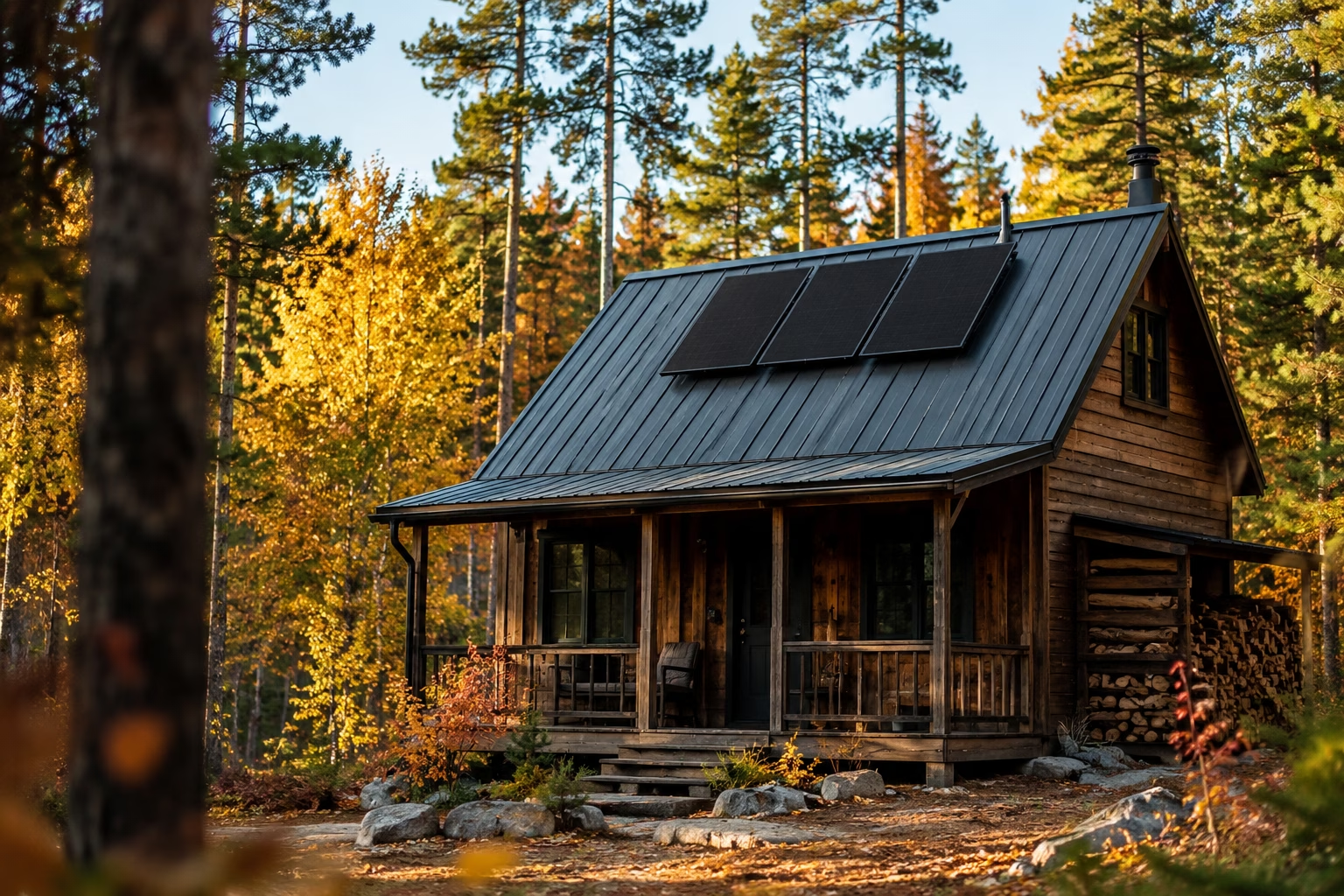
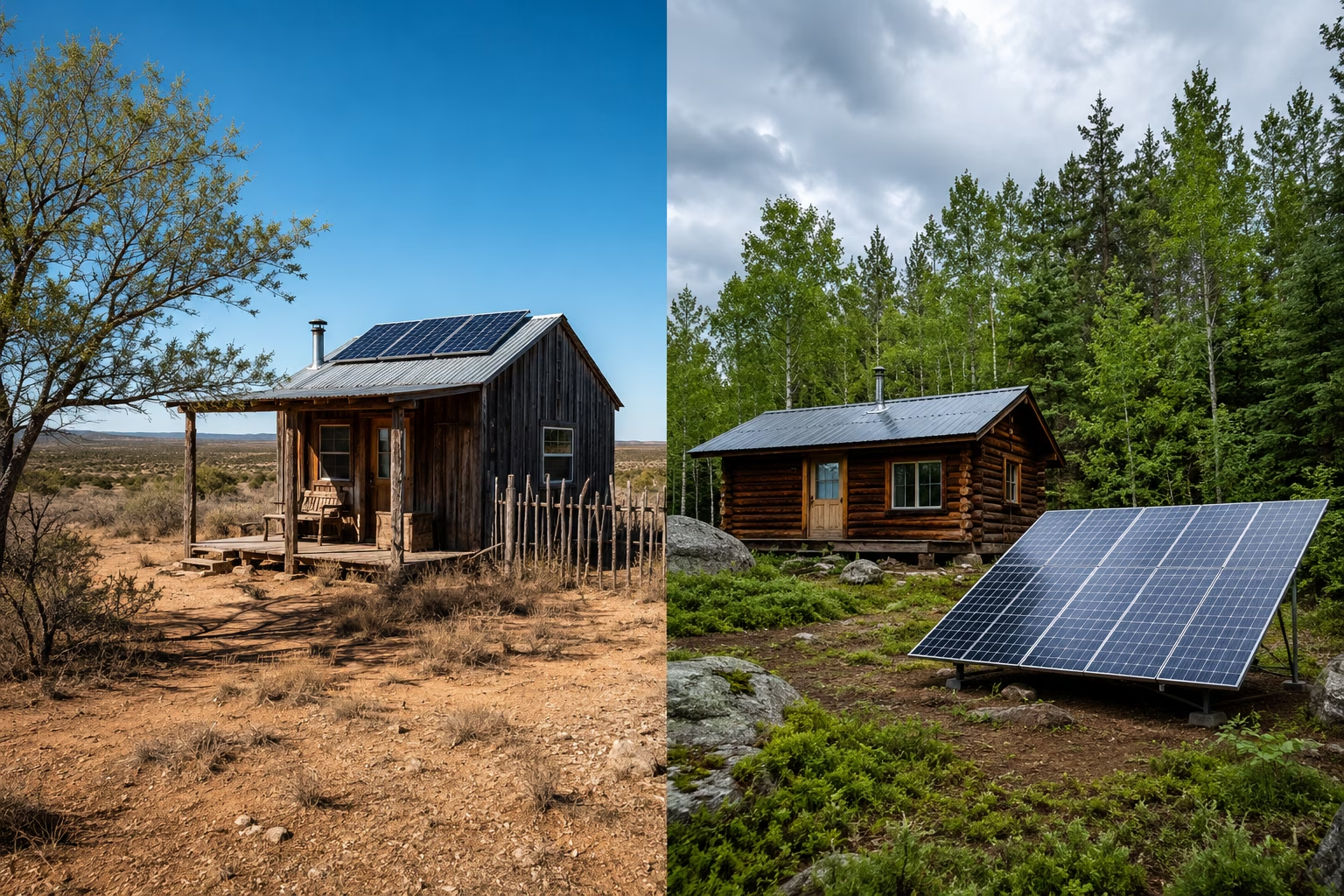
Your location determines your solar system more than anything else. A hunter in Texas and a hunter in Michigan are solving two completely different problems.
Set panel tilt to 50–60°. Snow slides off and you capture the low winter sun angle. Use self-heated LiFePO4 batteries — standard lithium stops charging below 32°F.
The canopy is your real enemy. Scout your clearing before mounting a single panel. A properly placed 400W array beats a shaded 600W array every time. Consider a pole mount.
You win on panels but lose on batteries. Texas heat degrades cells faster than anything. Keep your battery bank inside the cabin in a ventilated space — never in an outdoor metal box in direct sun.
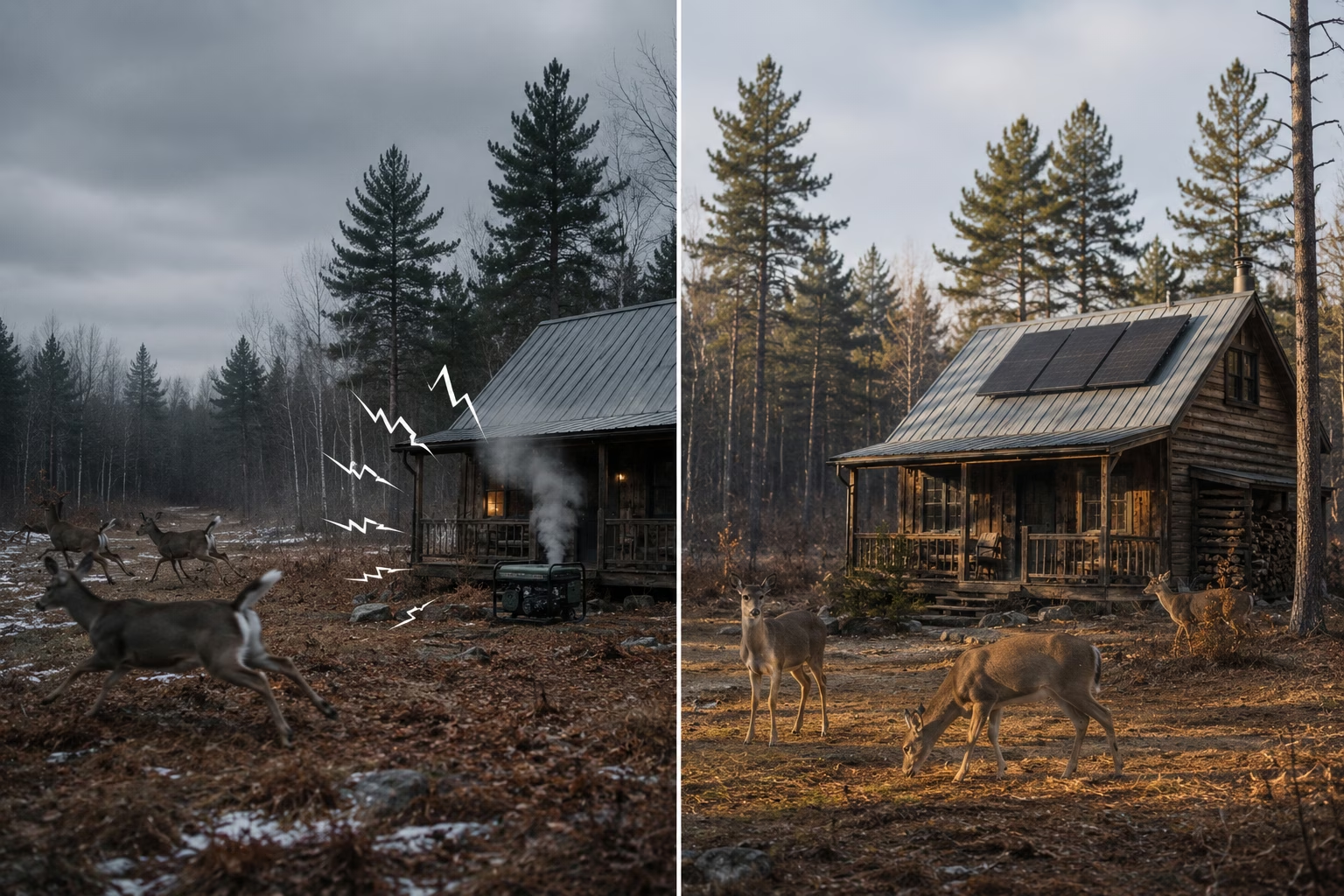
A standard gas generator runs at 65–75 decibels. That sound travels far in still, cold November air — the exact conditions you hunt in.
| Factor | Generator | Solar ✅ |
|---|---|---|
| Noise Level | 65–75 dB (scares game) | 0 dB — silent |
| Ongoing Fuel Cost | $50–$100/season, forever | $0 after install |
| Maintenance | Oil, plugs, carb cleaning | Wipe panels once/year |
| Cold Weather Start | Fails on cold mornings | No moving parts to fail |
| Upfront Cost | $500–$800 | $1,500–$2,500 typical |
| 5-Year Total Cost | ~$2,200+ (fuel + repairs) | ~$1,800 (install only) |
| Blizzard Resilience | Works in any weather | Needs sized battery bank |
Size your battery bank to carry two to three sunless days, and solar handles nearly every real-world hunting weekend you'll throw at it. The generator wins in extended blizzard scenarios — everything else goes to solar.
If you visit six weekends a year, do you really want to bolt $2,000 of solar panels to a remote, unsupervised roof all winter?
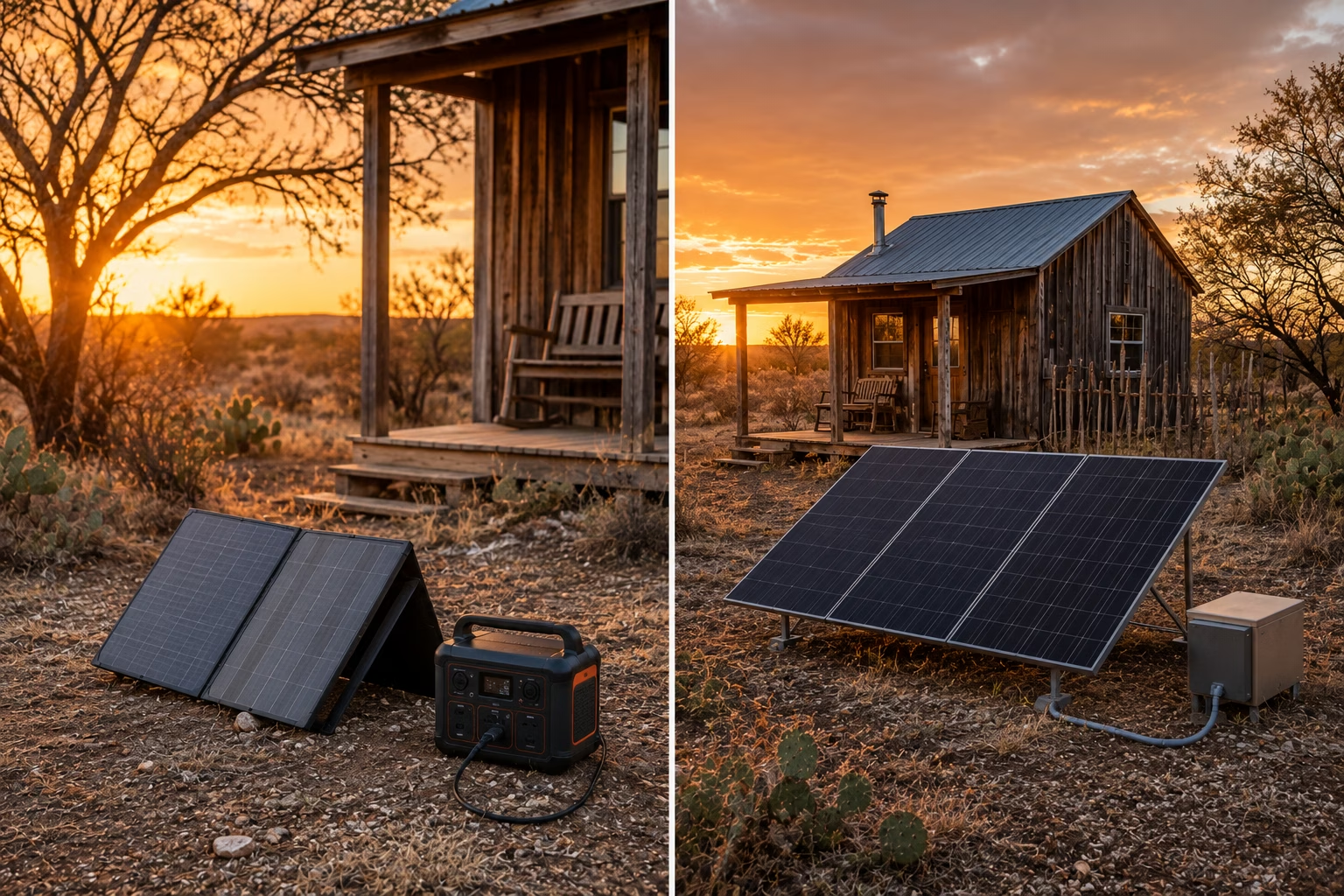
You visit seasonally (6 weekends/year), the cabin is unattended and remote, theft or vandalism is a concern, or you want zero installation complexity. Pack it in, pack it out.
You visit monthly or year-round, you need to run a chest freezer, well pump, or electric heater, and someone local can keep an eye on the property. Requires proper planning and multi-day installation.
1,500W space heaters or full-size chest freezers will tap out portable stations fast. Don't buy a portable unit expecting it to run heating equipment.
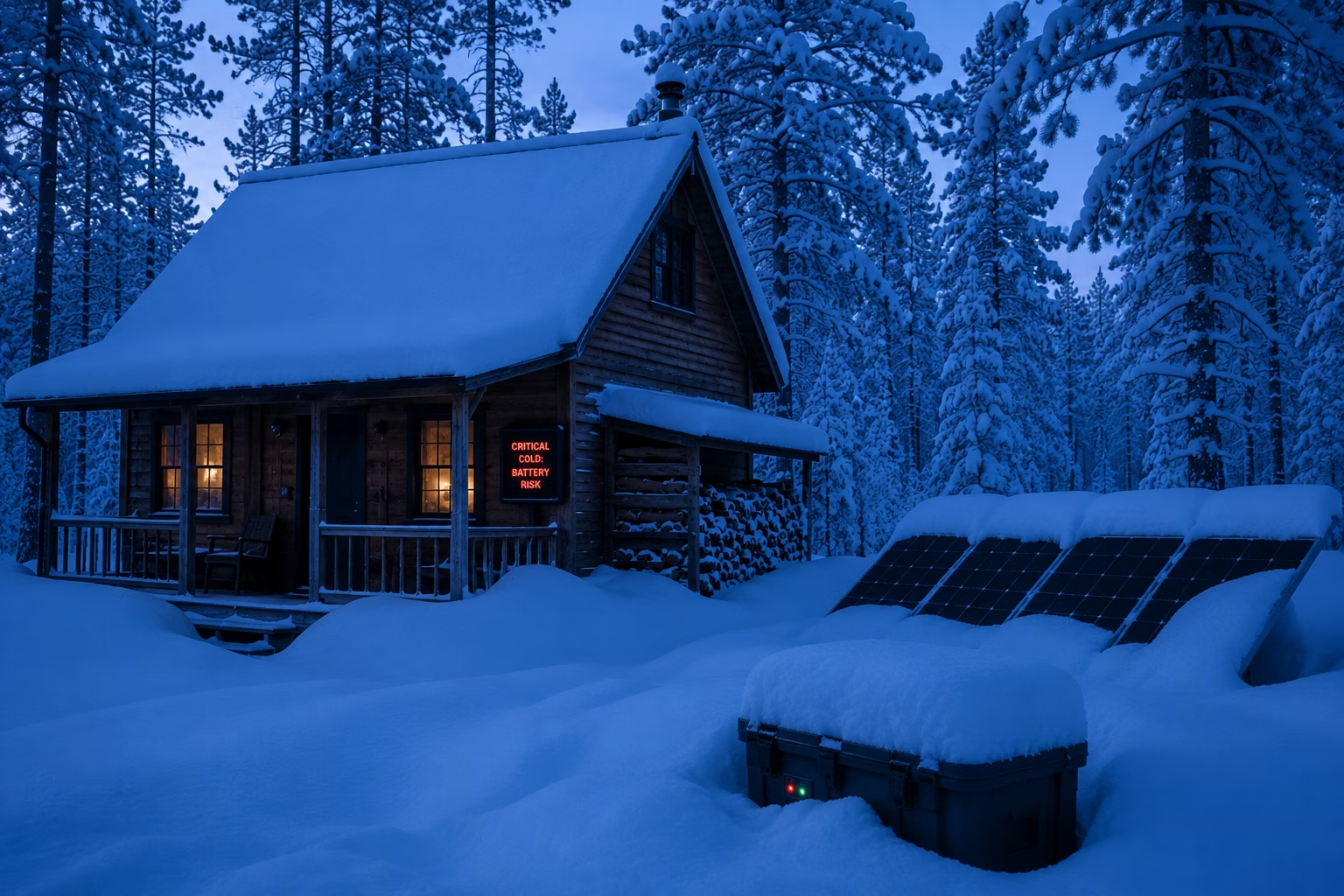
Most hunters worry about snow covering panels. That's not the real winter killer. Temperature is.
Standard LiFePO4 batteries have a hard cutoff: they cannot safely accept a charge below 32°F (0°C). Force a charge in freezing temps and you cause lithium plating — microscopic metal deposits that permanently damage cell capacity. One bad charging cycle can brick cells costing $800.
Your panels keep producing when the sun rises. Your charge controller keeps pushing power. And your frozen battery silently takes damage — or the BMS cuts charging entirely. Either outcome ruins your system.
In Michigan, Wisconsin, and Minnesota, late-season deer hunting means unheated cabins matching outdoor temps within hours of the fire going out. Your battery bank may have been at 15°F for 12 hours before you arrive Saturday morning.
Uses a small amount of solar energy to warm internal cells before accepting a charge. Brands like Renogy and Battle Born make these. The cleanest solution — fully automatic.
Flat panels collect snow like a table. A steep tilt sheds snow overnight and angles panels directly at the low winter sun. This single change recovers hours of lost production.
Wrap your battery bank in rigid foam insulation inside the cabin. It holds residual heat far longer than an exposed battery. Pair with a small generator as emergency backup for extreme cold snaps.
It depends heavily on how often you use the cabin. For a weekend-only setup with basic loads (lights, phone charging, small fridge), 200–400W of panels is often sufficient. Because your cabin sits empty Monday–Friday, those 5 days of solar production with zero load draw means a modest panel array fully recharges your battery bank before you arrive Friday night. A full-season cabin with heavier appliances may require 600–1,000W. Use our calculator above with your actual usage pattern for a precise recommendation.
Yes, a 12V compressor fridge (like a Dometic or ARB) is one of the most common and practical solar loads for hunting cabins. A 12V travel fridge draws roughly 30–50 Wh per day depending on ambient temp — very manageable even on a small system. Avoid standard household mini-fridges that run on 120V AC, as they draw 3–5× more power through an inverter. For a properly sized battery bank, a 12V fridge runs all weekend without issue.
Yes, but it requires specific adjustments for cold climates. The biggest risk isn't low sun hours — it's frozen batteries. Standard LiFePO4 batteries cannot safely accept a charge below 32°F. Solutions include self-heated battery models (Renogy, Battle Born), insulating your battery bank inside the cabin, and setting panel tilt to 50–60° to shed snow and capture low winter sun angles. Northern states like Michigan and Wisconsin also need more panel wattage to compensate for short, weak winter days.
For most hunting scenarios, solar wins on three fronts: it's completely silent (generators run at 65–75 dB, spooking game for half a mile), requires zero ongoing fuel cost, and has almost no maintenance. Generators cost $50–$100/season in fuel indefinitely, plus maintenance, and carry real risk of not starting on cold mornings. Solar's higher upfront cost typically breaks even within 3–5 seasons. The exception: extended blizzard conditions where panels stay buried for multiple days — a backup generator makes sense alongside solar.
A typical weekend cabin with lights, phone charging, and a 12V fridge uses roughly 200–400 Wh per day. For a full weekend (2 days) with 20% safety headroom, a 100Ah 12V LiFePO4 battery handles light loads comfortably. Add Starlink, a TV, or a water pump and step up to 150–200Ah. LiFePO4 is strongly recommended over lead-acid — it delivers full capacity in cold temps, lasts 3–5× longer, and is safe to discharge to 20% without damage. Use our calculator to dial in your exact recommendation.
No. Solar panels produce no noise, no movement, and no scent. Once installed, they're static objects that quickly become part of the landscape. Deer and other game habituate to them rapidly — typically within a few weeks. Angling panels properly (typically south-facing) minimizes any glare toward bedding areas. Solar is far less intrusive to wildlife than a generator running at 70 decibels.
Yes, and for weekend-only setups this is actually a core advantage. Panels charge your battery bank all week while you're gone — so you arrive Friday night to a full charge. Modern MPPT charge controllers handle overcharge protection automatically; once the battery is full, the controller simply stops pushing current. For unattended setups, use a quality charge controller with battery protection settings and ensure your wiring is weatherproof.
For a weekend-only cabin with minimal loads (LED lights and phone charging), you can build a functional system for under $400: one 100W panel (~$80), a 30A MPPT charge controller (~$45), and a 100Ah LiFePO4 battery (~$200–$250). This covers about 200–300 Wh/day — enough for lights, device charging, and a security light. Since your cabin sits empty all week, even this small panel fully recharges the battery every weekday. See more ways to save on solar →