Calculate Your Solar Payback Period Instantly — The Real Numbers Every Homeowner Needs
Table of Contents
- 1. Introduction
- 2. What Is Solar Payback Period?
- 3. Calculate Step by Step
- 4. What Is a Good Payback?
- 5. Payback Period by State
- 6. Federal Tax Credit Impact
- 7. Financing vs Cash ROI
- 8. Real Homeowner Case Studies
- 9. Factors That Speed Up Payback
- 10. Factors That Slow Payback
- 11. Commercial Solar Payback
- 12. Battery ROI
- 13. Common Mistakes
- 14. State Incentives 2026
- 15. FAQs
- 16. Final Thoughts

You've seen the ads. "Go solar and save thousands!" But when you actually sit down and try to figure out if solar makes financial sense for your home, things get murky fast.
Your installer gives you a savings estimate. The solar calculator on some website spits out a number. But none of it feels real — because nobody's walking you through the actual math.
That stops here.
This guide breaks down how to calculate your solar payback period accurately, what affects your solar ROI, and what real homeowners across the USA are actually experiencing — not what the sales pitch promises. For California-specific calculations, also see our Solar Calculator for California Home.
What Is a Solar Payback Period and Why Does It Matter?

The solar payback period is the amount of time it takes for your solar system to generate enough savings to cover what you paid for it.
Simple concept. But getting the number right requires looking at several moving parts together — your system cost, your electricity rate, how much sun your roof gets, whether you have net metering, and what incentives you qualify for.
If your system costs $20,000 after the federal tax credit and saves you $1,800 per year on electricity, your payback period is roughly 11 years.
That's the core formula:
Everything else — financing, battery storage, state incentives — adjusts that number up or down.
How to Calculate Your Solar Payback Period Step by Step

Step 1 — Find Your Net System Cost
Start with the total installation cost. The national average for a residential solar system runs between $18,000 and $30,000 before incentives, depending on system size and location.
Now subtract the federal solar tax credit. In 2026, the Investment Tax Credit (ITC) gives you 30% of your total system cost as a direct credit on your federal taxes.
Example:
If your state offers additional rebates or credits, subtract those too. Some states like New York, Massachusetts, and New Jersey stack their own incentives on top of the federal credit, which can drop your net cost significantly. See a full breakdown of current costs at our Solar Panel Cost 2026 guide.
Step 2 — Calculate Your Annual Solar Savings

This is where most homeowners go wrong. You can't just look at your current electric bill and assume solar will eliminate it.
Your actual savings depend on:
- How much electricity your system produces annually (measured in kWh)
- Your local electricity rate (cents per kWh)
- Whether your utility offers net metering
Example calculation:
If your utility offers net metering, you'll also receive credits for excess electricity your panels send back to the grid. That pushes annual savings higher. Use our Monthly Savings Calculator to run your personal numbers instantly.
Step 3 — Factor in Utility Rate Inflation

Electricity rates in the USA have historically risen about 2.5% to 4% per year. That means your solar savings actually grow over time because you're avoiding a bill that keeps climbing.
A homeowner saving $1,500 per year today might be saving $2,100 per year by year ten — even without touching their solar system.
When you run a solar payback calculator that includes utility rate escalation, your effective payback period often shortens by one to two years compared to a flat calculation.
Step 4 — Divide and Get Your Payback Period
Take your net system cost and divide it by your first-year annual savings.
Formula:
That's a rough starting payback. Now factor in rate inflation, and you might be looking at 10 to 11 years in real terms.
What Is a Good Solar Payback Period?

Anything between 6 and 12 years is generally considered a strong payback period for residential solar in the USA.
The national average currently sits around 8 to 10 years, though this varies heavily by state, electricity rates, and local sunlight hours.
Here's a quick breakdown:
| Payback Period | Rating | What It Means |
|---|---|---|
| Under 7 years | Excellent | You're in a high-rate, high-sun state with strong incentives. |
| 7 to 10 years | Very good | Solid ROI for most homeowners. |
| 10 to 13 years | Average | Still profitable given a 25-year panel lifespan. |
| Over 15 years | Marginal | Worth revisiting system size, financing terms, or state incentives. |
Average Solar Payback Period by State in 2026
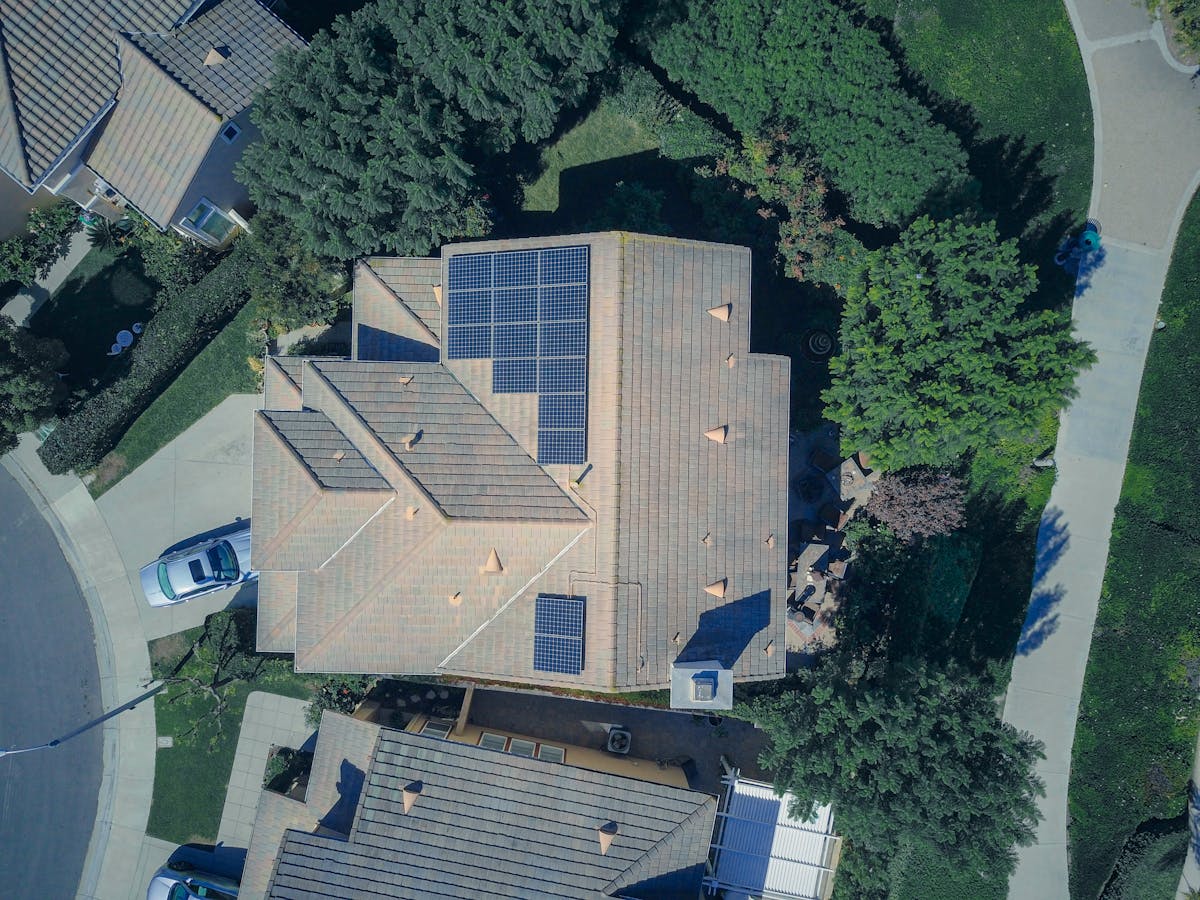
Location is one of the biggest factors in solar ROI. A homeowner in Arizona paying $0.14 per kWh with 300+ sunny days per year faces a completely different financial picture than someone in Washington state paying $0.09 per kWh with frequent cloud cover.
Texas Solar Payback Period
Texas homeowners have seen electricity rates climb sharply in recent years. With average rates now hovering around $0.12 to $0.15 per kWh and strong sun exposure across most of the state, payback periods typically run 9 to 11 years.
Texas doesn't have a state income tax credit, but property tax exemptions on solar installations help reduce the total cost burden. For a detailed Texas-specific analysis, visit our Solar Calculator for Texas Home.
Florida Solar Payback Period

Florida's combination of high electricity rates (averaging $0.13 to $0.16 per kWh), strong sunshine, and a solid net metering policy makes it one of the better states for solar ROI.
Typical payback periods in Florida run 8 to 10 years for cash buyers.
Arizona Solar Payback Period
Arizona is consistently one of the top states for solar production. The average payback period runs just 7 to 9 years thanks to extremely high solar irradiance, rates around $0.12 to $0.15 per kWh, and a 25% state tax credit (capped at $1,000).
Nevada Solar Payback Period
Nevada homeowners benefit from abundant sunshine and electricity rates around $0.11 to $0.14 per kWh. Payback periods typically land between 8 and 10 years.
California Solar Payback Period

California has high electricity rates — often $0.25 to $0.35 per kWh or more in some utility territories — which dramatically shortens the payback period despite higher installation costs.
Many California homeowners see payback periods of 6 to 9 years, even with some of the most expensive solar installations in the country. See our dedicated Solar Calculator for California Home for full details on NEM 3.0 and local rates.
New York Solar Payback Period
New York stacks the federal ITC with a 25% state tax credit (up to $5,000) and a property tax exemption. Electricity rates are high, often $0.20 to $0.25 per kWh. Payback periods typically run 7 to 10 years.
Midwest Solar Payback Periods
States like Ohio, Indiana, and Iowa have lower electricity rates (often under $0.13 per kWh) and less consistent sunshine, pushing payback periods out to 11 to 14 years. Still profitable, but not as fast.
How the Federal Solar Tax Credit Affects Your Payback Period

The 30% federal Investment Tax Credit is the single biggest driver of solar ROI for most American homeowners.
Here's what it actually does to your payback timeline:
| Scenario | System Cost | Annual Savings | Payback Period |
|---|---|---|---|
| Without tax credit | $22,000 | $1,600 | 13.75 years |
| With 30% tax credit | $15,400 | $1,600 | 9.6 years |
That's over four years shaved off your payback timeline — just from one incentive.
Important note: the ITC is a tax credit, not a rebate. You need to owe federal taxes to claim it. If you don't owe enough in year one, you can carry the unused credit forward to the following year.
Solar Financing vs Paying Cash — ROI Comparison

How you pay for solar significantly changes your payback timeline and total ROI.
Paying Cash for Solar
Cash buyers get the cleanest, fastest payback calculation. You eliminate interest costs entirely, and your savings go straight toward recovering your investment.
Example:
Solar Loan Financing
Most solar loans in 2026 carry interest rates between 5.99% and 8.99% for well-qualified borrowers. Monthly loan payments offset your electricity savings, which extends your true payback period.
Example:
In this scenario, you're nearly cash-flow neutral from day one — paying almost nothing extra each month compared to your old electricity bill.
After the loan is paid off in year 12, you're generating $1,800 per year in pure savings for the remaining 13+ years of panel life.
Total profit over 25 years: roughly $15,000 to $20,000 after all costs. Run your own numbers with our Monthly Savings Calculator.
Solar Lease and PPA — Lower ROI, Easier Entry
Solar leases and Power Purchase Agreements (PPAs) let you go solar with zero upfront cost, but you don't own the system. Your savings are smaller, and you typically don't qualify for the federal tax credit.
These arrangements can still reduce your electricity bill 10% to 20%, but they're not where the strong ROI lives. Cash or loan purchases almost always outperform leases over the long term.
Real Homeowner Solar Payback Case Studies

Case Study 1 — Phoenix, Arizona
Homeowner profile: Family of four, 2,400 sq ft home, $220/month average electric bill
System size: 9 kW
Total installation cost: $27,000
Federal tax credit (30%): -$8,100
Arizona state tax credit (25%, capped): -$1,000
Net cost: $17,900
Annual production: 13,500 kWh
Local rate: $0.14/kWh
Annual savings: $1,890
Payback period: 9.5 years
With net metering credits on excess summer production, this family expects to break even closer to 8.5 years.
Case Study 2 — Orlando, Florida
Homeowner profile: Retired couple, 1,800 sq ft, $160/month electric bill
System size: 6.5 kW
Total installation cost: $19,500
Federal tax credit (30%): -$5,850
Net cost: $13,650
Annual production: 9,750 kWh
Local rate: $0.15/kWh
Annual savings: $1,463
Payback period: 9.3 years
This couple financed through a solar loan at 6.5% over 10 years with monthly payments of $154 — slightly less than their old $160 electricity bill, making it nearly cost-neutral from day one. For small home sizing, see our Solar Calculator for Small House.
Case Study 3 — Chicago, Illinois
Homeowner profile: Single homeowner, 1,500 sq ft, $110/month electric bill
System size: 5 kW
Total installation cost: $16,500
Federal tax credit (30%): -$4,950
Net cost: $11,550
Annual production: 5,750 kWh
Local rate: $0.13/kWh
Annual savings: $748
Payback period: 15.4 years
This is a longer payback due to lower production from less sun and a lower electricity rate. Solar still works financially over a 25-year panel life, but the margin is thinner. The homeowner factored in utility rate inflation and expects a 12 to 13-year effective payback.
Factors That Speed Up Your Solar Payback Period

High Local Electricity Rates
The higher your electricity rate, the more valuable every kWh your panels produce. Homeowners in California, New York, Connecticut, and Massachusetts typically see the fastest paybacks because rates are so high.
Strong Net Metering Policies
Full retail net metering — where your utility credits you at the same rate you'd pay for electricity — maximizes the value of excess solar production. States that have weakened net metering policies (like California's transition to NEM 3.0) slow payback periods for new installations.
South-Facing Roof With No Shading
A south-facing roof at a 30-degree pitch in a sunny climate can produce 20% to 30% more electricity than an east or west-facing roof. More production equals faster payback.
Stacking State and Local Incentives
Some homeowners stack the federal ITC with a state income tax credit, a property tax exemption, a local utility rebate, and even a SREC (Solar Renewable Energy Certificate) market income. Together, these incentives can cut the net system cost by 40% to 50%.
Rising Utility Rates
Every time your utility raises rates, your solar system becomes more valuable. A homeowner who locked in a $20,000 system five years ago and is now avoiding $0.25/kWh California rates is collecting far more annual savings than their original payback calculation projected.
Factors That Slow Down Your Solar Payback Period

Financing Costs
Interest on a solar loan doesn't add to your savings — it's a real cost. A $20,000 loan at 8% over 15 years means you pay roughly $9,000 in interest over the loan term. Your payback period needs to account for that total cost, not just the principal.
Low Electricity Rates
If you live in a state where electricity costs $0.09 to $0.11 per kWh (parts of the Southeast, Pacific Northwest), your solar savings per kWh are smaller. Your system has to produce a lot of electricity to make the numbers work within a reasonable timeline.
Poor Roof Orientation or Shading
Trees, chimneys, neighboring buildings, and non-optimal roof angles all reduce production. A system that produces 20% less than expected takes proportionally longer to pay back. Track performance with our Smart Monitoring Solutions.
Oversized System
Buying more solar capacity than you can actually use — especially in states without full net metering — means you're generating electricity you can't fully monetize. Bigger isn't always better when excess power gets credited at a lower rate than retail. See our How Many Solar Panels guide to right-size your system.
Panel Degradation
Solar panels lose a small percentage of their output each year — typically 0.3% to 0.7% annually for quality panels. Over 25 years, a panel rated at 400W might produce around 380W by the end of its life. Good payback calculators factor in this degradation curve.
How Solar Savings Calculators Work

A solar payback period calculator takes your inputs and runs them through a financial model. Better calculators account for:
- Local electricity rates
- Annual rate escalation
- System production estimates based on your location and roof characteristics
- Federal and state incentives
- Financing terms and interest costs
- Net metering policy in your utility territory
- Panel degradation over time
The output isn't just a payback year — it's a full cash flow picture showing year-by-year savings, cumulative profit, and total lifetime return.
The best calculators let you adjust assumptions and see how changes affect your outcome. What happens if electricity rates rise 4% instead of 2.5%? What if you add a battery? What if you take a loan versus paying cash?
That kind of interactive modeling is where solar calculators really earn their value. Try our Solar Calculator to run your own numbers, or explore the broader Solar Calculator USA for national comparisons.
Are Solar Savings Calculators Accurate?

Honest answer: they're as accurate as the inputs you give them.
The biggest sources of error in solar ROI calculations are:
Overestimating production. Some installers use optimistic production numbers to make the system look better on paper. Ask for production estimates based on actual weather data for your zip code, not just theoretical peak sun hours.
Ignoring financing costs. A calculator that shows you gross savings without subtracting loan interest is giving you a misleading picture.
Assuming full bill elimination. Most solar systems are sized to cover 80% to 100% of your usage — but if your consumption rises (new EV, new appliances), you'll still have some utility costs.
Not accounting for net metering changes. If your state's net metering policy weakens during your payback period, your projected savings could decrease.
Use multiple calculators, ask your installer for production estimates backed by real weather data, and run your own spreadsheet using the formulas in this article.
Commercial Solar Payback Period Analysis

Commercial solar installations operate at a different scale — but the fundamentals are the same.
For businesses, solar payback periods typically run 5 to 8 years. Why faster than residential?
- Commercial electricity rates are often higher per kWh
- Businesses can depreciate solar equipment using the Modified Accelerated Cost Recovery System (MACRS), typically over 5 years — a significant tax benefit
- Businesses can still claim the 30% ITC
- Demand charge reduction — solar can lower peak demand charges, which sometimes doubles the effective savings for commercial users
A business installing a $200,000 commercial solar system might see:
The remaining 20+ years of system life then generate pure profit — often $300,000 to $500,000 in cumulative savings for a mid-sized commercial system.
Solar Battery ROI — Does Adding Storage Change Your Payback?
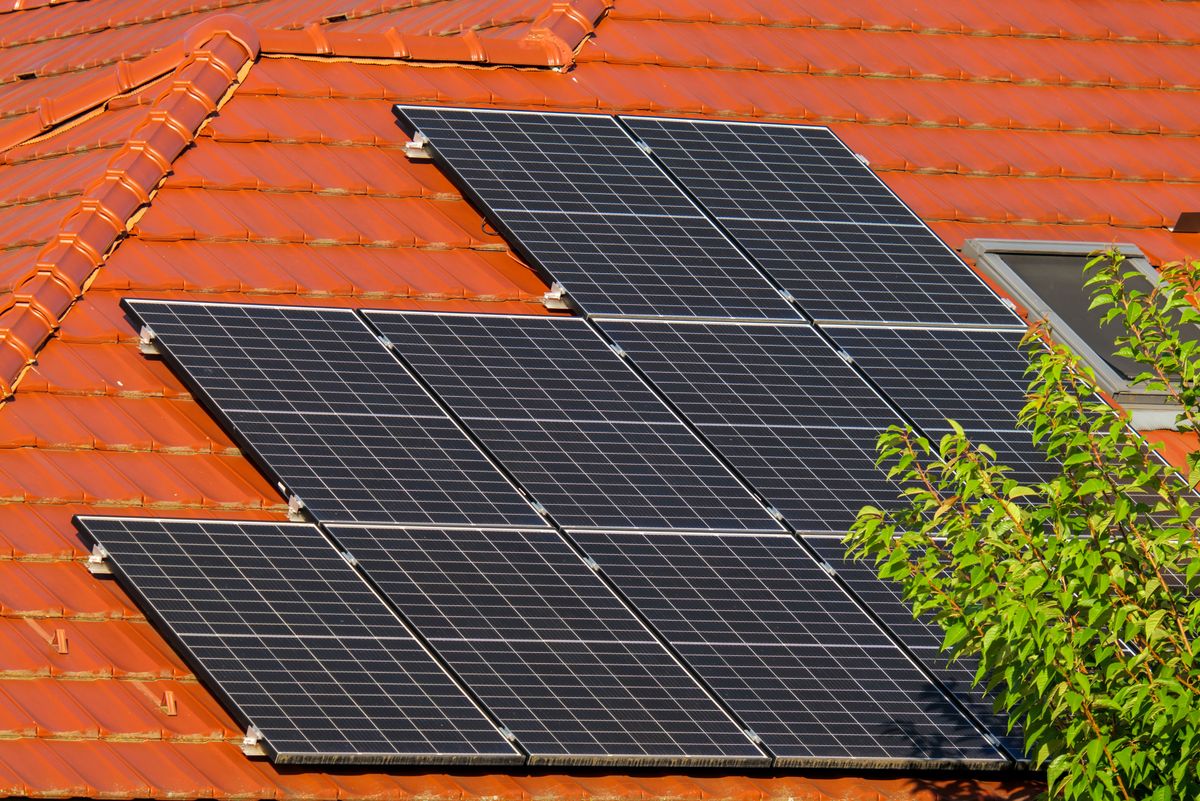
Adding a battery like the Tesla Powerwall or Enphase IQ battery system increases your installation cost, which extends the payback period — unless your situation makes battery storage particularly valuable.
Batteries make the most financial sense when:
- Your utility doesn't offer net metering (or offers poor net metering rates)
- You're on a time-of-use rate where evening electricity costs much more than daytime rates
- You experience frequent power outages and need backup power
- Your utility charges high demand fees
Adding a $12,000 to $15,000 battery to a solar system in California under NEM 3.0 — where selling excess power back to the grid is less lucrative — can actually shorten the payback period compared to solar-only because the battery lets you use more of your own power during peak pricing hours.
In most other scenarios, a battery adds 2 to 4 years to your payback period while providing backup power security. Learn more in our dedicated Battery Storage Guide.
How to Shorten Your Solar Payback Period

You don't have to accept the default payback timeline. Here are strategies that genuinely move the needle:
Maximize Every Available Incentive
Don't just claim the federal ITC. Research your state tax credits, local utility rebates, SREC programs, and property tax exemptions. Layering three or four incentives on top of each other can cut your net cost by 40% or more.
Right-Size Your System
Don't let an installer convince you to buy more panels than you need. A properly sized system that covers 90% to 100% of your usage will generate better ROI than an oversized system where excess production is credited at low rates. Use our Panel Count Guide to find the right size.
Negotiate Installation Costs
Solar installation prices vary significantly between installers. Getting three competing quotes can save $2,000 to $5,000 on a typical residential system. That alone can cut over a year off your payback timeline.
Improve Home Energy Efficiency First
Every kilowatt-hour you eliminate through LED lighting, improved insulation, smart thermostats, and efficient appliances is a kWh your solar system doesn't need to produce. A smaller, cheaper system with the same bill coverage gets you to payback faster.
Choose a South-Facing Roof Section
If your roof has multiple orientations available, work with your installer to maximize south-facing panel placement. More production from the same number of panels means faster payback.
Understanding Solar Panel Lifespan and Long-Term ROI

Your solar payback calculation shouldn't stop at the break-even point. What happens after payback is where the real wealth-building happens.
Most modern solar panels carry 25-year production warranties and realistically last 30 years or more. If your payback period is 9 years, you have 16 years of essentially free electricity ahead of you.
Example 30-year ROI calculation:
That's a 256% return on investment over 30 years — without touching a single investment account. Track system health over that lifetime with our Solar Maintenance Guide.
Solar ROI vs Other Investment Options

This is a question a lot of financially savvy homeowners ask: is solar actually a good investment compared to putting that money in the stock market?
Straightforward comparison:
| Investment Type | 30-Year Return | Risk Level | Tax Treatment |
|---|---|---|---|
| Solar ROI | ~8% to 10% annually | Very Low (guaranteed) | Tax-free savings |
| S&P 500 Historical | ~10% average | High (volatile) | Capital gains taxes apply |
Solar ROI:
- Net cost: $16,000
- 30-year savings: $57,000
- Net profit: $41,000
- Effective annual return: roughly 8% to 10% (tax-free, guaranteed, risk-adjusted)
S&P 500 historical average:
- Average annual return: ~10%
- But subject to market volatility, capital gains taxes, and not guaranteed
Solar provides a guaranteed, predictable, tax-free return. The stock market offers higher theoretical upside but with real risk. For many homeowners, especially in high-rate states, solar sits comfortably alongside a diversified investment portfolio — not instead of one. Wondering if solar is worth it overall? Visit our dedicated Is Solar Worth It guide.
Common Mistakes Homeowners Make Calculating Solar ROI
Trusting Installer Estimates Without Verification
Solar installers are salespeople. Their job is to help you say yes. That doesn't mean their numbers are wrong — but you should verify production estimates using independent tools like the NREL's PVWatts calculator, which uses real satellite weather data for your zip code.
Ignoring Your Utility Bill Structure
Your electric bill isn't just one rate. Many utilities use tiered pricing, time-of-use rates, fixed charges, and demand fees. Understanding exactly how your bill is structured helps you accurately estimate solar savings — because not every kWh your panels produce saves you the same amount of money.
Forgetting Maintenance Costs
Solar systems require very little maintenance — occasional cleaning and a monitoring check — but inverters typically need replacement once during a 25-year system life, costing $1,000 to $3,000. Build that into your long-term ROI calculation. See our Solar Maintenance Guide for a full cost breakdown.
Calculating Payback Based on Full Bill Elimination
If your system only offsets 80% of your usage, calculate savings based on 80% — not your full electric bill. The math matters.
How to Use a Solar Payback Calculator Effectively
A good online solar payback period calculator asks for:
- Your monthly electric bill (or annual kWh usage)
- Your zip code or state
- Your roof size and orientation (or estimated system size)
- Whether you're purchasing with cash or financing
- Your federal tax filing status (to verify ITC eligibility)
The calculator then outputs:
- Estimated system cost
- Estimated annual production
- Annual savings
- Payback period
- 25-year and 30-year savings projection
- Internal Rate of Return (IRR)
The best calculators let you adjust electricity rate escalation assumptions and see sensitivity analysis — how your payback shifts if rates rise faster or slower than expected. Try our Solar Panel Calculator for instant results tailored to your home.
State-by-State Solar Incentives That Affect Payback in 2026
New York
- Federal ITC: 30%
- NY State Tax Credit: 25% (up to $5,000)
- NY-Sun Incentive Program: cash rebates for certain installations
- Property tax exemption on solar equipment
- Net metering: available
Combined incentive impact: Can reduce net system cost by 40% to 55%
Massachusetts
- Federal ITC: 30%
- State income tax credit: 15% (up to $1,000)
- SREC II program: earn credits for electricity production
- Property tax exemption
- Net metering: available
SREC income potential: $50 to $150 per SREC, generating passive income on top of electric savings
Texas
- Federal ITC: 30%
- No state income tax (so no state tax credit applicable)
- Property tax exemption on added home value from solar
- Net metering: varies by utility (not all Texas utilities required)
Texas note: Homeowners on co-ops or municipal utilities should verify net metering policy before assuming full credit for exported power.
Arizona
- Federal ITC: 30%
- Arizona tax credit: 25% (up to $1,000)
- No sales tax on solar installations
- Property tax exemption
New Jersey
- Federal ITC: 30%
- Transition Renewable Energy Certificates (TRECs): ongoing passive income from solar production
- Net metering: available
Tracking Your Solar Savings Over Time

Once your system is installed, don't just assume it's performing as projected. Most modern solar systems come with monitoring apps that let you track:
- Daily, monthly, and annual production
- Production vs. original estimates
- System alerts for underperformance
Compare your actual utility bills against your pre-solar baseline every month. Document your savings. This isn't just satisfying — it lets you catch underperformance early, verify your payback timeline is on track, and have data when you eventually sell your home. Our Smart Monitoring Solutions guide covers the best tracking tools available.
Solar and Home Resale Value

Studies from Lawrence Berkeley National Laboratory have shown that homes with solar sell for a premium — often 3% to 4% more than comparable non-solar homes.
On a $350,000 home, that's a $10,500 to $14,000 boost in resale value.
That premium effectively shortens your true payback period further — because you're recovering some investment the moment you sell, not just through electricity savings.
Ready to Calculate Your Solar Payback Period?
Don't guess your solar ROI. Use our professional solar calculator to get exact payback period estimates, annual savings projections, and system sizing — built for real homeowners with real numbers.
📊 Run Solar Payback CalculatorFast • Accurate • 100% Free to Use
Frequently Asked Questions About Solar Payback Periods
What is a good solar payback period?
For most homeowners, a payback period between 7 and 10 years is considered excellent. Anything under 7 years is outstanding. Payback periods up to 13 years can still make solid financial sense given a 25 to 30-year panel lifespan — especially factoring in rising utility rates.
How do I calculate my solar payback period?
Divide your net system cost (after incentives) by your estimated annual electricity savings. Net System Cost ÷ Annual Savings = Payback Period in Years. For a more accurate result, factor in utility rate escalation of 2.5% to 4% per year, which effectively shortens your payback compared to a flat-rate calculation.
What is the average solar payback period in the USA?
The national average currently sits between 8 and 10 years for residential solar systems purchased outright. High-rate states like California, New York, and Massachusetts often see payback periods of 6 to 8 years. Lower-rate states in the Midwest and Southeast may see 11 to 14-year paybacks.
How much can solar actually reduce my electric bill?
A properly sized system typically eliminates 80% to 100% of your monthly electricity bill. Some homeowners with net metering reduce their bill to just the fixed utility connection fee — often $10 to $15 per month.
Does the federal tax credit really shorten my payback period?
Dramatically. The 30% ITC reduces your net system cost by nearly a third. On a $22,000 system, that's $6,600 back in your pocket — cutting your payback period by 3 to 5 years compared to the gross cost.
Is financing solar still worth it financially?
For most homeowners, yes. Even with interest costs, a solar loan usually keeps you close to cash-flow neutral from day one (loan payment roughly equals old electric bill). After the loan pays off, you're generating pure savings for the remaining panel life. Total ROI is lower than a cash purchase, but the opportunity cost of not paying $20,000 upfront often makes financing a smart choice.
What state has the fastest solar ROI in 2026?
California, Massachusetts, New York, and Arizona consistently lead for fastest solar ROI due to combinations of high electricity rates, strong state incentives, and good solar production. Hawaii technically has some of the fastest paybacks given extremely high electricity rates, though the net metering situation has become more complex.
Are solar savings calculators actually accurate?
They can be highly accurate when you input real numbers — your actual electricity rate, real production estimates based on local weather data, and honest system costs. The biggest errors come from optimistic production estimates and ignoring financing costs. Cross-reference any calculator results with NREL's PVWatts tool for independent production validation.
Is commercial solar worth it financially?
Almost always, yes — often more so than residential solar. MACRS depreciation, higher electricity rates, demand charge savings, and the federal ITC combine to create payback periods of 4 to 7 years for most commercial installations, with 20+ years of high-margin energy savings following.
What affects solar ROI the most?
Your local electricity rate is the single biggest factor. After that: your system's production (sun hours and roof orientation), your net system cost after incentives, your utility's net metering policy, and whether you pay cash or finance. Get these four factors right, and your payback period calculation will be reliable.
Solar energy isn't a gamble. It's a financial product with a calculable return.
The homeowners who end up disappointed by solar are almost always the ones who skipped the math and trusted a sales pitch. The ones who calculate their payback period carefully — accounting for real system costs, honest production estimates, applicable incentives, and their specific electricity rate — almost universally find solar to be one of the best financial decisions they've made.
Run your numbers using the formula in this article. Cross-check production estimates with PVWatts. Stack every incentive you qualify for. Get three quotes. And make your solar decision based on actual math — not a salesperson's best-case scenario.
The payback period is calculable. The savings are real. The math is on your side.
All cost figures, electricity rates, and incentive amounts reflect 2026 data and typical national ranges. Individual results vary based on location, utility, roof characteristics, and financing terms. Consult a licensed solar installer and tax professional for figures specific to your situation. See our Engineering Disclaimer and Privacy Policy for more information.