Solar Panels TEAS Passage – Complete Study Guide with Practice Questions & Answers
Table of Contents
- 1. Introduction
- 2. What Is a TEAS Passage?
- 3. Why Solar Topics Appear
- 4. How Solar Panels Work
- 5. Types of Solar Panels
- 6. Benefits of Renewable Energy
- 7. Sample Reading Passage
- 8. Practice Questions & Answers
- 9. Comprehension Strategies
- 10. Common Vocabulary
- 11. Frequently Asked Questions
- 12. Conclusion
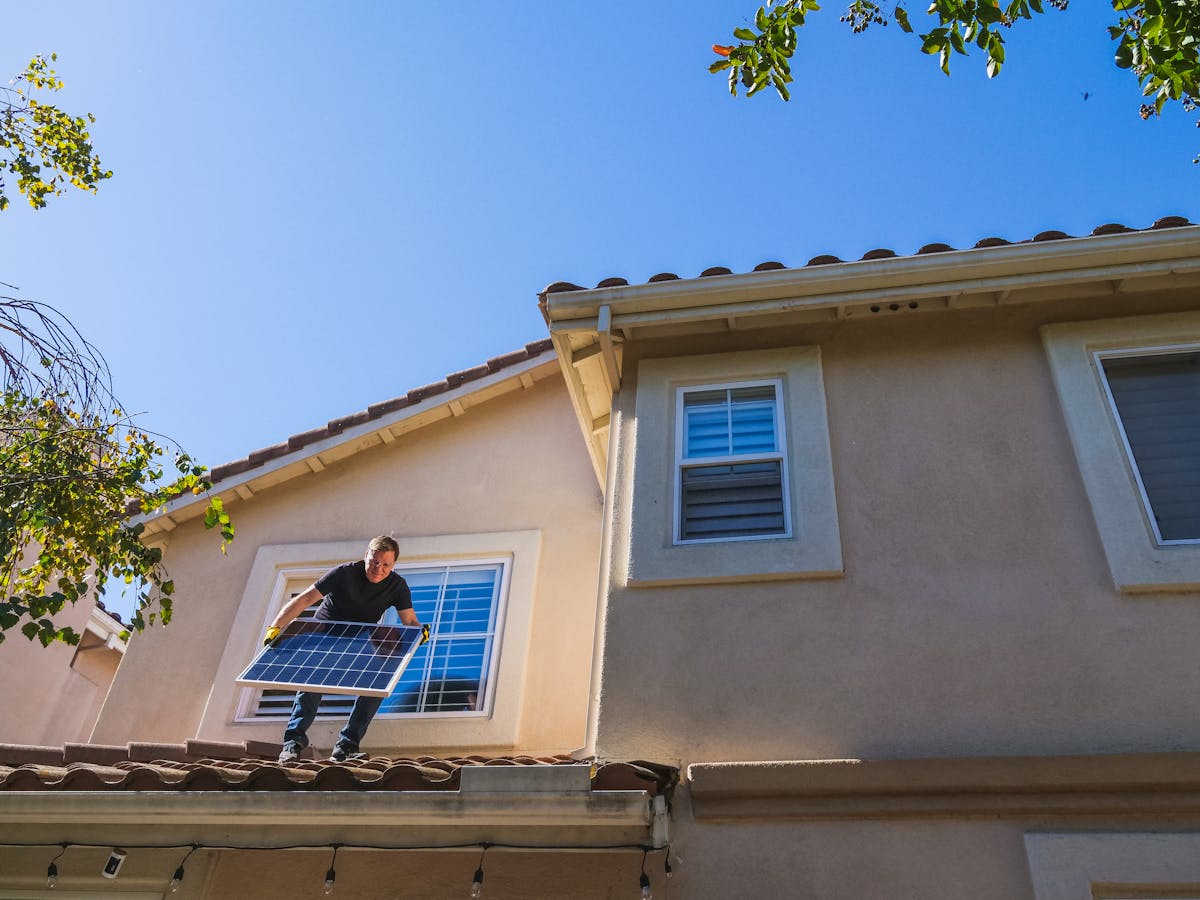
If you have ever opened a TEAS reading section and found yourself staring at a solar panels TEAS passage, you already know that sinking feeling. Dense technical vocabulary, unexpected data references, and questions that seem to test three things at once. But here is the truth — once you understand how solar energy reading passages are built, they become one of the most manageable passage types on the entire exam.
This guide gives you everything you need: how solar panels work, the three main panel types, a full solar panel informational text you can use as a mock test, sample questions with a complete solar panels passage answer key, and the reading strategies that separate high scorers from everyone else.
Whether you are preparing for the TEAS, hunting for solar panels IELTS academic answers, or simply looking for a reliable renewable energy reading comprehension resource, this guide covers it all. For a deeper look at real solar costs and savings, also explore our Solar Calculator for California Home.
What Is a Solar Panels TEAS Passage?

A solar panels TEAS passage is an informational or scientific text that appears in the reading section of the Test of Essential Academic Skills. The TEAS reading section tests your ability to understand nonfiction content — and topics related to science, health, and technology show up regularly.
Solar energy fits the TEAS format perfectly. It combines real-world relevance with enough technical detail to give test-makers rich material for inference questions, vocabulary-in-context questions, and main idea questions. If you have been searching for a solar panel educational passage to practice with, this topic gives you exactly the challenge the real exam delivers.
Why Do Solar Energy Topics Appear in TEAS and IELTS Exams?

Nursing and allied health programs care deeply about science literacy. A student who can read a clean energy reading passage and extract accurate information under time pressure can also read medical research, follow clinical protocols, and evaluate patient education materials. The TEAS uses topics like solar technology not to test your physics knowledge, but to test your reading habits when the clock is running.
The same logic applies to IELTS. A solar panels IELTS reading passage in the Academic module demands the same core skills: scanning for specific detail, inferring meaning from context, and matching headings to paragraphs. Students who practice with solar panels reading matching headings answers consistently find those skills transfer directly to other passage types.
How Solar Panels Work
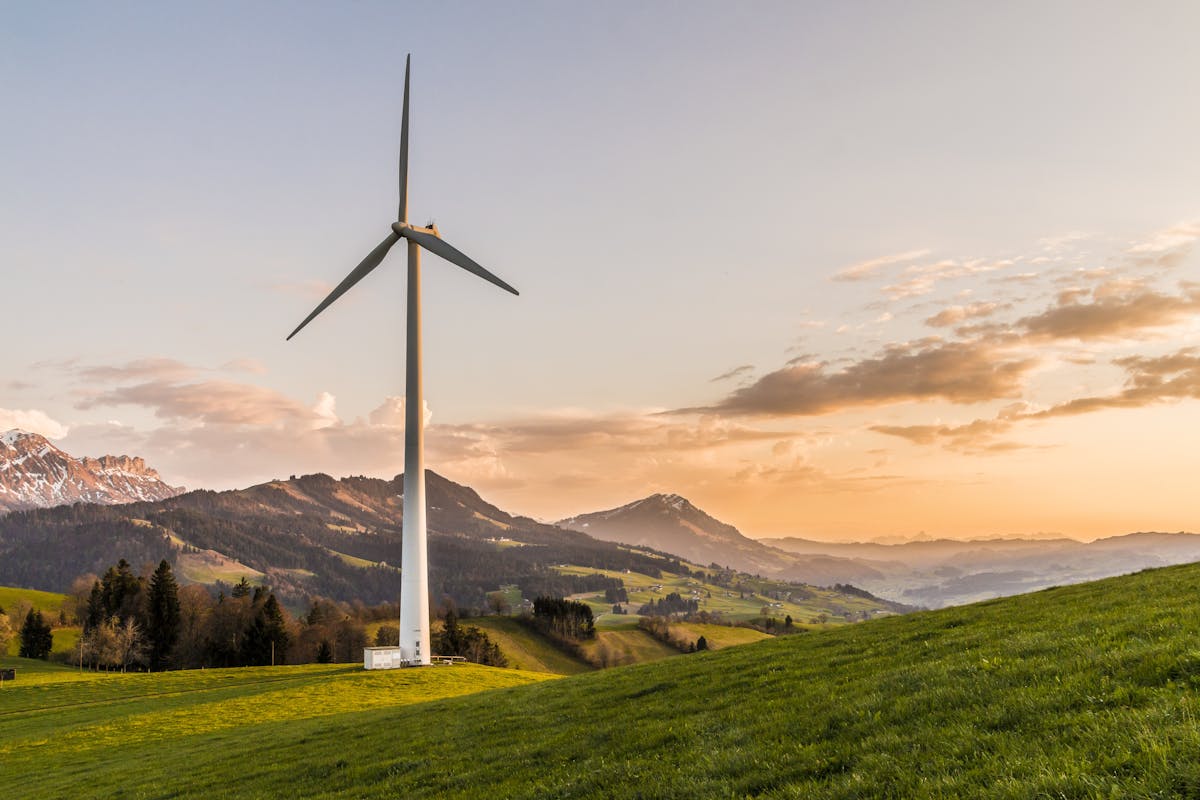
Understanding the basic science makes every solar power TEAS reading passage feel far less intimidating. Here is a plain-English breakdown you can internalize before exam day.
Step 1 — Sunlight Hits the Panel
Photons from the sun strike the surface of the photovoltaic cell and knock electrons loose from their atoms.
Step 2 — Electrons Start Moving
Those free electrons flow through the cell's semiconductor layers, creating direct current (DC) electricity.
Step 3 — The Inverter Converts Power
An inverter converts DC electricity into alternating current (AC), which homes and businesses can actually use.
Step 4 — Power Gets Used or Stored
Surplus electricity flows into a battery system or back into the grid, often earning the owner financial credits.
This process is called the photovoltaic effect, and it sits at the heart of every solar electricity passage you will encounter on a standardized exam. Knowing the core vocabulary — photon, electron, semiconductor, inverter — means you spend less time decoding unfamiliar words and more time answering questions correctly. Learn how these systems work in real installations with our Solar Calculator USA.
Types of Solar Panels
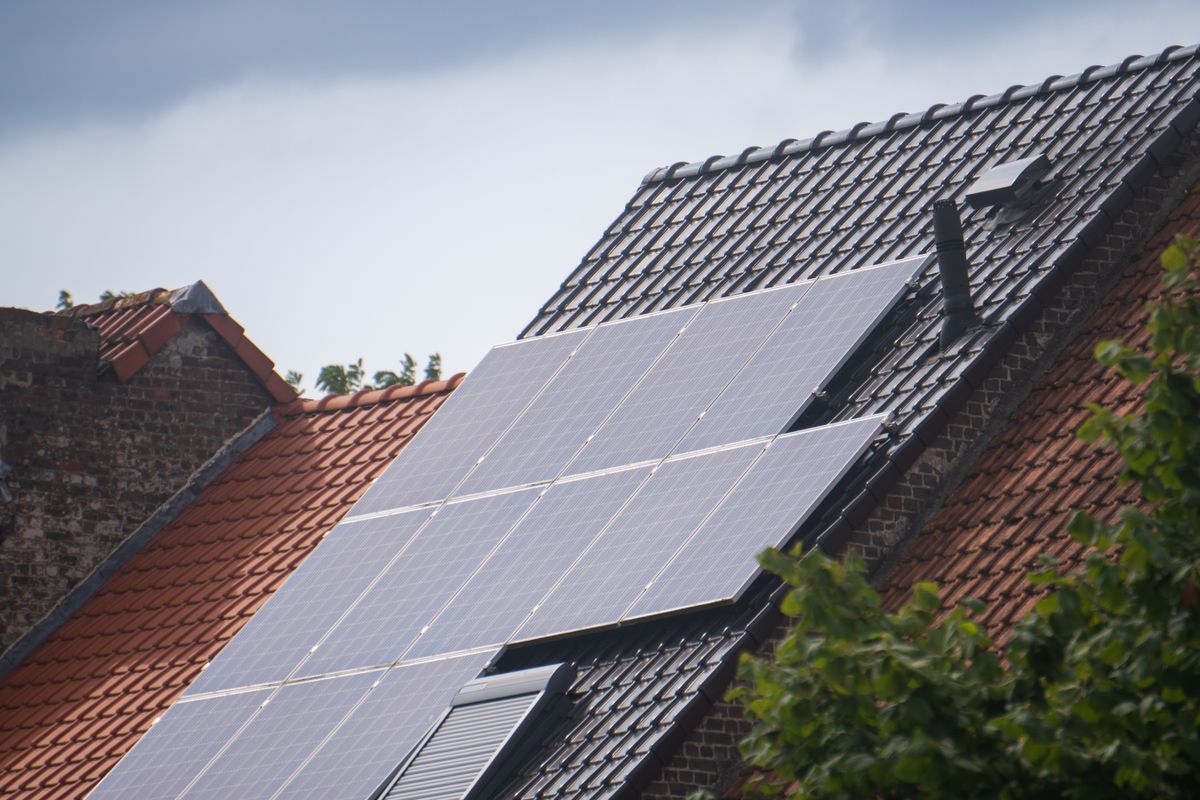
Most solar technology passage texts distinguish between three main panel types. Knowing their differences helps you answer solar panels passage true false answers questions quickly and accurately.
Monocrystalline Panels
These panels use a single continuous silicon crystal. They deliver the highest efficiency ratings and work best on residential rooftops where space is limited. They cost more to manufacture but produce significantly more electricity per square foot than other types.
Polycrystalline Panels
Manufacturers produce these panels by melting silicon fragments together. The process is cheaper, but the efficiency drops slightly. Large commercial solar farms often choose polycrystalline panels because the lower cost per unit offsets the modest efficiency gap at scale.
Thin-Film Panels
Thin-film panels apply photovoltaic material in ultra-thin layers onto glass, plastic, or metal. They are lightweight and flexible, making them ideal for curved surfaces and portable applications. They are the least powerful but the most versatile of the three types.
In a solar panels academic reading answers PDF context, you might see a true/false question like: "Monocrystalline panels are the least efficient type." The answer is FALSE — and knowing these three types makes that a one-second question instead of a source of confusion. Explore real-world panel performance in our Solar Panel Cost 2026 guide.
Benefits of Renewable Energy
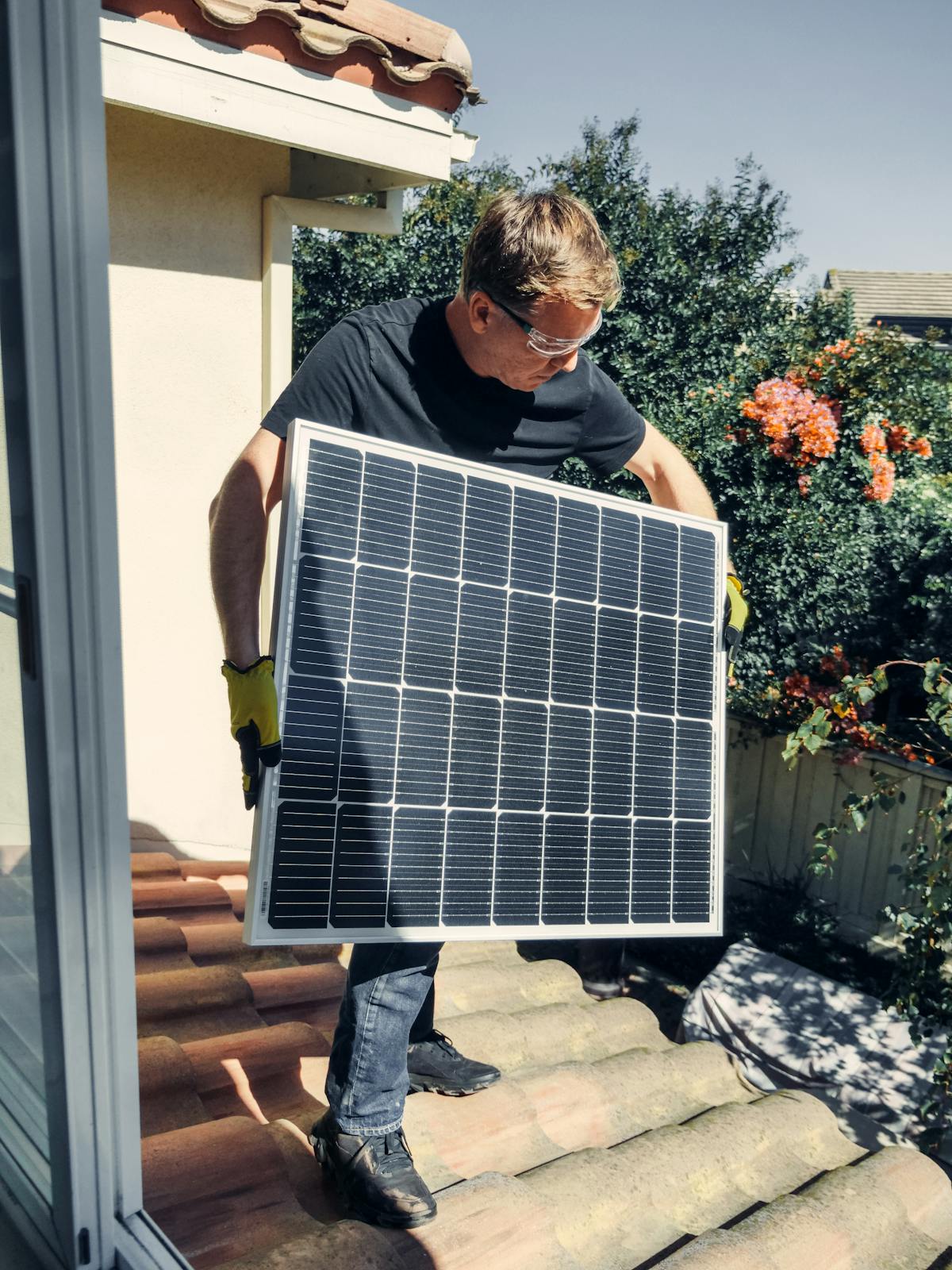
Every renewable energy passage you encounter touches on environmental and economic benefits. Here are the major points that appear most frequently across renewable resources passage texts and green energy reading passage articles.
🌿 Environmental Benefits
- Solar panels produce zero greenhouse gas emissions during operation, which directly supports energy conservation passage arguments about climate change.
- Sunlight is inexhaustible — a central point in any alternative energy TEAS passage that discusses long-term sustainability.
- Solar installations reduce dependence on coal and natural gas, cutting air pollution in surrounding communities.
- Most panel components last 25 to 30 years and are recyclable, keeping long-term waste to a minimum.
💰 Economic Benefits
- Once installed, solar panels cut monthly electricity bills dramatically — sometimes eliminating them entirely.
- Tax credits and government subsidies in many countries reduce the upfront cost significantly.
- The solar industry creates hundreds of thousands of jobs in manufacturing, installation, and maintenance.
- Homeowners who generate surplus power can sell it back to the grid through net-metering programs.
These talking points appear in almost every solar panel article for students and TEAS reading practice renewable energy exercise. When an exam question asks about the "primary purpose" of a renewable energy text, the correct answer almost always connects to one of these two benefit categories. See how solar savings work in practice with our Monthly Savings Calculator.
Sample Solar Panels Reading Passage
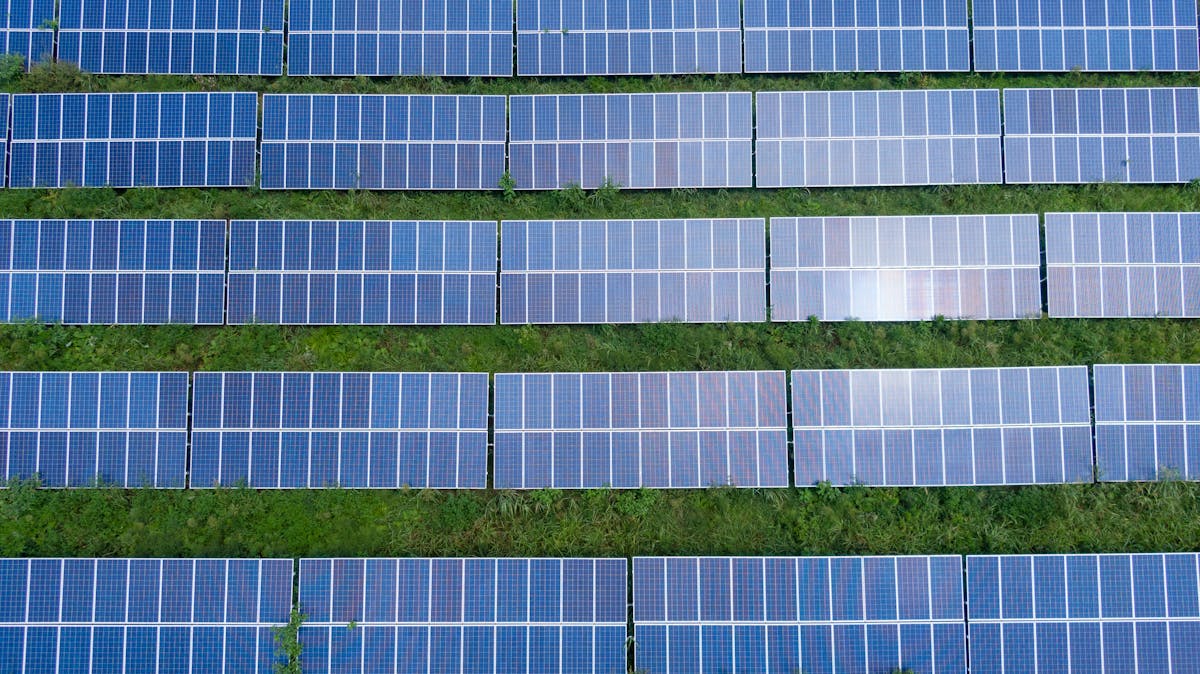
Use this as your solar panels practice passage. Read it the way you would on test day — once through for the main idea, then back through for specific details as questions require.
Over the past two decades, solar energy has evolved from a niche technology used in satellite power supplies into one of the world's fastest-growing sources of electricity. Governments, corporations, and individual homeowners now install solar panels at a record pace, driven by falling costs, stronger environmental policies, and a growing awareness of climate change. In 2023 alone, global solar capacity expanded by more than 280 gigawatts — enough to power hundreds of millions of homes.
At the core of every solar installation sits the photovoltaic cell. Photovoltaic cells contain semiconductor materials — most commonly silicon — that respond to light through what scientists call the photovoltaic effect. When photons strike the surface of the cell, they transfer energy to electrons within the silicon. These energized electrons break free from their atoms and flow through the semiconductor, generating a direct current of electricity. Because most household appliances run on alternating current, an inverter converts the output before it enters the home's electrical system.
Solar panels come in three primary configurations. Monocrystalline panels, made from a single continuous crystal of silicon, offer efficiency ratings of 15 to 22 percent. Polycrystalline panels, manufactured from melted silicon fragments, are less expensive to produce but convert slightly less sunlight into electricity. Thin-film panels apply photovoltaic material in ultra-thin layers onto flexible substrates such as glass or metal, making them lighter and more versatile, though generally less efficient than their crystalline counterparts.
The environmental case for solar energy rests on two pillars: zero operational emissions and energy independence. Once manufactured and installed, a panel generates electricity for 25 to 30 years without burning fuel or releasing carbon dioxide. Critics sometimes point to the energy required to manufacture panels, but multiple lifecycle analyses confirm that a solar panel recovers its production energy within one to four years — leaving two decades or more of genuinely clean electricity output.
Despite its advantages, solar energy faces real limitations. Panels only generate electricity during daylight hours and produce less power under cloud cover or in high-latitude regions. Energy storage through batteries addresses the intermittency problem but adds significant cost. Large-scale solar farms also require substantial land area, which can compete with agriculture and natural habitats. Engineers and policymakers continue to weigh these trade-offs as they design grid systems that balance reliability, affordability, and sustainability.
Looking forward, the solar industry invests heavily in next-generation technologies. Perovskite solar cells have achieved efficiency rates above 25 percent in laboratory settings. Bifacial panels capture sunlight on both sides, boosting yield without increasing footprint. Agrivoltaic systems place panels above agricultural land, allowing crops and energy production to coexist on the same site. These advances suggest that solar energy will play an even larger role in the global electricity mix by mid-century.
Solar Panels Passage Questions and Answers

These questions mirror the types you find in a real TEAS exam solar passage or IELTS Academic reading test. Work through them as a tea solar passage practice test before checking the answers.
The inverter converts direct current (DC) electricity produced by the solar panels into alternating current (AC) so that household appliances can use it. The passage states this directly: the inverter converts the output "before it enters the home's electrical system."
The passage states that polycrystalline panels are "less expensive to produce" than monocrystalline ones, but it never directly compares monocrystalline and thin-film manufacturing costs. This is a classic trap in solar panels passage true false answers tasks — the passage does not give enough information to call the statement true or false.
Zero operational emissions and energy independence. Paragraph 4 identifies both as the two "pillars" of the environmental case. A strong solar panels reading comprehension answer always cites both points.
Paragraph 5. It covers intermittency, battery storage costs, and land-use concerns. In a solar panels reading matching headings answers task, this paragraph matches a heading like "Challenges and Trade-offs in Solar Adoption." See how battery storage addresses these challenges in our Battery Storage Guide.
In context, intermittency refers to the irregular, non-continuous nature of solar power output — the fact that panels only generate electricity during daylight hours and not consistently. The passage describes batteries as a solution to "the intermittency problem," confirming this meaning.
The author notes that perovskite cells have achieved efficiency rates above 25 percent in laboratory settings, implying they could outperform standard silicon panels commercially in the future. The tone of Paragraph 6 is optimistic about these next-generation technologies.
Reading Comprehension Strategies for TEAS and IELTS

A smart approach to solar panels reading comprehension — and any science passage — matters far more than memorizing facts. These five strategies consistently produce higher scores.
Strategy 1 — Read the Questions First
Scan all questions before you read the passage. This turns you into an active searcher rather than a passive reader. You will naturally notice key terms when you reach the relevant paragraph.
Strategy 2 — Label Each Paragraph
As you read, write a two-word label beside each paragraph — "how it works," "panel types," "limitations," and so on. This mental map helps you locate answers quickly when questions ask "In which paragraph does the author discuss…?"
Strategy 3 — Slow Down at Contrast Words
On solar power comprehension passage questions about limitations or disadvantages, the answer almost always follows a contrast word: however, despite, although, while, or yet. Train yourself to slow down and read carefully at those signals.
Strategy 4 — Handle True/False/Not Given Questions Methodically
The Three Categories
The passage explicitly confirms the statement.
The passage explicitly contradicts the statement.
The passage neither confirms nor contradicts.
The most common mistake on solar panels passage true false answers questions is confusing "Not Given" with "False." If the passage simply does not mention something, you cannot call it false.
Strategy 5 — Practice with a Timer
A typical TEAS reading section gives you roughly 55 minutes for 53 questions — about 62 seconds per question. If a passage carries six questions, budget 8 to 10 minutes total. Use a timer during every TEAS reading practice renewable energy session so you build the right pacing instincts long before exam day.
Common Vocabulary in Solar Energy Passages
These terms appear repeatedly across solar panel articles for students, solar energy reading passages, and IELTS Academic texts on clean energy. Knowing them cold saves you time and prevents costly misreads. For comprehensive real-world context on these technologies, explore our How Many Solar Panels Guide.
Ready to Size Your California Solar System?
Don't guess your California power needs. Use our professional solar calculator to get the exact panel and battery requirements for your home — built for California's TOU rates and NEM 3.0 rules.
📊 Run Solar Panel CalculatorFast • Accurate • 100% Free to Use
Frequently Asked Questions
Is there an official solar panels TEAS passage PDF I can download?
ATI, the company that produces the TEAS, does not publicly release official past passages. However, the sample passage in this guide functions as a high-quality solar panels reading practice PDF substitute. You can print this page or save it as a PDF directly from your browser.
How do I find solar panels TEAS passage answers?
The most reliable method is to work through a sample passage and verify each answer by locating the specific paragraph and sentence that supports it. The solar panels passage solved answers section in this guide models exactly that process.
Do IELTS solar panels passages use the same question types as TEAS?
There is significant overlap. Both exams use true/false/not given questions, vocabulary-in-context questions, and detail-retrieval questions. IELTS Academic additionally uses matching headings and summary completion tasks. Practicing with solar panels IELTS practice answers resources sharpens skills that transfer directly to the TEAS reading section.
What is the energy payback period for solar panels?
Most lifecycle analyses find that a solar panel recovers the energy used in its manufacture within one to four years, leaving 20 or more years of net clean energy output. This figure appears frequently in energy conservation passage texts as a counterpoint to critics who question solar's environmental credentials. For real-world cost analysis, see our Is Solar Worth It guide.
Which panel type should I identify as most efficient on a TEAS question?
Monocrystalline panels, with efficiency ratings of 15 to 22 percent. Any solar panels sample passage answers resource should confirm this ranking above polycrystalline (13–16%) and thin-film (7–13%).
How long does it take to prepare for a TEAS solar energy reading passage?
Most students feel comfortable with science passages after four to six hours of focused, timed practice. Spend half that time reading passages at exam pace and the other half reviewing answer explanations — understanding exactly why right answers are right matters more than grinding through volume.
The solar panels TEAS passage is one of the most predictable passage types on the exam — and predictable passages reward preparation. You now understand how the photovoltaic effect works, what separates monocrystalline from thin-film panels, why renewable energy advocates cite lifecycle emissions data, and exactly how to break down true/false/not given questions without second-guessing yourself.
Use the sample passage above as your tea solar passage practice test. Time yourself, write your answers before checking the key, and review any missed question by returning to the exact paragraph that contains the evidence. That one habit — locating support before confirming your choice — accounts for a disproportionate share of points on every solar power comprehension passage task you will ever face.
The solar industry evolves fast, and exam writers follow it closely. Stay current with this solar technology passage material, build your vocabulary list, practice your timing, and you will walk into that reading section with every advantage a well-prepared student deserves.
The data and calculations in this article reflect conditions as of mid-2025. Utility rates, net metering rules, and incentive programs change regularly. Always verify current rates, tariffs, and rebates directly with your utility and a licensed California solar installer before making purchasing decisions. See our Engineering Disclaimer and Privacy Policy for more information.